Sterilization and Disinfection: Complete Guide to Cleaning, Sanitation and Sterilization Methods
-
- Published Updated
- 3,285 views
Maintaining a clean and hygienic environment is essential for homes, offices, healthcare facilities, restaurants, schools, hotels, warehouses, and other commercial properties. Regular cleaning removes visible dirt and debris, but it may not be enough to control harmful microorganisms such as bacteria, viruses, fungi, and other contaminants.
This is where sterilization and disinfection become important.
Although the terms cleaning, sanitation, disinfection, and sterilization are often used interchangeably, they represent different levels of hygiene and microbial control. Understanding these differences can help property owners and facility managers choose the right treatment for their specific requirements.
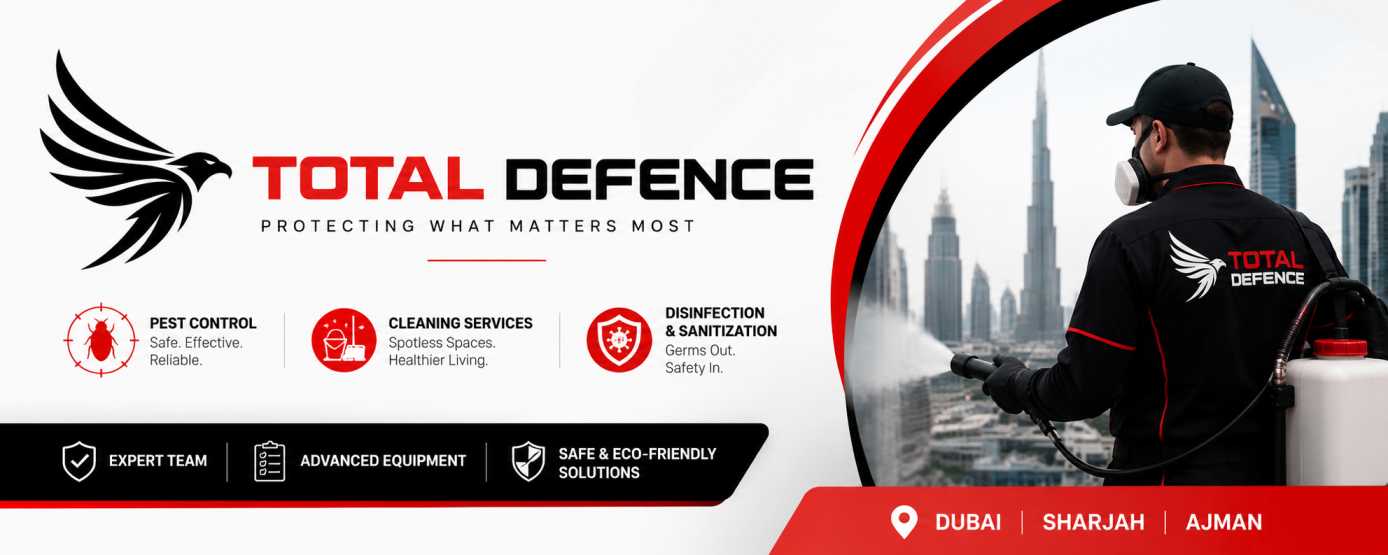
Total Defence provides professional disinfection, sanitization, sterilization, cleaning, pest control, and specialized facility maintenance services across Dubai, Sharjah, Ajman, and the UAE. Its services are designed for both residential and commercial environments, including offices, hotels, schools, healthcare facilities, restaurants, warehouses, industrial sites, and other properties.
What Is Sterilization and Disinfection?
Sterilization and disinfection are hygiene processes used to control or eliminate microorganisms from surfaces, equipment, spaces, and other environments.
However, they are not the same.
Disinfection is the process of reducing or eliminating many harmful microorganisms on surfaces and objects using approved chemical or physical agents.
Sterilization is a higher level of microbial control intended to eliminate all forms of viable microorganisms, including bacterial spores, when the appropriate validated process is used.
The method required depends on the type of property, level of contamination, surface or equipment being treated, and the required hygiene standard.
For everyday residential and commercial environments, professional disinfection and sanitization can be appropriate for reducing microbial contamination on commonly touched surfaces and areas. More demanding environments may require specialized sterilization procedures.
Cleaning, Disinfection and Sterilization: What Is the Difference?
Cleaning, disinfection and sterilization are three different stages or approaches to hygiene management.
1. Cleaning
Cleaning physically removes:
Dust
Dirt
Food particles
Grease
Organic matter
Debris
Visible contamination
Cleaning does not necessarily kill microorganisms. However, it is an important first step because dirt and organic material can interfere with the effectiveness of disinfectants.
For example, an office desk may look clean after wiping, but microorganisms can still remain on frequently touched surfaces.
2. Disinfection
Disinfection goes beyond ordinary cleaning.
A suitable disinfectant is applied to an appropriate surface or area to destroy or inactivate targeted microorganisms.
Professional disinfection may be particularly useful in:
Offices
Schools
Restaurants
Hotels
Commercial buildings
Residential properties
Healthcare-related environments
High-touch areas
Shared facilities
The correct product, concentration, application method, and contact time are important for effective disinfection.
3. Sterilization
Sterilization represents a more comprehensive level of microbial elimination.
Depending on the application, sterilization methods can include validated heat, steam, chemical, radiation, or other specialized processes.
Sterilization is generally associated with environments and equipment where a very high level of microbial control is required.
Cleaning → Disinfection → Sterilization
A simple way to understand the difference is:
Cleaning = removes contamination
Disinfection = destroys or inactivates many harmful microorganisms
Sterilization = aims to eliminate all viable microorganisms when a validated sterilization process is used
Why Are Sterilization and Disinfection Important?
Poor hygiene can allow microorganisms to remain on frequently touched surfaces and shared environments.
In commercial properties, inadequate hygiene can also affect:
Employee wellbeing
Customer confidence
Workplace cleanliness
Food hygiene
Property reputation
Operational standards
Overall environmental safety
Professional sterilization and disinfection can therefore form an important part of a wider hygiene management program.
Total Defence combines disinfection and sanitization services with professional cleaning and pest management solutions to help maintain cleaner and safer residential and commercial environments. The company states that its disinfection and sanitization services target viruses, bacteria, and allergens using approved solutions.
Sterilization and Disinfection Methods
There is no single method suitable for every situation. The appropriate sterilization and disinfection method depends on the surface, environment, contamination level, and required hygiene standard.
1. Chemical Disinfection
Chemical disinfectants are commonly used on suitable hard surfaces and equipment.
Depending on the application, professional products may contain different active ingredients designed to target specific microorganisms.
Important factors include:
Correct concentration
Surface compatibility
Required contact time
Application method
Safety precautions
Manufacturer instructions
Using too little product or removing it before the required contact time can reduce effectiveness.
2. Thermal Disinfection
Heat can be used to reduce or eliminate microorganisms in suitable applications.
Hot-water or steam-based processes may be appropriate for certain equipment and surfaces where heat can be safely applied.
The required temperature and exposure time depend on the specific process.
3. Steam Cleaning
Steam uses high-temperature vapor to clean and treat appropriate surfaces.
It can be useful for certain:
Floors
Hard surfaces
Bathrooms
Kitchens
Equipment
Commercial environments
Steam should be used according to equipment specifications and surface compatibility.
4. UV-Based Treatment
Ultraviolet light can be used in specific controlled applications to reduce microorganisms.
However, UV effectiveness depends on factors such as:
Light intensity
Exposure time
Distance
Surface visibility
Shadowing
Equipment design
UV treatment should therefore be considered a specialized method rather than a universal replacement for cleaning and professional disinfection.
5. Surface Disinfection
Surface disinfection focuses on areas that are frequently touched or likely to become contaminated.
Examples include:
Door handles
Switches
Desks
Counters
Railings
Reception areas
Shared equipment
Washroom surfaces
Kitchen surfaces
High-touch surface disinfection can be incorporated into a broader commercial cleaning program.
Sanitation, Disinfection and Sterilization
Sanitation, disinfection and sterilization are related but different concepts.
Sanitation
Sanitation generally focuses on reducing microorganisms or contaminants to a level considered acceptable for a particular environment.
Sanitation is commonly associated with maintaining routine hygiene standards.
Disinfection
Disinfection is more targeted toward destroying or inactivating microorganisms on suitable surfaces and objects.
Sterilization
Sterilization represents the highest level among these processes and is designed to eliminate all viable microorganisms when performed using an appropriate validated sterilization method.
Therefore, choosing between sanitation, disinfection, and sterilization should be based on the actual hygiene requirement rather than simply choosing the strongest-sounding treatment.
Difference Between Sterilization and Disinfectant
A common question is the difference between sterilization and disinfectant.
The terms actually describe different things.
Sterilization is a process.
Disinfectant is a chemical or antimicrobial agent used to disinfect suitable surfaces or objects.
For example, a professional may use a disinfectant as part of a surface disinfection procedure, while sterilization may involve a specialized validated process using heat, steam, chemicals, radiation, or another approved technique.
Sterilization vs Disinfection
Feature |
Disinfection |
Sterilization |
Main purpose |
Reduce or eliminate many harmful microorganisms |
Eliminate all viable microorganisms when properly validated |
Typical application |
Surfaces, facilities and suitable objects |
Specialized equipment and controlled applications |
Microbial control |
High, but not necessarily complete |
Highest level of microbial control |
Spores |
May not reliably eliminate all spores |
Designed to eliminate viable spores |
Process |
Chemical or physical methods |
Validated physical or chemical methods |
Common environment |
Homes, offices, commercial properties |
Specialized environments requiring sterilization |
The most important point is that disinfection should not automatically be described as sterilization. Each process has a different purpose and performance requirement.
Cleaning vs Sanitizing vs Disinfecting vs Sterilizing
Many people use these terms as if they mean the same thing, but they do not.
Cleaning
Physically removes dirt, dust, grease, debris, and organic material.
Sanitizing
Reduces microorganisms to an acceptable level according to the applicable standard or use case.
Disinfecting
Uses an appropriate process or chemical to destroy or inactivate targeted microorganisms on suitable surfaces.
Sterilizing
Uses a validated process intended to eliminate all viable microorganisms.
A professional hygiene program may combine more than one of these approaches.
For example:
Cleaning → Sanitization/Disinfection → Ongoing Hygiene Maintenance
The exact sequence depends on the environment and service requirements.
Professional Disinfection and Sterilization for Homes
Residential properties can experience microbial contamination through:
High-touch surfaces
Kitchens
Bathrooms
Shared items
Poor ventilation
Waste areas
Pet-related contamination
Pest activity
Water systems
High-traffic areas
Professional disinfection services in Dubai can help homeowners maintain cleaner living environments, particularly after illness, renovation, contamination events, or periods of heavy occupancy.
For broader property hygiene, Total Defence also provides residential deep cleaning and pest control services, allowing customers to address both cleanliness and pest-related issues through one service provider.
Commercial Disinfection and Sterilization Services
Commercial properties often require more structured hygiene procedures because many people share the same environment.
Total Defence provides commercial cleaning, pest management, and disinfection solutions for different sectors, including:
Offices
Hotels
Restaurants
Retail outlets
Schools
Hospitals
Warehouses
Food processing facilities
Industrial sites
Construction sites
Boats and yachts
The company states that its commercial solutions are customized according to the needs and conditions of each property.
A professional hygiene program can help businesses maintain cleaner working environments while supporting their broader health and safety procedures.
How Professional Disinfection Works
A professional disinfection service normally begins with an assessment of the property and the areas requiring treatment.
A typical process may include:
Step 1: Property Assessment
Technicians identify:
Areas requiring treatment
High-touch surfaces
Possible contamination sources
Surface types
Occupancy requirements
Access and safety considerations
Step 2: Preparation
The area is prepared before treatment.
Depending on the service, this may include removing unnecessary objects, protecting sensitive items, and ensuring suitable access.
Step 3: Cleaning
Visible dirt and organic contamination are removed where necessary.
This helps prepare surfaces for effective disinfection.
Step 4: Disinfection Treatment
The appropriate disinfectant and application method are selected for the environment and surfaces being treated.
Step 5: Contact Time
The disinfectant needs sufficient contact time to work effectively.
This is an important part of professional treatment and should follow the product's approved instructions.
Step 6: Ventilation and Re-entry
Depending on the treatment, ventilation and re-entry requirements may apply.
Occupants should follow the technician's instructions before returning to treated areas.
Step 7: Ongoing Hygiene
Disinfection works best as part of an ongoing hygiene strategy rather than as a substitute for regular cleaning.
Disinfection and Sterilization for Water Systems
Water storage and distribution systems require specialized cleaning and hygiene management.
Contaminated tanks or pipelines can contribute to water-quality problems. Total Defence also provides water tank cleaning and pipeline disinfection services, combining physical cleaning with appropriate disinfection procedures where required. Its website describes professional water-system assessment, cleaning, disinfection, flushing, and post-treatment checks for pipeline services.
This is particularly important for:
Residential buildings
Villas
Commercial buildings
Hotels
Industrial facilities
Facilities with large water storage systems
Water tank cleaning should not be confused with ordinary surface disinfection. Water systems require procedures specifically designed for the system being treated.
Why Cleaning Alone May Not Be Enough
A surface can appear visually clean while microorganisms remain present.
For example, a frequently touched office surface may have no visible dirt but can still be exposed to microorganisms through repeated contact.
This is why a comprehensive hygiene strategy can combine:
Regular Cleaning + Appropriate Disinfection + Pest Control + Specialized Maintenance
For businesses, combining these services can provide a more complete approach to property hygiene.
Total Defence offers cleaning services including commercial building cleaning, residential deep cleaning, post-construction cleaning, facade and window cleaning, floor cleaning and polishing, water tank cleaning, fuel tank cleaning, grease trap cleaning, sewerage and septic tank cleaning, and industrial container and storage tank cleaning.
Sterilization, Disinfection and Pest Control
Microbial hygiene and pest management are closely connected in many properties.
Pests can contribute to contamination by moving through:
Waste areas
Drains
Kitchens
Food storage areas
Bathrooms
Outdoor spaces
Building cavities
For this reason, simply disinfecting a property without addressing an ongoing pest problem may not provide a complete long-term hygiene solution.
Total Defence offers pest control services for ants, cockroaches, bed bugs, spiders, flies, mosquitoes, wasps, bees, silverfish, scorpions, mice, rats, termites, birds, lizards, and other pests.
Combining pest control, professional cleaning, and disinfection can help businesses and property owners address multiple hygiene risks together.
Other Services Available from Total Defence
In addition to sterilization and disinfection, Total Defence provides a wide range of property hygiene and maintenance solutions.
Pest Control Services
Ant Control
Cockroach Control
Bed Bug Control
Spider Control
Mosquito Control
Fly Control
Wasp Control
Bee Control
Silverfish Control
Scorpion Control
Rat and Mouse Control
Termite Control
Bird Control
Lizard Control
And other pest management services
Cleaning Services
Commercial Building Cleaning
Residential Deep Cleaning
Post-Construction Cleaning
Facade & Window Cleaning
Floor Cleaning & Polishing
Water Tank Cleaning
Fuel Tank Cleaning
Grease Trap Cleaning
Sewerage & Septic Tank Cleaning
Industrial Container & Storage Tank Cleaning
These services allow Total Defence to provide a broader property-care solution rather than focusing on a single hygiene requirement.
Why Choose Total Defence for Disinfection Services?
Choosing the right service provider is important when dealing with hygiene and contamination.
Total Defence focuses on professional cleaning, pest control, disinfection, and specialized maintenance services for residential, commercial, and industrial properties.
Key advantages include:
Professional service teams
Customized treatment solutions
Advanced cleaning and treatment methods
Residential and commercial service options
Integrated pest control and cleaning solutions
Disinfection and sanitization services
Water tank and building cleaning
Services across Dubai, Sharjah, Ajman, and the UAE
The company also emphasizes trained teams, advanced technology, customized solutions, and sustainable cleaning and pest-control practices.
How Often Should You Schedule Disinfection?
There is no universal schedule that works for every property.
The appropriate frequency depends on:
Property type
Number of occupants
Foot traffic
Industry
Existing hygiene procedures
Pest activity
Contamination risk
Specific regulatory or operational requirements
High-traffic commercial properties may require more frequent professional cleaning and disinfection than low-occupancy residential properties.
Instead of relying on a fixed schedule, property owners should assess their actual hygiene requirements and develop an appropriate maintenance program.
Frequently Asked Questions About Sterilization and Disinfection
What is the difference between sterilization and disinfection?
Disinfection reduces or eliminates many harmful microorganisms on suitable surfaces, while sterilization is a higher-level process intended to eliminate all viable microorganisms when performed using an appropriate validated method.
Is cleaning the same as disinfection?
No. Cleaning physically removes dirt, dust, debris, and organic matter. Disinfection uses an appropriate antimicrobial process to destroy or inactivate targeted microorganisms.
What is the difference between sanitation and disinfection?
Sanitation generally reduces contamination or microorganisms to an acceptable level for a particular use, while disinfection is intended to destroy or inactivate targeted microorganisms on suitable surfaces.
What is the difference between sterilization and disinfectant?
Sterilization is a process, whereas a disinfectant is an antimicrobial product used to disinfect appropriate surfaces or objects.
What are common sterilization and disinfection methods?
Depending on the application, methods may include chemical disinfection, heat, steam, UV-based treatment, and other specialized validated processes.
Can disinfection replace regular cleaning?
No. Disinfection and cleaning serve different purposes. Regular cleaning removes dirt and organic material, while disinfection targets microorganisms. A comprehensive hygiene program may require both.
Does Total Defence provide commercial disinfection services?
Yes. Total Defence provides disinfection and cleaning solutions for commercial environments including offices, hotels, restaurants, schools, hospitals, warehouses, industrial sites, and other facilities.
Does Total Defence provide pest control as well?
Yes. Total Defence provides residential and commercial pest control services covering a wide range of insects, rodents, birds, and other common pests across Dubai, Sharjah, and Ajman.
Final Thoughts
Understanding the difference between sterilization and disinfection, cleaning, disinfection and sterilization, and sanitation, disinfection and sterilization is important when developing an effective hygiene strategy.
Cleaning removes visible contamination. Sanitation reduces contamination to an acceptable level. Disinfection targets harmful microorganisms, while sterilization represents a higher level of microbial elimination for applications where that level of control is required.
For homes, offices, commercial buildings, hotels, restaurants, warehouses, and industrial properties, professional hygiene services can help maintain cleaner and safer environments.
Total Defence provides comprehensive disinfection, sanitization, cleaning, pest control, water tank cleaning, building cleaning, and specialized facility maintenance services across Dubai, Sharjah, Ajman, and the UAE.
If your property requires professional disinfection and sterilization services, contact Total Defence for an assessment and a solution tailored to your property.
Total Defence — Professional Pest Control, Cleaning & Disinfection Services Across the UAE.