Sweet Almond Massage Oil: Benefits, Uses, and How to Buy the Right One in India
-

- Published Updated
- 2,457 views
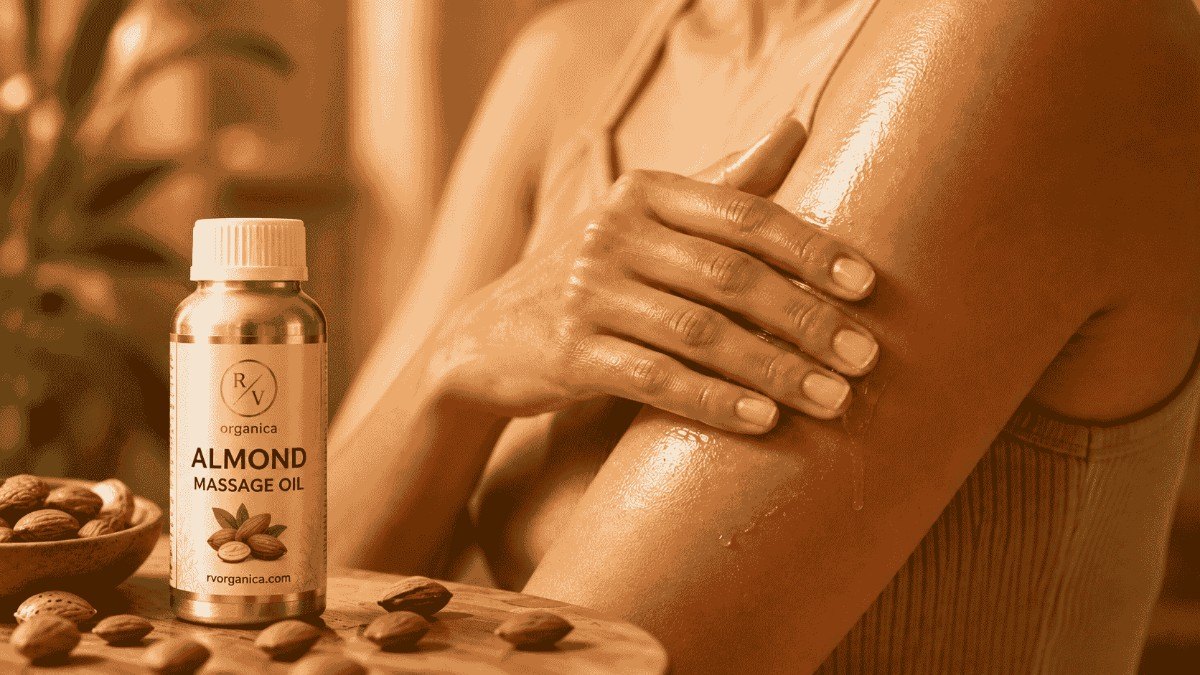
Quick answer: Sweet almond massage oil, cold-pressed from Prunus amygdalus dulcis kernels, gives you 15-20 minutes of working time on skin before it absorbs. Doesn't solidify in winter. Doesn't need warming before a session. If you want one carrier oil that handles body massage, face care, and daily moisturizing without buying three different products depending on the season, this covers it.
Most people buy their first bottle of sweet almond massage oil because someone told them it works. Very few ask why it works, and even fewer check whether the bottle they bought is actually pure. That gap is where most disappointment with carrier oils begins.
A lot of buyers assume any pale yellow oil labeled almond is doing the same job. It is not. Sweet almond oil comes specifically from Prunus amygdalus dulcis kernels, pressed cold so the heat sensitive compounds inside survive the process. Bitter almond, a different variety entirely, is not used in cosmetic oils for safety reasons. The confusion between the two names has led to a lot of unnecessary skepticism about a genuinely well studied ingredient.
To get more information visit this = Sweet Almond Massage Oil.
How Sweet Almond Oil Actually Works on Skin
The oil’s profile is built around three fatty acids. Oleic acid makes up 60 to 80 percent of the composition, linoleic acid contributes another 20 to 29 percent, and palmitic acid fills in the remaining 4 to 9 percent. This balance is what gives the oil its characteristic slip during a massage, rich enough to reduce friction, light enough to avoid a heavy residue.
Vitamin E rounds out the profile at roughly 4.6 to 5.3 milligrams per tablespoon, present in the alpha tocopherol form the skin metabolizes efficiently. This is not a marketing detail. Alpha tocopherol is the form most consistently associated with topical antioxidant activity in cosmetic science.
For massage specifically, the oil’s absorption window matters more than people realize. Sweet almond oil takes about 15 to 20 minutes to fully absorb once applied. That timing lines up almost exactly with how long a typical massage session runs, giving practitioners enough glide time without leaving skin oily long after the session ends.
Its comedogenic rating sits at 2 out of 5, which places it in the moderately safe range for most skin types. It will not suit everyone with very reactive or acne prone skin, but for general body use it rarely causes issues.
Almond, Coconut, and Sesame Compared
These three oils get compared constantly, usually without much precision.
Coconut oil solidifies at room temperature across most of the year in India, which means it needs to be warmed before use and can feel heavier once absorbed. Its comedogenic rating of 4 also makes it a riskier choice for backs, chests, and other areas prone to breakouts. Sweet almond oil stays liquid year round and spreads in a thinner, more even layer.
Sesame oil takes a different route entirely. Traditional Ayurvedic practice favors it for Abhyanga style massage because it penetrates more deeply into muscle tissue and carries a natural warming quality. If the goal is joint relief or deep tissue work, sesame massage oil often performs better than almond. If the goal is everyday moisturizing or a lighter feel, almond tends to be the more practical pick.
Neither oil replaces the other completely. Many practitioners keep both on hand and choose based on the treatment, not personal preference alone.
What a Genuine Certificate of Analysis Should Show
This is the section most buyers skip, and it is the one that actually protects them.
A proper Certificate of Analysis for sweet almond oil should report a peroxide value under 10 mEq O2 per kilogram, measured against the AOCS standard. This number reflects oxidation, and oxidation is the main reason a good oil eventually smells rancid.
Free fatty acid content should stay below 1 percent. The number worth paying closest attention to is linoleic acid content. Pure sweet almond oil naturally sits between 20 and 29 percent linoleic acid. When a Certificate of Analysis shows linoleic acid dropping below 15 percent, that is a strong signal the oil has been diluted with a cheaper filler, often sunflower oil.
Under FSSAI’s Cosmetics Rules 2020, documentation like this is a compliance requirement, not an optional extra. Separately, almond oil has been assessed by the CIR panel as safe for topical cosmetic use when these quality markers are met. Any manufacturer unwilling to share a Certificate of Analysis on request is not one worth buying from.
Shelf life follows a predictable pattern too. An unopened bottle typically holds its quality for 12 to 18 months. Once opened and exposed to air repeatedly, that window narrows to 6 to 12 months.
Using It on the Face, Not Just the Body
Sweet almond oil is one of the few carrier oils gentle enough for direct facial use without dilution, largely because of that moderate comedogenic rating combined with its vitamin E content. Dry and normal skin types generally tolerate it well applied straight from the bottle.
Oily or acne prone skin should proceed more carefully. A patch test along the jawline for a few days is a reasonable precaution before committing to full face use. Buyers specifically shopping for facial application are usually better served browsing face massage oils formulated with slightly different clarity and filtration standards than bulk body oils.
A few groups should avoid the oil altogether. Anyone with a tree nut allergy should not use it topically, since reactions can occur without ingestion. Pregnant women and people with known sensitive skin conditions should patch test before regular use, the same precaution that applies to introducing any new carrier oil.
Sourcing in Bulk Without the Usual Headaches
Buyers looking to source in volume run into the same obstacle repeatedly. Most manufacturers set a minimum order quantity around 25 litres, which puts smaller spas, clinics, and product lines at a disadvantage before they even get a sample tested.
RV Organica’s Almond Massage Oil is priced to allow a 5 litre minimum order, a fraction of the industry standard. That makes it realistic for a business to test a batch, run it through their own quality checks, and scale up only once they are satisfied. The product currently holds a 4.67 out of 5 rating from 3 reviews, with feedback consistently mentioning how well it absorbs during massage without leaving a greasy finish. It sits within the broader range of body massage oils alongside options like sesame massage oil, and pairs naturally with other entries in the carrier oils collection for anyone building out a full product line.
Buying Sweet Almond Oil in India
For most individual buyers, the practical questions come down to trust and paperwork rather than chemistry. A manufacturer that provides GMP and ISO 22000 certification, along with a Certificate of Analysis on request, removes most of the guesswork.
RV Organica operates out of its Nimbri facility in Panipat, Haryana, under its parent entity RV International, holding nine certifications including WHO GMP, Halal, Kosher, HACCP, and MSME recognition. Orders above Rs. 999 ship free, and first time buyers can apply the code FIRSTORDER at checkout for an additional discount. Questions about bulk quantities or Certificate of Analysis documentation can go directly to [email protected] or +91 8937003005.
Is sweet almond oil good for massages
Yes, its fatty acid balance and 15 to 20 minute absorption window make it well suited to massage, giving practitioners enough glide time without excessive residue afterward.
What are the disadvantages of sweet almond oil for skin
Its comedogenic rating of 2 out of 5 means it can occasionally clog pores on acne prone skin, and anyone with a tree nut allergy should avoid it entirely due to the risk of topical reaction.
Which is better for massage, almond oil or coconut oil
Almond oil generally wins for everyday and facial use since it stays liquid and absorbs faster, while coconut oil’s higher comedogenic rating makes it less suitable for breakout prone areas, though some still prefer its texture for slower full body sessions.
Who should not use almond oil
People with tree nut allergies should avoid it completely, and pregnant women or those with known skin sensitivities should patch test before regular use.
Can you put sweet almond oil directly on skin
Yes, it is gentle enough for direct application on both body and face for most skin types, though oily or acne prone skin should patch test first given its moderate comedogenic rating.
Final Thoughts
Sweet almond oil earns its place in a massage kit through consistency rather than novelty. It works because of a specific, checkable set of numbers, not because of a story printed on the label. Anyone shopping for it seriously should ask for the Certificate of Analysis before asking about the price.