Taxi App Development Solutions | Build Your Own Taxi Booking App
-

- Published Updated
- 4,299 views
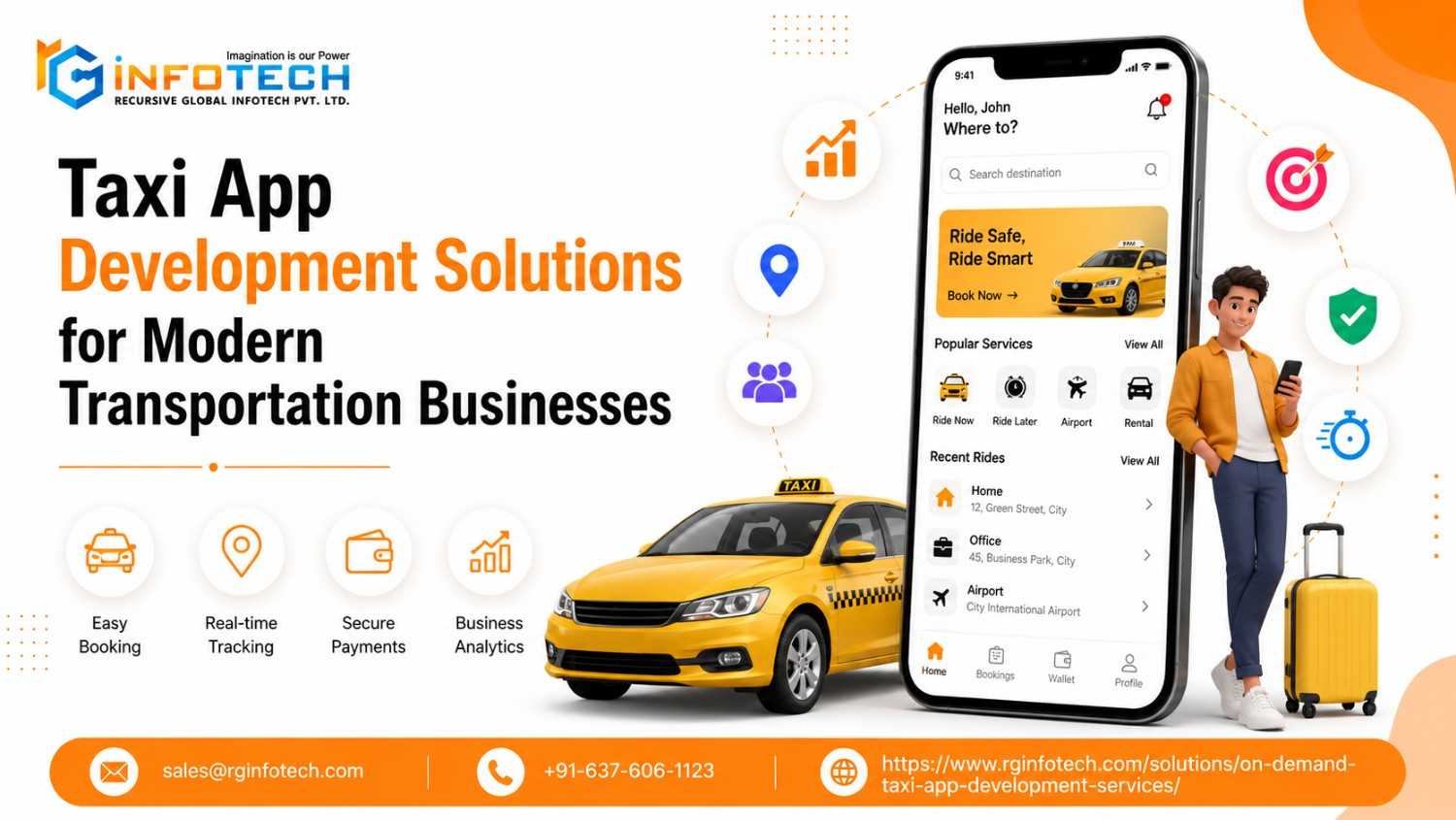
The transportation industry is rapidly moving toward digital and on-demand mobility solutions. Customers prefer booking taxis through mobile applications because they offer convenience, real-time tracking, transparent pricing, and secure payment options. For transportation businesses, startups, and fleet operators, investing in taxi app development solutions can be an effective way to modernize operations and build a scalable ride-booking business.
With a custom taxi booking app, businesses can connect passengers, drivers, and administrators through a single platform. From ride booking and GPS tracking to digital payments and driver management, a feature-rich taxi application can provide everything needed to operate a modern transportation service.
What Are Taxi App Development Solutions?
Taxi app development solutions involve designing and developing customized mobile and web applications for taxi booking and transportation businesses. These solutions typically include a passenger app, driver app, admin dashboard, and backend system.
A complete taxi booking platform can help businesses manage:
- Passenger registrations and profiles
- Taxi and ride bookings
- Driver assignments
- Real-time GPS tracking
- Fare calculation
- Online payments
- Ride history
- Driver earnings
- Ratings and reviews
- Promotions and discounts
- Fleet management
- Business analytics
The application can be customized according to the business model, target market, service area, and operational requirements.
Why Build Your Own Taxi Booking App?
Building your own taxi booking application gives your business greater control over customers, drivers, pricing, branding, and revenue.
1. Build Your Own Brand
A customized taxi app allows businesses to create a unique brand identity instead of depending entirely on third-party ride-hailing platforms.
2. Increase Direct Bookings
Customers can book rides directly through your application, helping you establish a direct relationship with your users.
3. Manage Drivers Efficiently
A centralized driver management system allows administrators to monitor driver availability, bookings, earnings, and performance.
4. Offer Flexible Pricing
Businesses can create their own pricing models based on distance, time, vehicle category, location, demand, and other factors.
5. Improve Customer Experience
Features such as live tracking, estimated fares, digital payments, scheduled rides, and notifications can make taxi booking faster and more convenient.
Essential Features of a Taxi Booking App
A successful taxi booking application should provide dedicated features for passengers, drivers, and administrators.
Passenger App Features
The passenger application should make the booking process simple and convenient.
User Registration & Login
Users can register using their phone number, email address, or supported social login options.
Easy Taxi Booking
Passengers can enter pickup and destination locations, select a vehicle category, view estimated fares, and request a ride.
Real-Time Driver Tracking
GPS integration allows passengers to track their assigned driver on a map and monitor the driver's estimated arrival time.
Fare Estimation
Users can view an estimated ride cost before confirming their booking.
Multiple Payment Options
The application can support credit/debit cards, digital wallets, UPI, cash, and other regional payment methods.
Ride History
Passengers can access previous bookings, payment information, trip details, and invoices.
Ratings & Reviews
Customers can rate drivers and provide feedback after completing their trips.
Push Notifications
Notifications can inform users about booking confirmation, driver assignment, arrival, ride status, payment, and promotions.
Driver App Features
The driver application helps transportation businesses manage their driver network effectively.
Driver Registration
Drivers can submit their personal information, driving license, vehicle documents, and other required details for verification.
Online/Offline Status
Drivers can switch between online and offline modes depending on their availability.
Ride Request Management
Drivers can receive nearby ride requests and accept or reject them according to their availability.
GPS Navigation
Integrated navigation helps drivers reach pickup and destination locations efficiently.
Earnings Management
Drivers can view daily, weekly, and monthly earnings along with completed ride details.
Trip History
Drivers can access their previous trips, passenger information, fares, and payment records.
Admin Panel Features
The admin dashboard provides centralized control over the entire taxi booking platform.
Key features can include:
- User management
- Driver management
- Vehicle management
- Booking management
- Fare management
- Payment management
- Commission management
- Promo code management
- Customer support
- Ratings and reviews
- Reports and analytics
- Location management
- Revenue tracking
An advanced admin panel allows business owners to monitor their transportation operations from a single dashboard.
Advanced Taxi App Features
To create a competitive taxi platform, businesses can integrate advanced features such as:
Scheduled Taxi Booking
Allow passengers to book rides in advance for airport transfers, business meetings, appointments, and planned journeys.
Multiple Vehicle Categories
Offer different vehicle options such as economy, sedan, SUV, premium, luxury, or electric vehicles.
Ride Sharing
A ride-sharing feature can allow multiple passengers traveling in similar directions to share a ride.
Corporate Taxi Booking
Businesses can provide corporate accounts for employee transportation, business travel, billing, and reporting.
AI-Based Driver Matching
AI-powered algorithms can help match passengers with suitable drivers based on location, availability, traffic conditions, and other factors.
Referral & Loyalty Programs
Referral bonuses, loyalty points, discounts, and rewards can help businesses attract and retain customers.
Fleet Management
Fleet operators can monitor vehicles, driver assignments, maintenance schedules, and vehicle performance through a centralized system.
Benefits of Custom Taxi App Development
Building a custom taxi booking application can provide several benefits for transportation businesses.
Better Operational Efficiency
Automated booking, dispatching, payments, and driver management can reduce manual processes.
Improved Customer Retention
A convenient booking experience, personalized offers, loyalty programs, and reliable service can encourage customers to use the application repeatedly.
Scalable Business Model
A scalable taxi application can support additional drivers, vehicles, service areas, and features as your business grows.
Multiple Revenue Opportunities
Taxi businesses can generate revenue through:
- Ride commissions
- Booking charges
- Surge pricing
- Subscription plans
- Corporate accounts
- Premium rides
- Advertising
- Partner services
Better Business Insights
Analytics and reporting can help business owners understand bookings, revenue, customer behavior, driver performance, and popular service areas.
Technology Stack for Taxi App Development
The technology stack depends on project requirements, platforms, scalability, and integrations.
A modern taxi booking application may use:
| Technology Area | Common Technologies |
|---|---|
| Mobile App | Flutter, React Native, Kotlin, Swift |
| Backend | Node.js, Laravel, PHP, Python |
| Database | MySQL, PostgreSQL, MongoDB |
| Maps & GPS | Google Maps APIs |
| Cloud | AWS, Google Cloud, Microsoft Azure |
| Notifications | Firebase Cloud Messaging |
| Payments | Stripe, PayPal, Razorpay, Regional Gateways |
| Analytics | Google Analytics & Custom Analytics |
Selecting the right technology stack helps create a secure, responsive, and scalable taxi application.
Taxi App Development Process
A professional taxi app development project generally follows these stages:
1. Business Analysis
The development team analyzes your business model, target audience, competitors, service locations, pricing strategy, and required features.
2. UI/UX Design
The user interface is designed for passengers, drivers, and administrators with an emphasis on simple navigation and an efficient booking process.
3. Application Development
Developers build the passenger app, driver app, backend, APIs, database, and admin panel.
4. API Integration
Third-party services such as maps, GPS, payment gateways, push notifications, authentication, and analytics are integrated.
5. Testing
The application is tested for functionality, performance, security, usability, and compatibility across supported devices.
6. Deployment
After successful testing, the application is deployed to the required app stores and cloud infrastructure.
7. Maintenance & Support
Continuous maintenance helps businesses resolve technical issues, improve performance, update features, and keep the application compatible with new technologies.
How Much Does It Cost to Build a Taxi Booking App?
The cost of taxi app development depends on various factors, including:
- Number of platforms
- App design complexity
- Number of features
- Backend requirements
- Third-party integrations
- Payment gateway requirements
- GPS and mapping functionality
- Admin panel complexity
- Development team location
- Security and scalability requirements
A basic taxi booking application will generally cost less than a highly customized platform with advanced fleet management, AI-powered features, corporate accounts, multiple payment systems, and complex analytics.
For an accurate estimate, businesses should define their required features and development scope before starting the project.
How to Choose the Right Taxi App Development Company?
Selecting the right development partner is important for creating a reliable taxi booking platform. Before hiring a company, consider:
- Experience in taxi app development
- Portfolio of transportation applications
- Mobile and web development expertise
- UI/UX design capabilities
- GPS and map integration experience
- Payment gateway expertise
- Security practices
- Scalability capabilities
- Post-launch maintenance and support
A reliable development company should understand your business objectives and build a solution that can grow with your transportation business.
Why Choose RG Infotech for Taxi App Development?
RG Infotech is a professional IT and software development company offering custom taxi app development solutions for startups, transportation businesses, fleet operators, and enterprises.
Our taxi app development approach focuses on creating scalable and user-friendly platforms with features such as passenger booking, driver management, GPS tracking, online payments, notifications, ratings, admin dashboards, and analytics.
Whether you want to launch a new taxi booking startup or transform an existing transportation business, RG Infotech can help you develop a customized digital solution based on your business requirements.
Conclusion
Taxi App Development Solutions provide transportation businesses with the technology needed to compete in today's digital mobility market. By building your own taxi booking app, you can create a direct connection with customers, manage drivers efficiently, streamline operations, and develop new revenue opportunities.
From a basic taxi booking application to a complete ride-hailing platform, the right combination of features, technology, design, and scalability can help turn your transportation idea into a successful digital business.