Technology Transfer Services for Precision Engineering and Component Manufacturing
-

- Published Updated
- 8,859 views
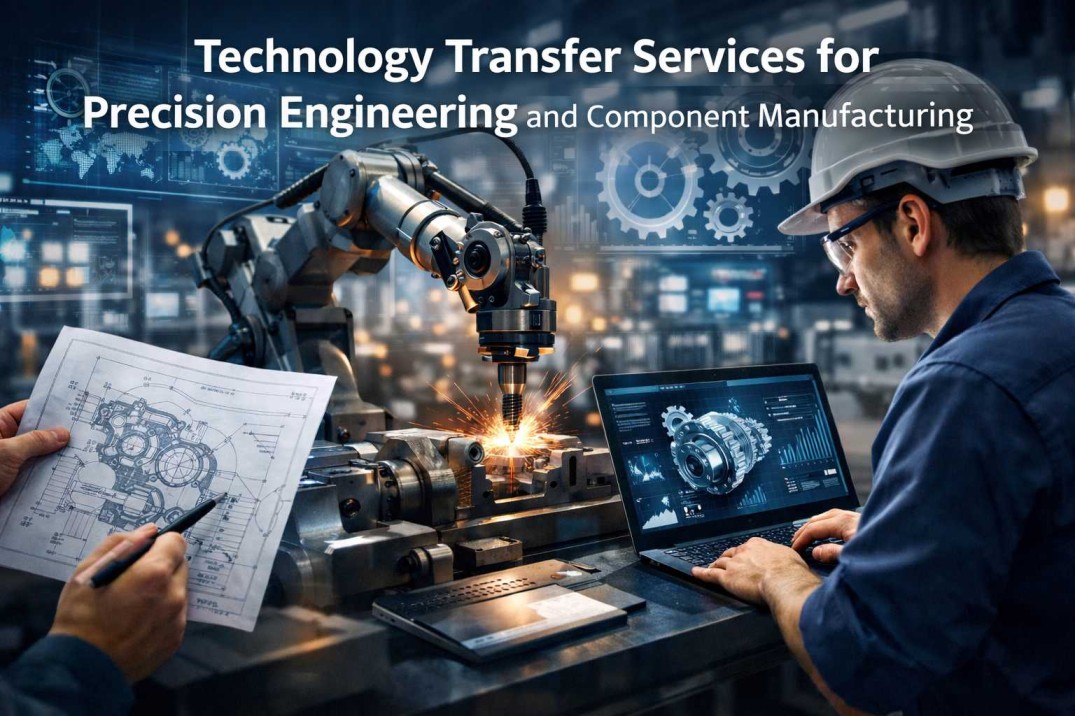
Precision engineering and component manufacturing industries are under constant pressure to improve product quality, reduce production cost, accelerate time-to-market, and meet global customer expectations. As businesses expand into new markets, launch new products, add new manufacturing lines, or shift production between facilities, the need for structured technology transfer becomes increasingly important.
Technology transfer is no longer limited to pharmaceutical or chemical industries. It is now widely used across precision engineering, automotive components, aerospace parts, electronics manufacturing, industrial equipment, metal fabrication, and high-value industrial component production.
For precision engineering companies, technology transfer services help move product knowledge, manufacturing processes, tooling requirements, machine settings, quality standards, drawings, SOPs, inspection methods, and production know-how from one location, team, or supplier to another.
What Are Technology Transfer Services?
Technology transfer services involve transferring technical knowledge, production processes, equipment settings, engineering documentation, and operational standards from one manufacturing environment to another.
In precision engineering and component manufacturing, this may include:
Technology transfer consulting ensures that the receiving site can manufacture the product according to the same quality, productivity, and performance standards as the original site.
Manufacturing technology transfer is commonly used when companies:
Talk to Our Expert: https://www.imarcengineering.com/services/technology-transfer
Why Technology Transfer Is Important in Precision Engineering
Precision engineering industries depend heavily on tight tolerances, consistent quality, machine accuracy, repeatability, and process control.
Even small variations in tooling, machine setup, raw materials, or operator practices can affect:
Technology transfer services are important because they help manufacturers reduce these risks during process changes and production expansion.
For example, if a component manufacturing company moves a production line from one plant to another without proper manufacturing technology transfer, the new facility may struggle with:
A structured technology transfer process helps maintain quality and consistency across all production locations.
Step-by-Step Technology Transfer Process
Step 1: Define the Scope of Transfer
The first step in technology transfer consulting is defining exactly what will be transferred.
This may include:
Defining the scope is important because it helps businesses identify technical gaps and resource requirements.
Step 2: Review Existing Manufacturing Process
Before transferring production, businesses should understand the existing manufacturing process in detail.
This stage generally includes:
Technology transfer services often include detailed process documentation because undocumented process knowledge can create major production issues later.
Step 3: Match Equipment and Tooling
One of the most important parts of manufacturing technology transfer is equipment compatibility.
The receiving site must have:
If the receiving facility uses different machines, process adjustments may be necessary.
For example, spindle speed, cutting parameters, fixture design, coolant flow, or machine programming may need to be modified.
Step 4: Transfer Documentation and SOPs
Documentation is one of the most important elements of technology transfer services.
Documentation generally includes:
Technology transfer consulting helps businesses ensure that all documentation is updated, controlled, and shared correctly.
Strong documentation also reduces operator dependency and improves repeatability.
Step 5: Conduct Trial Production Runs
Before full-scale production begins, the receiving site should perform trial runs.
Trial production helps businesses verify:
Trial runs are important because they help identify problems before large-scale production starts.
Step 6: Validate Quality and Performance
Quality validation is critical for precision engineering and component manufacturing.
Technology transfer services generally include validation of:
Dimensional accuracy is especially important in precision engineering because even a small variation can affect downstream assembly or customer acceptance.
Step 7: Train Operators and Supervisors
Even if the receiving site has the right machines and documentation, production quality may still suffer if operators are not trained properly.
Technology transfer consulting often includes training for:
- Safety practices
Training is especially important for complex machining processes, multi-axis CNC operations, robotic systems, and automated inspection equipment.
Common Challenges in Manufacturing Technology Transfer
Precision engineering businesses often face challenges such as:
Technology transfer services help reduce these risks through structured planning, documentation, testing, and validation.
Industry Applications of Technology Transfer Services
Technology transfer services are widely used in:
Many companies also use manufacturing technology transfer during vendor development and localization projects.
For example, imported products may require process localization to reduce cost and improve domestic sourcing.
Benefits of Professional Technology Transfer Consulting
Professional technology transfer consulting provides several long-term benefits.
These benefits include:
For precision engineering and component manufacturing companies, technology transfer services are not just about sharing technical information. They are a strategic process that helps businesses improve productivity, maintain quality, reduce operational risk, and support long-term manufacturing growth.
Contact
IMARC Engineering
Phone: +91-120-433-0800
Email: [email protected]
India: C-130, Sector 2, Noida, Uttar Pradesh 201301
LinkedIn: https://www.linkedin.com/showcase/imarc-engineering/