Time Tracking for Employees: Improve Project Planning
-

- Published Updated
- 57 views
How Time Tracking for Employees Improves Project Planning and Team Productivity
Introduction
Managing projects efficiently requires more than assigning tasks and setting deadlines. Businesses also need to understand how employees spend their working hours, which tasks require the most time, and where project delays occur. Without accurate information, managers may struggle to estimate project timelines, distribute workloads, and deliver work on schedule.
Time Tracking for Employees helps businesses understand how working hours are allocated across projects and tasks. By maintaining accurate time records, organizations can identify productivity patterns, improve resource planning, and make better decisions about upcoming projects.

For businesses managing multiple employees and deadlines, a structured time-tracking process can make project management more transparent and organized.
Why Is Time Tracking Important for Project Planning?
Project planning depends on realistic timelines, available resources, and a clear understanding of task requirements. When managers estimate work without historical data, projects may take longer than expected or exceed their budgets.
Employee time records provide useful insights into how long different activities actually take. Managers can use this information to create more realistic schedules and identify potential bottlenecks before they affect project delivery.
Here are some important benefits:
Better time estimation: Previous time records help managers estimate the duration of similar tasks.
Improved workload distribution: Managers can identify overloaded employees and redistribute tasks when necessary.
Deadline management: Tracking project hours helps teams recognize delays and adjust priorities.
Resource planning: Businesses can understand whether existing team capacity is sufficient for upcoming projects.
Greater accountability: Clear records help teams understand how time is allocated across responsibilities.
When used consistently, Time Tracking for Employees supports better planning without relying entirely on assumptions or manual estimates.
How Employee Time Tracking Supports Daily Operations
Time tracking can help teams organize daily work more effectively. Instead of reviewing project progress only at the end of the week, managers can use time records alongside task updates to understand how work is progressing.
1. Monitor Time Spent on Tasks
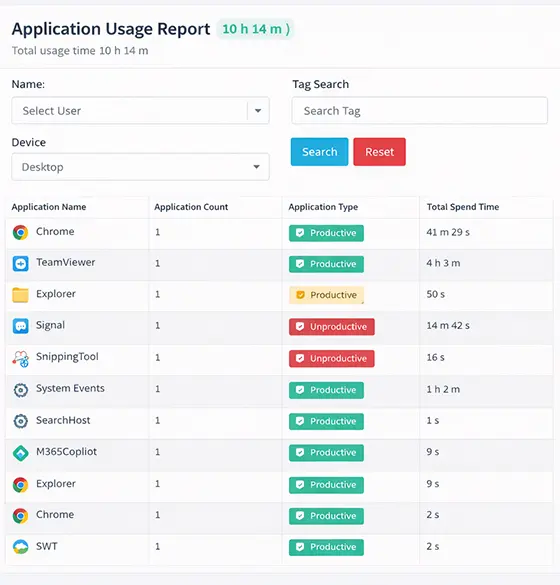
Recording time against individual tasks helps teams understand which activities require more effort than expected. For example, a marketing project may include keyword research, content creation, design, and performance analysis.
When employees record time against these activities, managers can compare estimated hours with actual hours. This information helps improve future project estimates.
2. Identify Project Delays Early
A task that consistently takes longer than planned may indicate unclear requirements, limited resources, or unexpected technical challenges.
Reviewing time records alongside task status helps managers investigate these issues early. They can clarify requirements, provide additional support, or adjust deadlines before a small delay affects the entire project.
3. Improve Team Workload Management
Assigning too many tasks to one employee can create bottlenecks, while other team members may have available capacity. Time records provide additional context for understanding workload distribution.
Managers can use this information to assign responsibilities more fairly and balance priorities across the team.
4. Simplify Timesheet Reviews
Manual timesheets can require considerable administrative effort, especially when employees work on several projects. Digital time-tracking systems can make it easier to organize work-hour records, review timesheets, and prepare information for payroll or client billing.
Businesses should establish clear policies explaining how employees record time and how managers review the information.
Best Practices for Implementing Time Tracking Software
Choosing a tool is only one part of creating an effective time-tracking process. Businesses should also establish simple procedures that employees can follow consistently.
Consider these best practices:
Define clear objectives: Decide whether tracking is intended for project estimation, attendance, billing, or workload planning.
Choose appropriate software: Select a solution that matches your team's size, workflows, reporting needs, and budget.
Use project-based categories: Organize records by project and task so that the data remains useful.
Review reports regularly: Check actual hours against estimates and investigate significant differences.
Communicate transparently: Explain what information is collected, who can access it, and how it will be used.
Focus on outcomes: Use time data to improve workflows rather than judging employees solely by the number of hours recorded.
Businesses evaluating digital solutions can explore DeskTrack's time tracking software to learn more about organizing employee work-time records and supporting workforce management.
How to Measure the Results of Time Tracking
To understand whether a time-tracking process is helping, businesses should monitor relevant performance indicators instead of collecting data without a clear purpose.
Useful measurements include:
Project estimation accuracy: Compare planned hours with actual hours.
On-time project completion: Monitor how frequently projects meet their deadlines.
Task completion time: Identify recurring delays or inefficient processes.
Timesheet completion rate: Check whether employees submit accurate records consistently.
Workload balance: Review whether tasks and project hours are distributed appropriately.
These measurements should be considered alongside project complexity, employee responsibilities, and work quality. A higher number of tracked hours does not automatically mean better performance.
Conclusion
Effective project planning requires realistic estimates, clear priorities, balanced workloads, and reliable information. Time Tracking for Employees can help organizations understand how working hours are distributed, recognize project bottlenecks, and improve future planning decisions.
By choosing suitable software, establishing transparent policies, and reviewing meaningful performance indicators, businesses can create a more organized approach to project management. The goal is not simply to record hours but to use accurate information to improve workflows, manage resources effectively, and deliver projects on time.