
UK Tax Codes Explained: All the Information You Need in 2025
-

- Published Updated
- 1,301 views
To make sure you don't pay too much or too little Income Tax, you need to know what your UK tax code means. At first, tax codes can look like a secret language with letters and numbers that don't make sense. But they are meant to show your Personal Allowances, extra income, benefits, and any special tax situations you may have. If you're a PAYE employee in London, a landlord, or a director, having the right code can help you save money and stress. This guide from Taxaccolega, your trusted UK accounting partner, covers everything you need to know about tax codes, including updates for 2025, real-life examples, and useful tips.
What is a tax code?
A tax code is basically a list of rules for your employer or pension provider about how much Income Tax to take out of your pay or pension. HMRC figures out this code based on your situation and sends it to your employer.
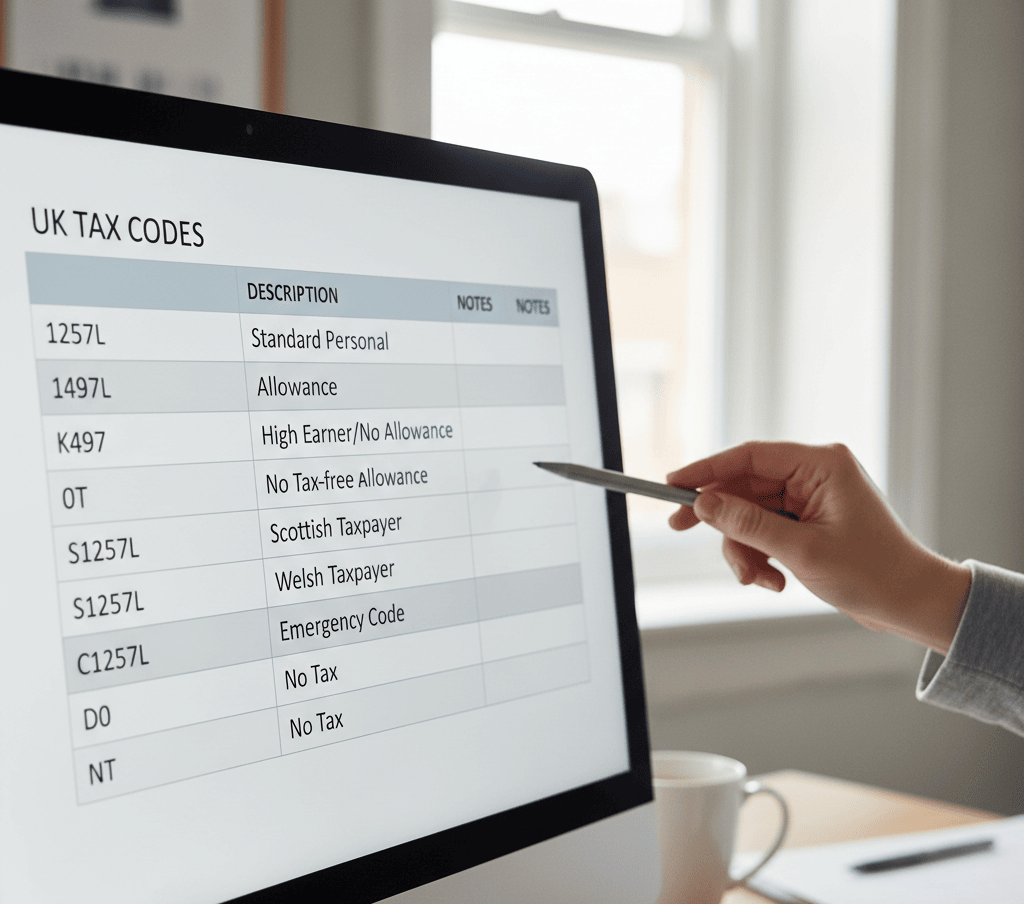
For example, if your tax code is 1257L, it means that in the 2024/25 tax year, you can keep £12,570 of your income tax-free. Anything over that is taxed at the normal Income Tax rates. Then, your employer uses this code to figure out how much to take out of your paycheck each month for PAYE.
Do Self-Employed People Get a Tax Code?
No, self-employed individuals do not receive a tax code. Instead, they are assigned a Unique Taxpayer Reference (UTR) and pay their taxes through the Self Assessment system. Your UTR never changes, even if you temporarily stop self-employment and later return.
Self-employed people calculate their own tax liability at the end of each fiscal year, and HMRC collects it via Self Assessment returns. If you’re self-employed and also have a PAYE job, that PAYE income will be subject to its own tax code while your self-employed earnings are handled separately.
Where Can You Find Your Tax Code?
Tax codes can change frequently depending on your circumstances. You can find yours in several places:
A letter from HMRC detailing your tax code.
Your payslip from your employer.
The HMRC online account or mobile app.
Employer payroll communications.
Checking your tax code regularly ensures you’re not overpaying, particularly if you have multiple income sources or company benefits. Taxaccolega often assists employees and employers in reviewing these codes to avoid costly mistakes.
How Are Tax Codes Structured?
Tax codes consist of a number and a letter, each with specific meanings:
Number: Typically represents your Personal Allowance.
Letter: Indicates adjustments, special circumstances, or emergency codes.
Sometimes, codes only include letters, which usually signal an emergency tax situation or other specific adjustments.
Understanding Letters and Numbers in Tax Codes
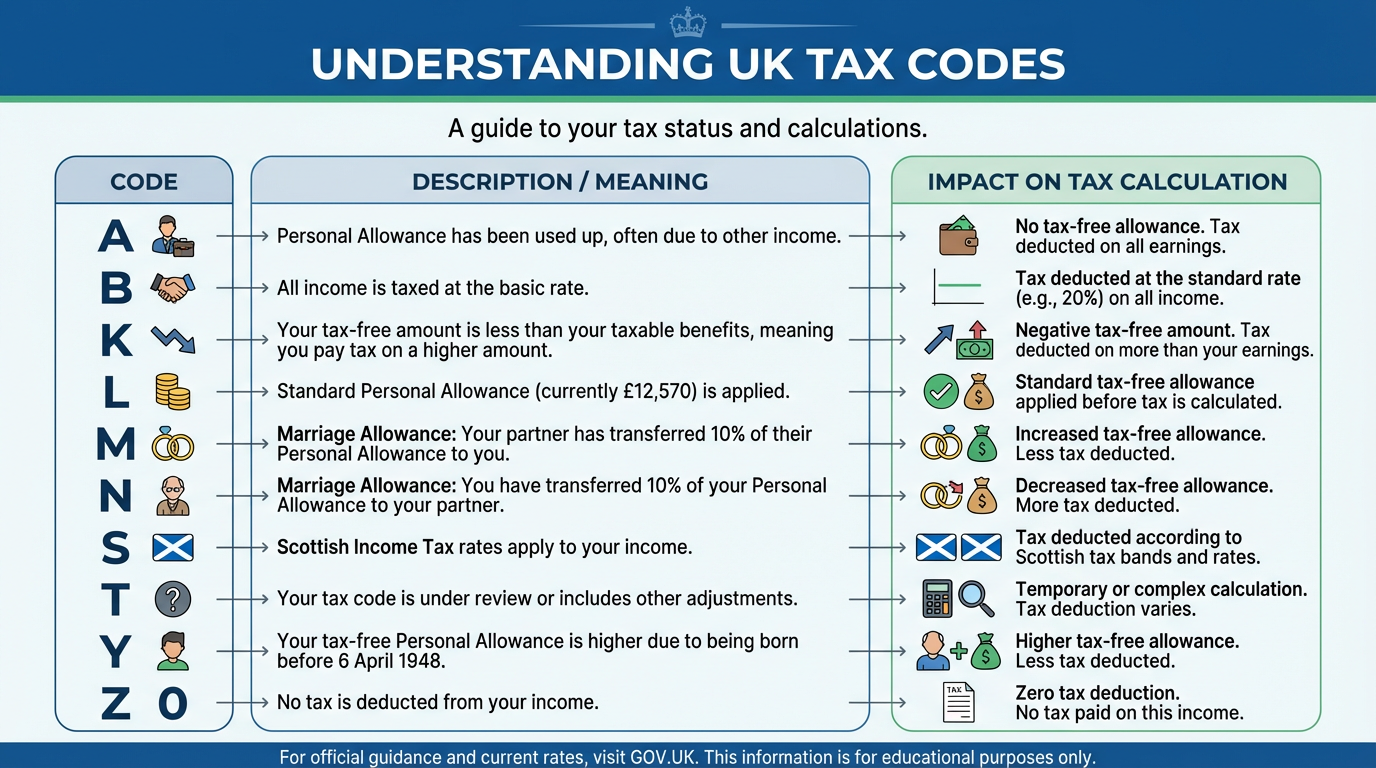
Here’s a detailed breakdown of the most common letters and numbers:
BR
“Basic Rate” code. All income taxed at 20%, no Personal Allowance.
Common for second jobs or if HMRC hasn’t issued your full tax code yet.Example: A second part-time job taxed entirely at 20%.
C, C0T, CBR, CD0, CD1 (Wales only)
“C” denotes Welsh tax.
Functionally identical to English codes (e.g., 1257C = £12,570 allowance).
D0 / D1
Higher and additional rate codes for income above thresholds.
D0: 40% tax on secondary income.
D1: 45% tax on secondary income exceeding £125,140.
K
Applied when you owe tax from prior years or have untaxed benefits.Example: Owing £14,000 may result in K143, increasing taxable income for PAYE.
L
Standard Personal Allowance code.Example: 1257L = £12,570 allowance.
M / N
Marriage Allowance adjustments:
M: Received 10% from partner.
N: Transferred 10% to partner.
T
HMRC requires additional info to finalise your allowances.
0T
Zero Personal Allowance, often for new starters or unknown circumstances.
NT
No tax owed (non-residents or bankruptcy cases).
S, S0T, SBR, SD0–SD3 (Scotland only)
Scottish equivalents of English codes with Scottish tax rates.
Emergency Codes: W1, M1, X
W1: Weekly salary earners.
M1: Monthly salary earners.
X: No info available—temporary measure.
2025 UK Tax Code Updates
For 2025, HMRC is adjusting how codes are applied:
More BR codes for second jobs or multiple income streams.
Aggressive K codes to recover underpaid Self Assessment tax or account for benefits.
Faster emergency codes (W1/M1/X) for new starters.
Mid-year adjustments more frequent.
Self Assessment recovery via PAYE—previous underpayments may be deducted silently from your salary.
These updates particularly affect directors, freelancers, landlords, and employees with multiple jobs.
Get Help with Your Tax Codes
Incorrect tax codes can lead to overpaying HMRC, lost cash flow, and frustration. Taxaccolega assists employees, freelancers, and employers in verifying and correcting tax codes. We also help businesses ensure their employees have the correct codes, avoiding overpayment and compliance issues.
Frequently Asked Questions About UK Tax Codes
1. What does a tax code mean?
It tells your employer how much Income Tax to deduct from your pay.
2. Where can I find my tax code?
Payslips, HMRC online account, letters, or the mobile app.
3. Do self-employed people get a tax code?
No. They use a UTR and Self Assessment returns.
4. What do the numbers mean?
Reflect your tax-free Personal Allowance (e.g., 1257L = £12,570).
5. What do the letters mean?
L = standard allowance
M/N = Marriage Allowance
K = untaxed income or benefits
BR, D0, D1 = basic, higher, additional rates
S/C = Scotland or Wales
6. What is an emergency code?
Used when HMRC lacks full info (W1, M1, X).
7. Why would I have a K code?
Recover underpayments or account for benefits in kind.
8. How often do codes change?
Whenever circumstances change, including second jobs, benefits, or previous tax owed.
9. What if my tax code is wrong?
You may overpay or underpay. Check with HMRC or your payroll.
10. What are the 2025 updates?
More BR and K codes, faster emergency codes, mid-year adjustments, Self Assessment recovery via PAYE.
11. Can employers check tax codes?
Yes, using HMRC tools, but professional review is recommended.
By understanding UK tax codes and keeping them accurate, you can save money and avoid headaches. Taxaccolega helps individuals and businesses across London, Croydon, and UK-wide navigate these codes, ensuring correct deductions and maximising allowances.
