OpVoc – share you voice in social media
-

- Published Updated
- 8,924 views
Definition:
In recent years, social media has evolved far beyond simple text posts and static images. Platforms have shifted toward video content, short-form entertainment, live streaming, and more immersive communication styles. While these formats have transformed how people interact online, one of the most powerful and still underused forms of digital communication remains voice.
Voice communication brings something unique that text and images cannot fully replicate: emotion, tone, personality, and authenticity. When a person speaks, their feelings are naturally embedded in their voice. This creates a stronger emotional connection between users compared to written messages, which often feel neutral or limited in expression.
Unlike text, voice carries subtle human signals such as hesitation, excitement, humor, sadness, or urgency. These signals make communication more realistic and closer to real-life interaction. This is one of the main reasons why voice-based platforms are starting to gain attention in the digital world.
This is where new platforms like OpVoc are introducing a different approach to social interaction online.
about opvoc:
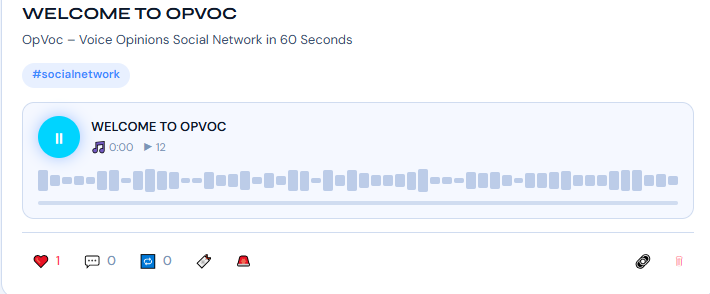
OpVoc is a voice-based social platform designed to allow users to share short audio opinions instead of traditional text posts. Instead of typing long messages, users simply speak their thoughts, record them, and share them with a community that listens and responds through voice interaction.
The idea behind this approach is simple but powerful: communication should feel natural, fast, and human. Typing can sometimes slow down expression, especially when users want to share quick reactions, emotional opinions, or spontaneous thoughts. Voice removes that barrier and allows communication to become more immediate and fluid.
Another important aspect of voice-based platforms is authenticity. On traditional social media, users often carefully edit their text before posting. They may delete sentences, rewrite ideas, or adjust tone to appear a certain way. While this improves clarity, it also reduces spontaneity and can make interactions feel less genuine.
Voice, on the other hand, is much harder to fake. It reflects real emotions in real time, without heavy editing or filtering. This creates a more honest form of communication where users can express themselves naturally. As a result, conversations feel more real and engaging.
OpVoc focuses on short-form voice content, which makes it easy for users to engage without spending too much time. Instead of long posts, essays, or complicated threads, users can simply express a thought in a few seconds and move on. This keeps the platform dynamic, lightweight, and suitable for fast-paced digital environments.
From a user experience perspective, voice-based interaction also improves accessibility. Many people find speaking faster and easier than typing, especially on mobile devices. This is particularly useful in situations where typing is inconvenient or time-consuming.
It also opens new possibilities for users who prefer speaking over writing. Not everyone expresses themselves best through text. Some people communicate more naturally through speech, and voice-based platforms give them a better way to participate in online communities.
As technology continues to evolve, we are seeing a broader shift toward more human-centered digital experiences. Video platforms changed how we consume content, transforming entertainment and social media into visual experiences. Now, voice is emerging as the next stage in this evolution.
Voice-based communication adds a layer of intimacy that neither text nor video can fully replace. It sits between the simplicity of text and the richness of video, offering a balance of speed and emotional depth. This makes it ideal for quick discussions, opinions, reactions, and social engagement.
Platforms like OpVoc are part of this shift, exploring how voice can replace or complement traditional text-based communication. Instead of focusing only on writing or scrolling, users can now participate in conversations in a more natural and expressive way.
This opens new possibilities for social interaction, community building, and digital expression. People can share thoughts more freely, react more quickly, and engage in discussions that feel closer to real-life conversations.
In the future, we may see more platforms adopting voice-first communication models, where speaking becomes the primary way users interact online. This could change how social media works entirely, making it more personal, emotional, and human-centered.
As digital communication continues to evolve, voice may become one of the most important tools for online interaction. It bridges the gap between technology and human expression in a way that feels natural and intuitive and it's easy to use.
You can explore more about this concept here:
👉 https://opvoc.com/