How to Weatherproof a Treehouse Structure
-

- Published Updated
- 4,619 views
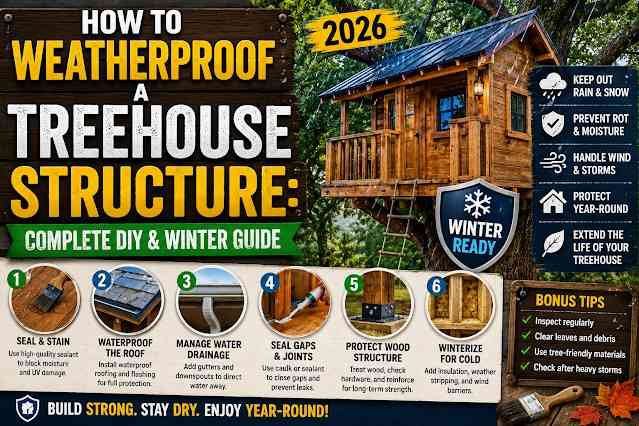
A treehouse can be a great addition to a backyard, but because it is exposed to outdoor conditions, it needs protection from rain, wind, sunlight, humidity, and changing temperatures. Learning how to weatherproof a treehouse structure can help protect the wood, improve comfort, and extend the life of the entire structure. Good weatherproofing is not just about making the treehouse waterproof; it is also about controlling moisture and protecting materials from long-term weather damage.
Why Treehouse Weatherproofing Is Important
Outdoor wood is constantly exposed to moisture and temperature changes. Rain can enter through the roof, windows, doors, and small gaps, while humidity can keep wooden surfaces damp. Over time, this can contribute to mold, mildew, cracking, swelling, and wood rot in a treehouse.
Proper treehouse weatherproofing helps reduce these problems and keeps the structure in better condition. It can also make an enclosed treehouse more comfortable during different seasons.
Choose Weather-Resistant Treehouse Materials
The materials used during construction have a major effect on the durability of a treehouse. Exterior-grade plywood, pressure-treated lumber, and naturally durable wood are commonly considered for outdoor structures.
Choosing weather-resistant treehouse materials can help the structure withstand rain and humidity more effectively. Outdoor-rated screws, brackets, and other hardware can also be important because ordinary metal fasteners may corrode when exposed to moisture.
The right material depends on the treehouse design, local climate, budget, and amount of exposure to the elements.
Waterproof a Treehouse Roof
The roof provides the first line of protection against rain. If the roof allows water to enter, moisture can eventually reach the ceiling, walls, and floor.
A waterproof treehouse roof should use roofing materials designed for outdoor exposure. Metal roofing, asphalt shingles, and other weather-resistant roofing systems can be suitable depending on the structure.
Roof overhangs can also help keep rain away from exterior walls and windows. Keeping the roof in good condition is one of the most important parts of long-term treehouse maintenance.
Protect Treehouse Wood From Rain
Rainwater can cause significant damage when it remains on wooden surfaces for extended periods. Horizontal surfaces such as steps, floors, railings, and ledges can be particularly vulnerable.
Protecting treehouse wood from rain involves reducing areas where water can collect and allowing wet surfaces to dry properly. Exterior wood stains and sealers can provide additional protection against moisture.
Regular inspection is useful because damaged or peeling finishes may no longer provide the same level of protection.
Use an Exterior Wood Sealer
An exterior wood sealer for a treehouse can help reduce moisture absorption and protect exposed timber. Some wood sealers also provide UV protection, which can help slow fading and surface deterioration caused by sunlight.
The best wood sealer depends on the type of wood, climate, and desired appearance. Clear sealers can maintain the natural appearance of wood, while stains can add color while providing protection.
Exterior products should always be suitable for outdoor wood and applied according to the manufacturer's instructions.
Prevent Wood Rot in a Treehouse
Wood rot usually becomes a concern when wood stays wet for long periods. Areas around the roof, floor, joints, and lower sections of walls can be more exposed to moisture.
Preventing wood rot in a treehouse starts with keeping vulnerable areas dry and allowing adequate airflow. Signs of possible wood deterioration can include soft areas, dark discoloration, cracking, fungal growth, or an unusual musty smell.
Finding these signs early can make treehouse maintenance much easier.
Weatherproof Treehouse Windows and Doors
Windows and doors can become entry points for rain and drafts if they are not properly protected. Gaps around frames may also become larger as wood naturally expands and contracts.
Weatherproof treehouse windows and doors can include suitable weatherstripping, exterior-grade sealants, and proper flashing around openings. These features help limit water intrusion while maintaining the normal movement of the structure.
Good ventilation should still be maintained because excessive sealing without airflow can contribute to condensation.
How to Weatherproof a Treehouse Structure
Treehouse Floor Waterproofing
The floor is another area that deserves attention. Water can reach the floor from rain, leaks, or moisture underneath the structure. Poor drainage can leave parts of the floor damp.
Treehouse floor waterproofing involves using suitable outdoor flooring materials and maintaining proper drainage and airflow. Keeping the underside of the floor ventilated can help moisture evaporate after wet weather.
Damaged floorboards should be inspected rather than simply covered with paint or sealant.
Protect a Treehouse From Wind and Sun
Rain is not the only threat to an outdoor structure. Strong winds can affect roofing, siding, doors, windows, and other exterior components. A treehouse also experiences natural movement because the supporting tree can move during windy conditions.
Treehouse wind protection therefore depends on the design and construction of the structure. Roofing materials and exterior components should be regularly checked after severe storms.
Sunlight can also damage exposed wood. UV rays can fade finishes and gradually affect the surface of timber. Exterior stains and finishes containing UV protection can help maintain the appearance of exposed wood.
Treehouse Ventilation and Moisture Control
A weatherproof treehouse should not be completely sealed without considering ventilation. Humid air can become trapped inside, leading to condensation and moisture problems.