Why 0.9% Sodium Chloride for Injection Remains the Foundation of Crisis Medicine
-

- Published Updated
- 904 views
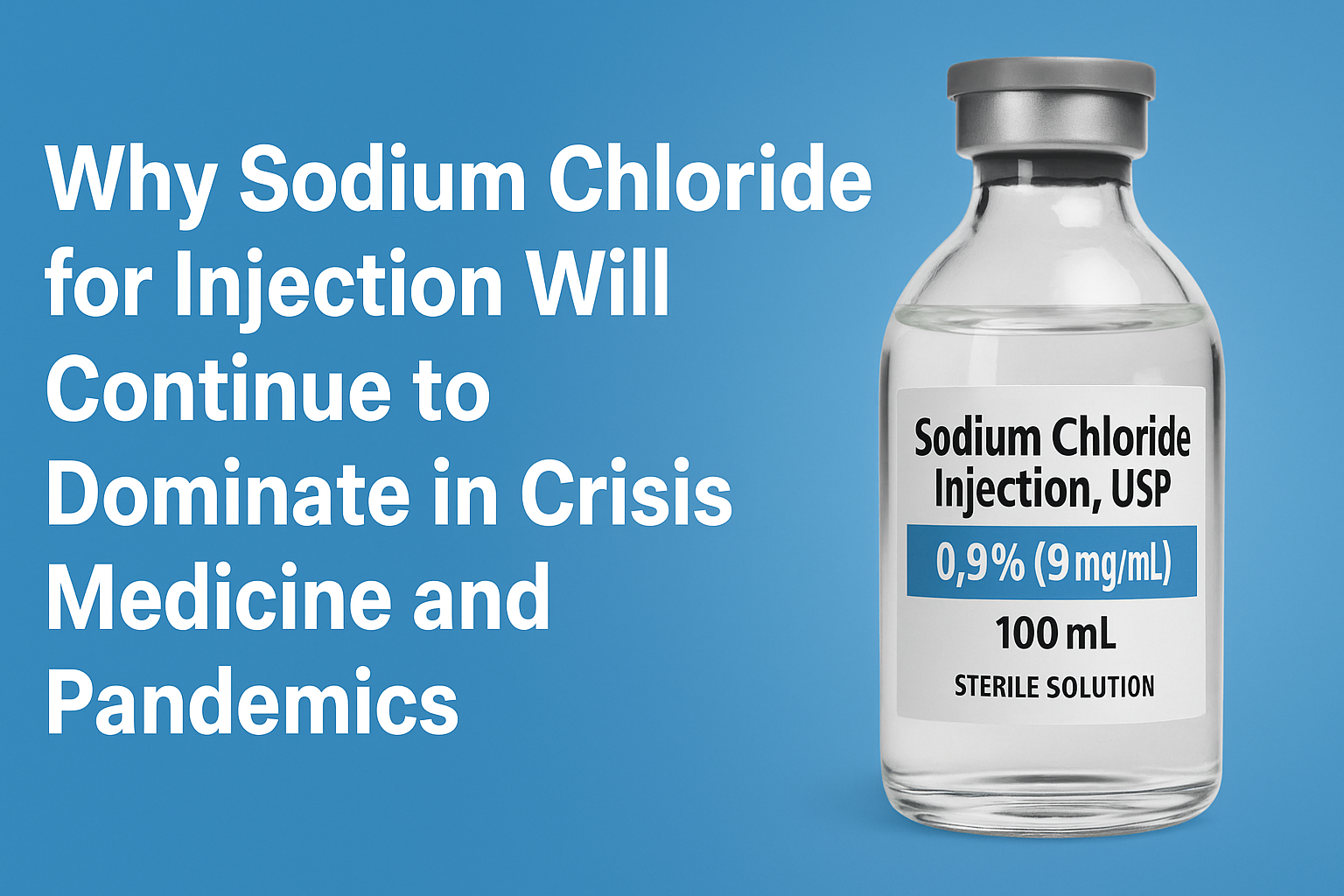
In emergency rooms and field hospitals, sodium chloride for injection is the default intravenous fluid for resuscitation, medication delivery, and basic patient stabilization. This article explains why sodium chloride for injection will continue to dominate crisis medicine and pandemics, outlining clinical roles, logistical strengths, and practical steps for providers and administrators.
0.9% sodium chloride (normal saline) remains the backbone of emergency and pandemic care because it is clinically versatile, simple to manufacture and store, widely available in global supply chains, and regulatorily familiar. Use the Crisis Fluid Framework (CFF) checklist below to prioritize allocation, training, and substitution decisions during shortages.
sodium chloride for injection: why it remains essential
Clinical versatility and low barrier to use
0.9% sodium chloride (also called normal saline or isotonic saline) is compatible with most intravenous medications, usable for fluid resuscitation, and safe for large-scale infusion when balanced solutions are not required. In triage and initial stabilization its predictable osmolarity and electrolyte content reduce clinical complexity—an advantage when staff are stretched thin during pandemics.
Supply-chain and manufacturing advantages
Manufacturing normal saline uses few raw inputs (sodium chloride, sterile water, packaging) and well-established sterile filling lines. That simplicity lowers the risk of production bottlenecks compared with compounded or multicomponent fluids. Central health agencies such as the U.S. Food and Drug Administration monitor and publish guidance on drug and sterile supply shortages, which helps hospitals plan substitutions and allocations during crises (FDA drug shortage information).
Logistics: storage, transport, and point-of-care use
Normal saline tolerates a wide range of storage and transport conditions compared with blood products or temperature-sensitive biologics. Single-use bag sizes (50 mL to 1 L) are adaptable to different clinical environments—from ambulances to ICU—and simplify inventory management for emergency stockpiles.
Crisis Fluid Framework (CFF) checklist
A named, repeatable checklist aids decisions during shortages and surges.
- Categorize demand: identify high-priority uses (resuscitation, medication vehicle, wound irrigation).
- Force-match supply: map available bag sizes and concentrations to prioritized clinical uses.
- Fallbacks: define acceptable alternatives and substitution rules (e.g., balanced crystalloids vs. saline where clinically appropriate).
How to implement the CFF
Assign a clinical lead for inventory audits, create tiered allocation lists, and train triage staff on substitution protocols. Keep documented thresholds for contacting regional stockpiles or activating mutual aid agreements.
Real-world scenario
During a respiratory pandemic surge in a regional hospital, the emergency department diverted saline bags intended for elective procedures to resuscitation bays after a rapid inventory audit. Using the CFF checklist, the pharmacy repurposed 500 mL bags for medication dilution and retained larger 1 L bags for fluid resuscitation. This preserved critical supply for the highest-acuity patients while deferring non-essential uses.
Practical tips for hospitals and clinicians
- Maintain a rotating emergency stock equal to 2–4 weeks of expected surge usage based on historical peak demand.
- Standardize bag sizes and labeling to speed bedside selection and reduce medication errors.
- Train non-critical staff on basic IV setup and saline handling to expand capacity during surges.
- Document acceptable substitutions in electronic health records to ensure auditability and consistent practice.
Trade-offs and common mistakes
Trade-offs
Choosing normal saline over balanced crystalloids can be faster and simpler in a crisis, but balanced fluids may reduce the risk of hyperchloremic metabolic acidosis in some patients. The clinical trade-off should be decided by severity, availability, and monitoring capability.
Common mistakes
- Assuming interchangeability without defined protocols—different fluids have distinct physiologic effects and drug compatibilities.
- Failing to update clinicians on allocation rules during a shortage—creates ad-hoc, inconsistent use.
- Ignoring small-bag inventory—50–100 mL bags may be the limiting factor for medication administration.
Core cluster questions
- What are the primary clinical uses of 0.9% sodium chloride in emergency medicine?
- How should hospitals prioritize IV fluid allocation during a supply shortage?
- When are balanced crystalloids preferred over normal saline in critical care?
- What storage and transport practices extend the shelf life of sterile saline bags?
- How can regional mutual aid support sodium chloride shortages during pandemics?
Related terms and synonyms
Normal saline, 0.9% NaCl, isotonic saline, intravenous fluids, crystalloids, balanced crystalloid solutions, Ringer's lactate.
References and standards
Regulatory and public health agencies such as the U.S. Food and Drug Administration (FDA), Centers for Disease Control and Prevention (CDC), and World Health Organization (WHO) provide operational guidance for managing drug and medical supply shortages during public health emergencies.
FAQ
Is sodium chloride for injection essential during pandemics?
Yes. It functions as a universal IV fluid for resuscitation, medication dilution, and basic patient support. Its manufacturing simplicity and broad clinical utility make it a frontline supply during pandemic surges.
What are acceptable alternatives if normal saline supply is limited?
Balanced crystalloids (e.g., lactated Ringer's) are common alternatives for resuscitation, while sterile water for irrigation or appropriately concentrated electrolyte solutions may be used for specific medication dilution—only under protocolized guidance.
How should hospitals track sodium chloride inventory during a crisis?
Use daily inventory audits tied to real-time usage metrics, trigger points for conservation protocols, and clear lines to regional stockpiles or suppliers for surge resupply.
Can using saline for non-urgent purposes worsen shortages?
Yes. Prioritizing non-essential uses—routine flushes or elective irrigation—without conservation policies can deplete supplies rapidly during a surge. Implement the CFF checklist to prevent this.
Are there safety concerns with large-volume saline resuscitation?
Monitor for hyperchloremic metabolic acidosis and fluid overload in patients receiving large volumes. Adjust fluid choice based on comorbid conditions (renal dysfunction, heart failure) and available monitoring capability.