How to Choose the Right Mobile App Development Company in the USA: A Practical Selection Guide
-

- March 17th, 2026
- 515 views

Get a free topical map and start building content authority today.
Selecting the right mobile app development partner is a strategic decision. A mobile app development company in the USA can influence time-to-market, security, compliance, cost predictability, and long-term product success. This guide explains why the choice matters, how to evaluate vendors, and offers a repeatable framework to make the decision defensible.
- Why the vendor choice affects product quality, security, and budget.
- A named vendor-selection framework (CAPS) with a practical checklist.
- Actionable tips, common mistakes, and a short real-world scenario.
Detected intent: Informational
Why choosing the right mobile app development company in the USA matters
Working with the right mobile development partner reduces rework, improves user experience, and helps meet regulatory and platform requirements (App Store, Google Play). A vendor that understands platform differences, accessibility standards, and performance profiling will produce a more maintainable product. When choosing between local, hybrid, or offshore teams, align capabilities with business goals — for example, compliance-heavy fintech apps have different needs than consumer games.
The CAPS vendor-selection framework (Capabilities, Alignment, Processes, Security)
Use the CAPS framework to structure evaluations and compare vendors consistently.
Capabilities
Assess technical skills, platform expertise (iOS, Android, React Native, Flutter), portfolio quality, and domain knowledge. Look for published case studies, code samples, and references that demonstrate relevant experience.
Alignment
Check cultural fit, communication style, timezone overlap, and product mindset. Alignment means the vendor treats the project like a product—prioritizing metrics, roadmap planning, and iterative releases—rather than only delivering specifications.
Processes
Evaluate development lifecycle, QA automation, CI/CD practices, sprint cadence, and change management. A mature process reduces surprises and clarifies ownership for deliverables, bug fixes, and feature extensions.
Security
Verify security practices: code reviews, dependency management, data encryption, and incident response. For guidance on risk management and cybersecurity best practices, consult official standards such as the NIST Cybersecurity Framework: https://www.nist.gov/cyberframework.
How to choose a mobile app development company: practical steps
- Define business outcomes and non-functional requirements (performance, uptime, compliance).
- Create a short requirements briefing and share with 3–5 prequalified vendors.
- Request a proposal with architecture sketch, milestones, and a commercial model (fixed-price, time & materials, hybrid).
- Score each proposal using the CAPS checklist and run a 2–4 week paid discovery or spike to validate assumptions.
- Negotiate SLAs, IP ownership, and an initial pilot scope before committing to a larger engagement.
Checklist: CAPS vendor-selection checklist
- Capabilities: Relevant apps in portfolio, published case studies, sample code or technical blog posts.
- Alignment: Communication plan, key contacts, cultural fit score.
- Processes: CI/CD, automated tests, sprint demo cadence, issue tracking visibility.
- Security: Threat model, data handling, third-party dependency policy, compliance certifications.
- Commercials: Clear pricing, payment milestones, change-order process, warranty period.
Real-world example: a fintech startup selection scenario
A fintech startup needed a consumer banking app with strong security, multi-factor authentication, and PSD2-like consent flows. The shortlist included one boutique US team with fintech experience, one large agency with broad capabilities, and an offshore firm with lower rates. Applying the CAPS framework favored the boutique US vendor: higher domain knowledge (Capabilities), closer timezone overlap and product focus (Alignment), mature CI/CD and automated testing (Processes), and documented security controls aligned to regulatory expectations (Security). The startup ran a paid 3-week discovery sprint to validate the vendor's approach before signing a longer contract, reducing risk and clarifying scope.
Practical tips for vetting vendors
- Ask for a short technical vignette: request a one-page architecture diagram showing how the team would handle authentication, offline sync, and push notifications.
- Verify references with questions about code quality, responsiveness, and post-launch support.
- Include a small, time-boxed paid pilot to reveal working style, toolchain, and actual delivery speed.
- Require transparency on third-party libraries and a plan for dependency updates and vulnerability remediation.
Common mistakes and trade-offs
Common mistakes
- Choosing solely on price — this often shifts costs to rework, security fixes, and missed deadlines.
- Skipping a paid discovery phase — assumptions about architecture or integrations lead to scope creep.
- Ignoring platform-specific needs — iOS and Android differ in UI patterns, background processing, and app lifecycle behavior.
Trade-offs to consider
Cost vs. speed: Higher hourly rates may accelerate time-to-market through experienced teams and fewer iterations. Local vs. offshore: Local vendors provide easier collaboration and compliance visibility; offshore firms may offer cost savings but require stronger governance. Fixed-price vs. time & materials: Fixed-price reduces budget volatility but can lock in suboptimal specs; time & materials adds flexibility but requires rigorous scope control.
Core cluster questions for related coverage
- What are the key criteria for evaluating mobile app development firms?
- How long does it typically take to build a consumer mobile app?
- What are standard pricing models for US mobile app development services?
- How can startups run a low-risk pilot with an app development company?
- Which security and compliance checks should be included in vendor contracts?
Measuring success after vendor selection
Define measurable KPIs before work begins: release frequency, crash-free user percentage, API latency, user retention, and time-to-implement high-priority changes. Include acceptance criteria in the contract and schedule regular retrospectives to keep delivery aligned with business outcomes.
FAQ: Why choosing the right mobile app development company in the USA matters?
How do costs differ between US-based and offshore app development teams?
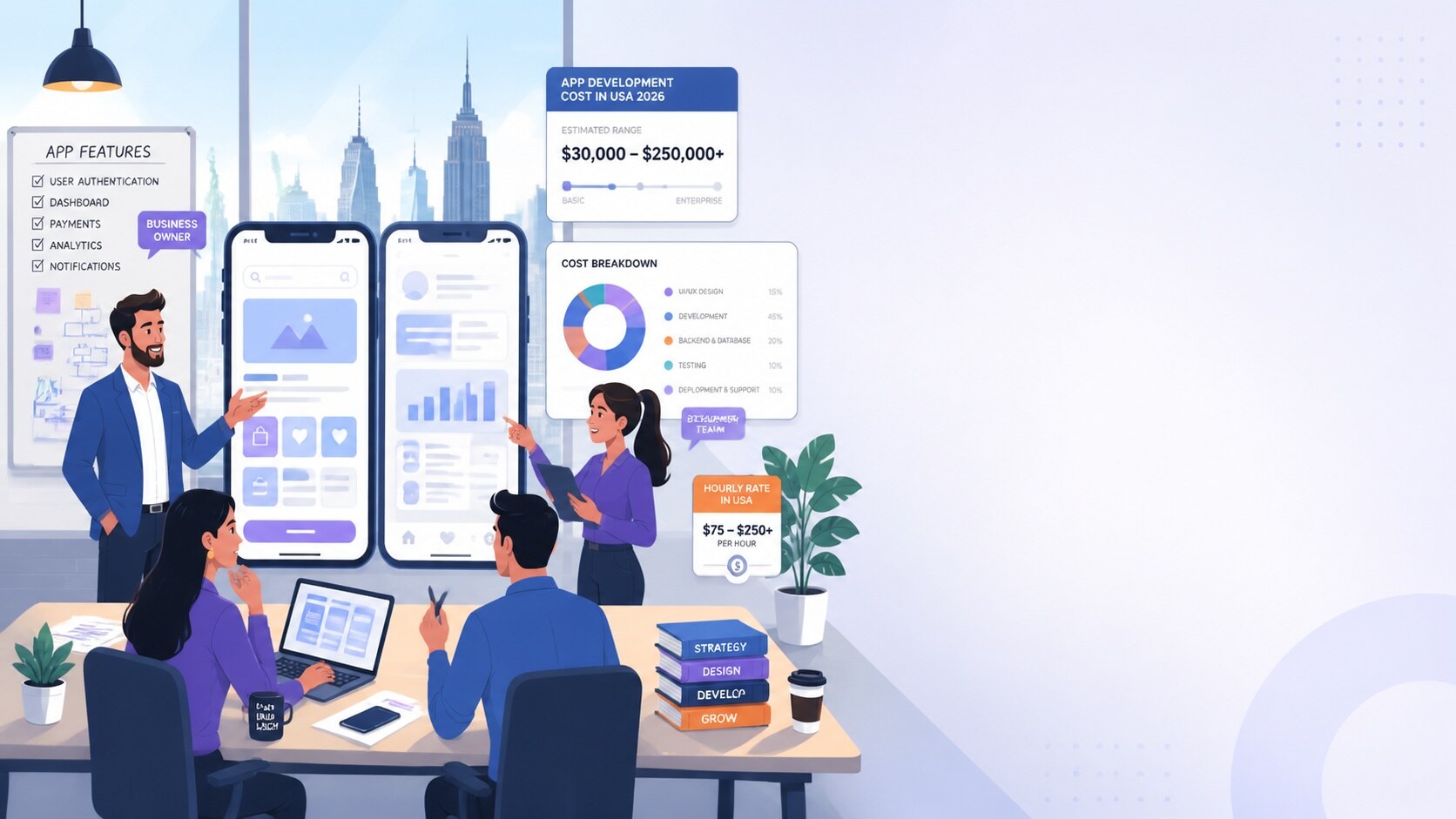
US-based teams typically charge higher hourly rates but offer advantages in timezone overlap, legal jurisdiction, and often product mindset. Offshore teams can reduce hourly costs but add management overhead and potential communication delay. Use a pilot phase to compare real delivery velocity rather than relying only on quoted rates.
What should be included in a discovery or pilot engagement?
A discovery should produce a prioritized backlog, architecture diagram, technical risks, and a timeboxed proof-of-concept that demonstrates a core flow. It should also produce a more accurate estimate for the full project.
What security and compliance requirements are important for US apps?
Common requirements include secure authentication, encryption at rest and in transit, privacy controls, and data minimization. For regulated industries, include industry standards and consult guidance from authorities such as NIST to align vendor practices with accepted frameworks.
How long should post-launch support and maintenance contracts last?
Initial support should cover at least 3–6 months post-launch for bug fixes and performance tuning. For ongoing feature development and platform updates, year-long rolling agreements are common, with defined SLAs for critical issues.
What are red flags when evaluating proposals from app development companies?
Red flags include vague deliverables, no mention of security or testing, no references, lack of a roadmap for maintenance, and unwillingness to run a small paid pilot or share sample work. A defensible selection process reduces the chance of costly surprises.