Sports Injury Prevention & Performance with 3D Skeletal Scans
-

- April 24th, 2026
- 5,849 views

FREE SEO Topical Map Generator: Find Your Next Content Ideas
Athletes often believe that improving performance is all about training harder, lifting heavier, or increasing endurance. While these factors are important, they are only part of the equation. The structure and alignment of the body play an equally critical role in how efficiently an athlete moves.
Even small imbalances in the skeletal system can affect performance, reduce efficiency, and increase the risk of injury over time. Many athletes continue to push through pain without fully understanding its root cause. In most cases, the issue is not visible through basic observation or traditional imaging methods.
Why Injuries Keep Coming Back
Recurring injuries are one of the most frustrating challenges athletes face. Even after proper treatment and rest, the same pain often returns.
This usually happens because:
- The root cause was never properly identified
- Structural imbalances remain uncorrected
- Movement patterns are influenced by hidden misalignment
For example, two athletes may follow the same training program, yet only one suffers repeated injuries. The difference often lies in their internal alignment not their effort.
Without addressing these hidden factors, recovery becomes temporary instead of permanent.
What 3D Skeletal Imaging Shows
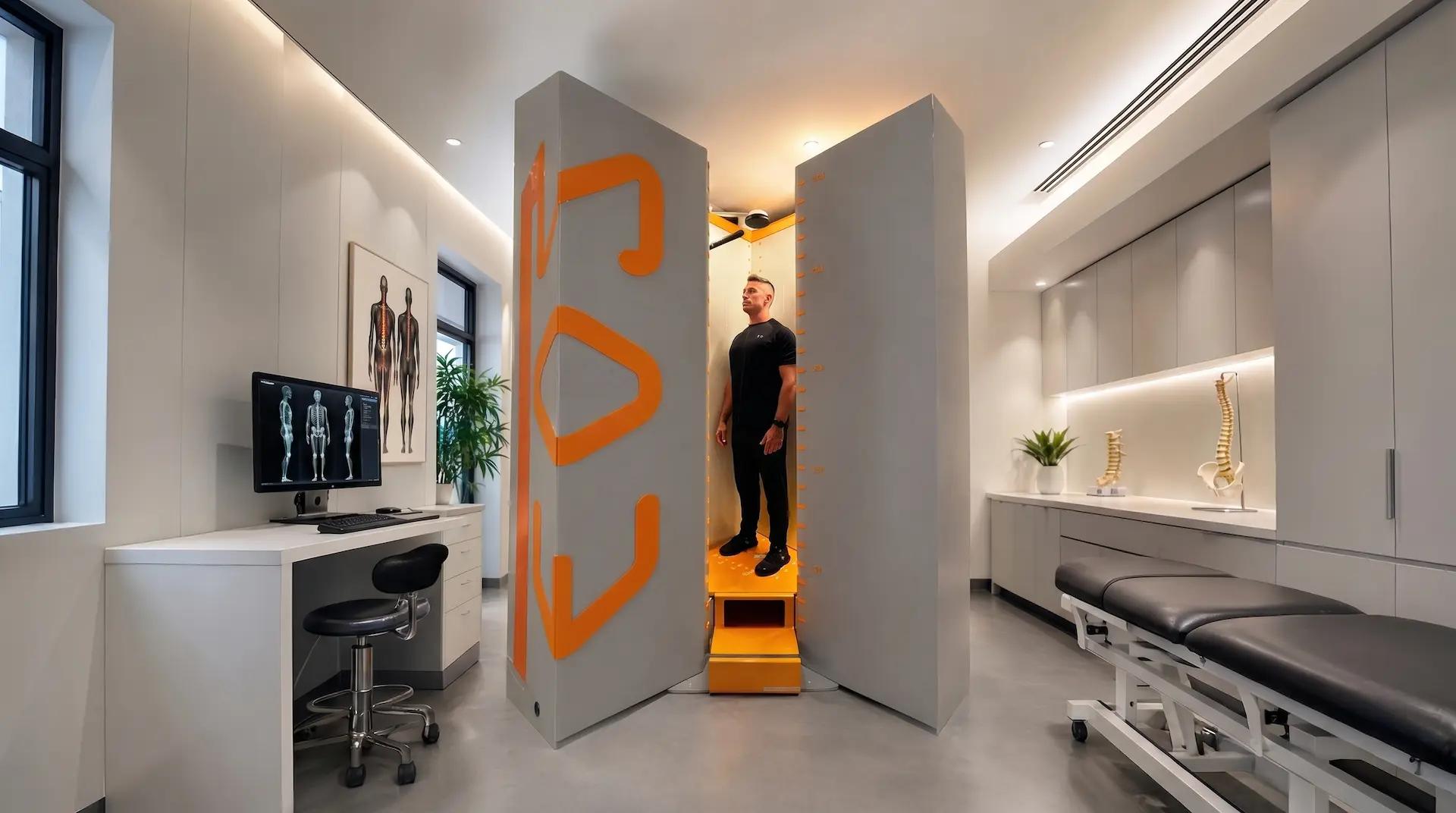
A 3D skeletal scan captures a full-body image while the athlete is standing in a natural, weight-bearing position. This is important because it reflects how the body functions during real movement.
The scan provides detailed insights into:
- Pelvic position and balance
- Spinal curvature and posture
-
Knee alignment under load
- Foot and ankle positioning
- Overall body symmetry
Unlike traditional scans, this method delivers objective, measurable data rather than visual assumptions. It allows specialists to see how different parts of the body interact with each other.
Understanding the Kinetic Chain
The human body operates as a connected system, often referred to as the kinetic chain. Every movement whether running, jumping, or lifting depends on coordination between multiple joints and muscles.
When one part of the body is misaligned:
- Other areas begin to compensate
- Stress shifts to different joints
- Movement efficiency decreases
For example:
- A rotated pelvis can affect knee tracking
- Flat feet can influence hip stability
- Spinal imbalance can reduce overall coordination
These adjustments may seem small at first but can lead to long-term performance issues and injury risks.
The Role of Postural Asymmetry
Postural asymmetry occurs when one side of the body is not properly balanced with the other. While minor differences are normal, significant imbalances can affect athletic performance.
This can lead to:
- Reduced balance and coordination
- Uneven power distribution
- Faster fatigue during activity
Over time, asymmetry forces the body to work harder to maintain stability, which increases stress on joints and muscles.
Lower Limb Alignment and Injury Risk
The alignment of the hips, knees, and ankles is critical in determining how force travels through the body. Poor alignment can place excessive stress on specific joints.
Common issues linked to misalignment include:
- Knee pain and instability
- Hip strain and discomfort
- Foot and ankle injuries
- Altered walking or running mechanics
Since these movements are repeated thousands of times during training, even small misalignments can have a significant long-term impact.
The Role of Early Detection in Injury Prevention
One of the biggest advantages of 3D skeletal scans is early detection. Many alignment issues develop gradually and remain unnoticed until they cause pain or injury.
With early assessment:
- Potential risk factors can be identified before symptoms appear
- Corrective strategies can be applied sooner
- Long-term damage can be prevented
This proactive approach shifts the focus from treatment to prevention—something that is essential for athletes aiming for long-term success.
Personalized Training Based on Structural Data
Every athlete’s body is different, which means training programs should not be one-size-fits-all.
With data from 3D scans:
- Coaches can design customized training plans
- Weak areas can be targeted more effectively
- Movement patterns can be optimized
Instead of guessing what might work, training becomes data-driven. This leads to better results and reduced injury risk.
How 3D Scans Improve Performance
Beyond injury prevention, 3D skeletal imaging plays a key role in enhancing athletic performance.
With accurate structural
- Movement becomes more efficient
- Energy is used more effectively
- Strain on joints is reduced
This allows athletes to perform at a higher level while maintaining long-term physical health.
Better alignment translates directly into smoother motion, improved endurance, and greater overall stability.
Who Can Benefit from These Scans
3D skeletal imaging is not limited to elite athletes. It can benefit a wide range of individuals, including:
- Professional athletes aiming for peak performance
- Amateur athletes dealing with recurring pain
- Runners experiencing lower limb issues
- Individuals recovering from injuries
- Young athletes during growth phases
Anyone who wants a deeper understanding of their body can benefit from this advanced assessment.
Conclusion
Athletic success is not just about effort it is also about alignment, structure, and efficiency. Hidden imbalances in the body can limit performance and increase injury risk, even in highly trained individuals.
3D skeletal scans provide a clear and accurate picture of how the body functions as a whole. By identifying and addressing these issues early, athletes can move better, train smarter, and perform more consistently. Understanding your body is the first step toward unlocking its full potential.
Take the Next Step in Injury Prevention
Better performance begins with better understanding of your skeletal alignment. A standing 3D scan offers precise insight to support safer training and recovery decisions.
Book Your Appointment!
FAQs
1. How do 3D skeletal scans help athletes?
They identify alignment issues that affect movement efficiency and biomechanics. This helps improve performance while reducing the risk of injuries.
2. Are these scans only for professionals?
No, athletes at all levels can benefit from better body awareness. Even beginners can use them to improve posture and prevent future problems.
3. Can scans prevent injuries?
They detect risk factors like imbalances and misalignment early. This allows corrective action before injuries become serious.
4. What problems can they detect?
They reveal issues in posture, joint alignment, and movement patterns. They can also highlight asymmetries that impact performance.
5. Do they replace physiotherapy?
No, they do not replace treatment or rehabilitation programs. They support physiotherapy by providing accurate structural insights.
6. How often should an athlete get scanned?
It depends on training intensity and individual needs. Regular scans help track progress and catch new issues early.