BIM Course in NCR: Build Industry-Ready Skills with BIM Certification
-
- Published Updated
- 43 views
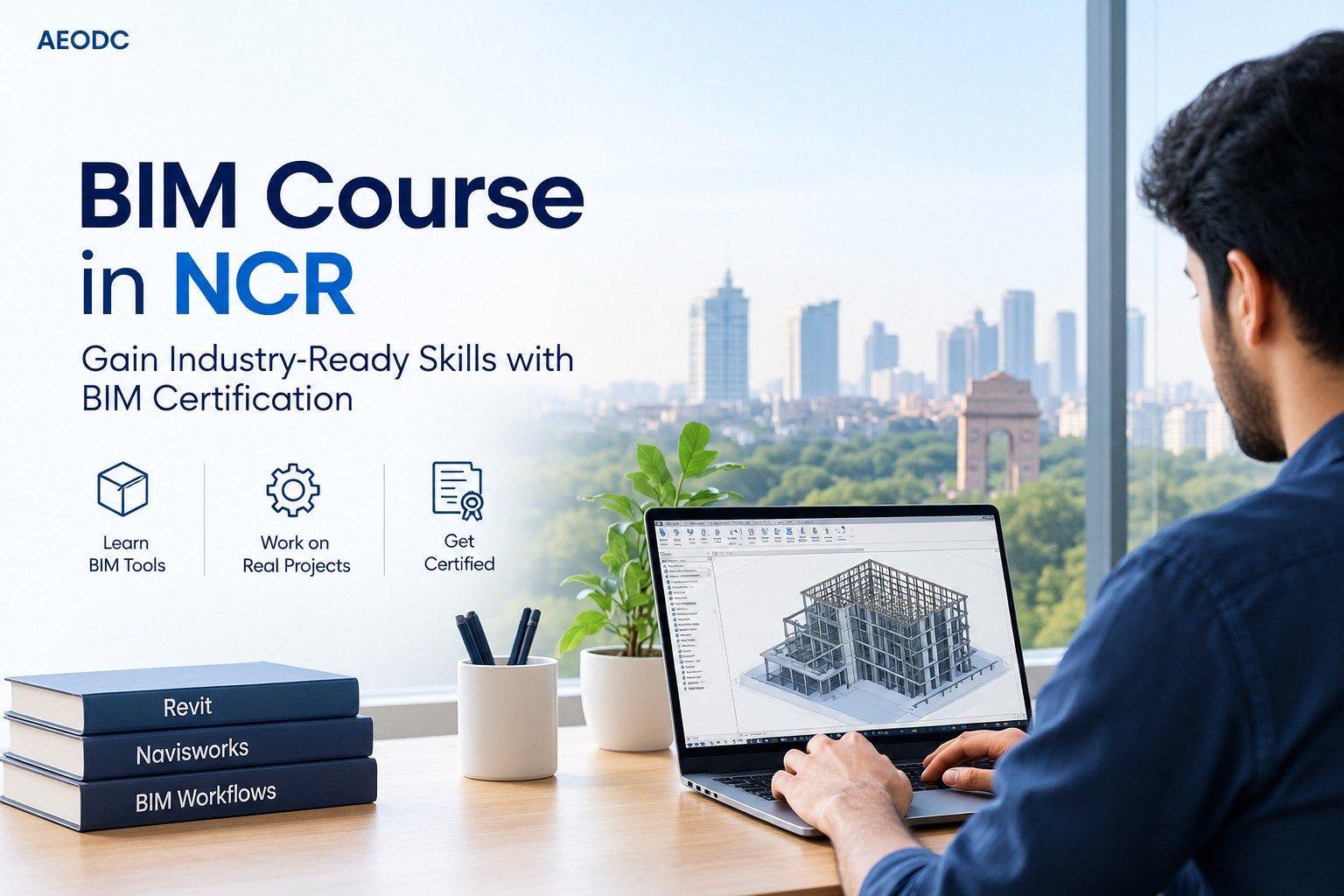
BIM Course in NCR – Practical BIM Training and Certification
The Architecture, Engineering and Construction (AEC) industry is rapidly adopting digital technologies and connected project workflows. As companies increasingly use Building Information Modeling (BIM) for design, documentation, coordination and project information management, learning BIM has become an important step for students, freshers, architects, engineers, designers and working professionals.
A BIM Course in NCR can help learners understand how digital building models are created, organized and coordinated across different project disciplines. BIM is not limited to creating three-dimensional models. It connects geometry with project information and supports collaboration between architects, structural engineers, MEP professionals, contractors and other project stakeholders.
For individuals looking to develop practical AEC skills, BIM Certification in NCR can provide a structured way to demonstrate knowledge of BIM concepts, software workflows and project-based applications.
Why Choose a BIM Course in NCR?
Delhi NCR is one of India's major centers for architecture, construction, infrastructure, engineering and real-estate development. The region has a large ecosystem of architecture firms, engineering consultants, construction companies and infrastructure organizations working on residential, commercial, industrial and infrastructure projects.
As project delivery becomes increasingly digital, professionals with knowledge of BIM workflows can better understand how different project disciplines interact. A good BIM training program should therefore go beyond teaching software commands.
Learners should understand how BIM is applied to actual project workflows, including model development, construction documentation, coordination, information management, schedules and quantities.
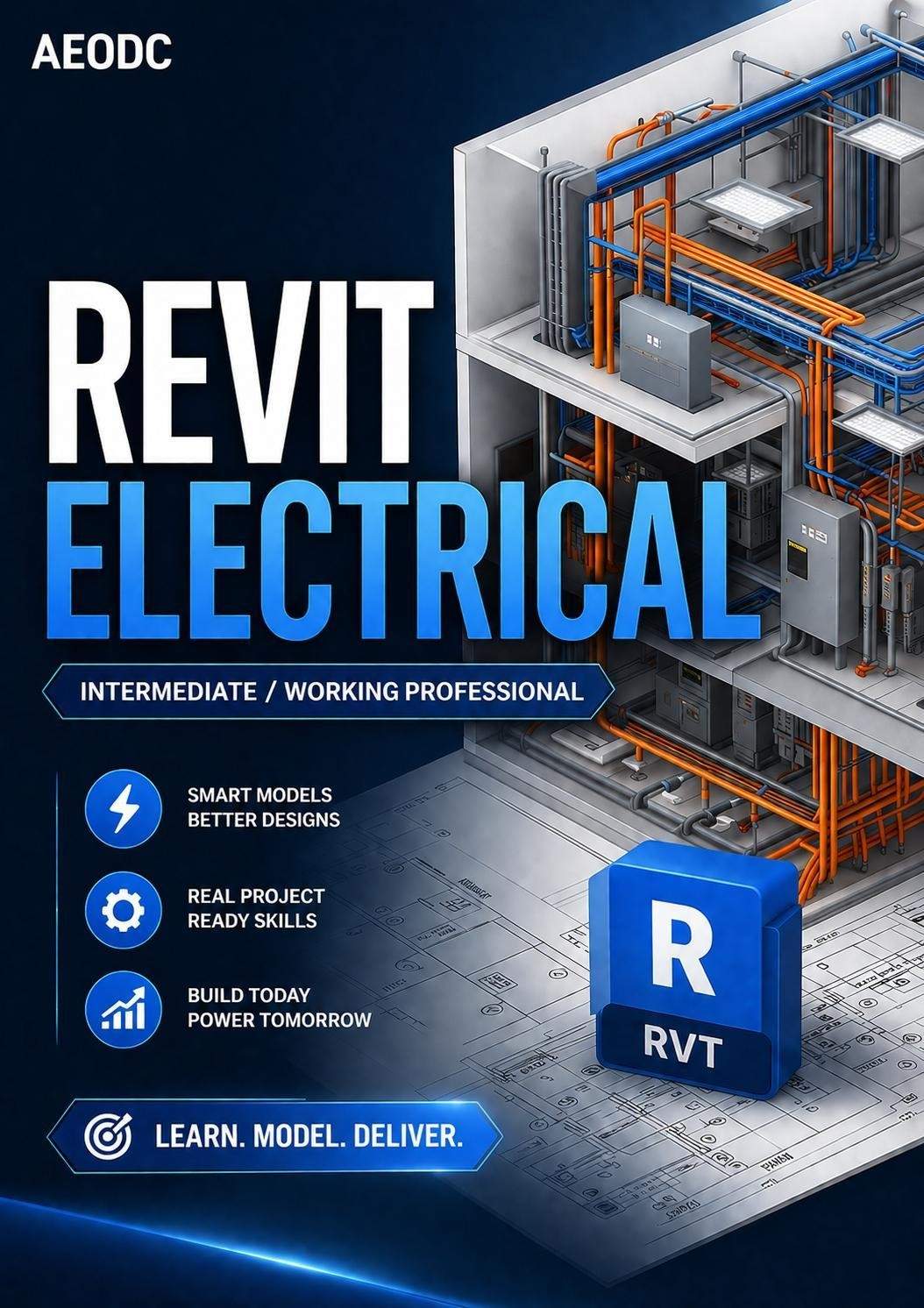
At AEODC – AEO Design Consultants, BIM education is structured around practical AEC applications. Depending on the selected program, learners can explore Revit Architecture, Revit Structure, Revit MEP, Navisworks, AutoCAD, 4D construction simulation and 5D BIM concepts.
What Can You Learn Through BIM Training?
A structured BIM program can help learners develop technical knowledge applicable to different stages of an AEC project. The exact topics depend on the selected course and discipline, but training may cover:
BIM fundamentals and project workflows
Architectural modeling using Revit
Structural modeling and documentation
Mechanical, electrical and plumbing modeling
Construction drawings and documentation
Model coordination and clash detection
BIM standards and project organization
Schedules and quantity information
Model-based project coordination
Practical project-based BIM applications
Learners can develop an understanding of how different building elements are represented within a digital model and how information can be organized for design and construction activities.
This practical approach is important because BIM is not simply about learning individual software features. Professionals also need to understand how models, drawings, information and coordination processes work together during project delivery.
BIM Certification in NCR: Is It Useful?
A BIM Certification in NCR can add value to a professional profile when the certification is supported by genuine practical knowledge and relevant training.
A certificate alone does not demonstrate complete BIM capability. Learners should consider the quality and structure of the training before selecting a certification program. Factors such as curriculum, practical exercises, trainer experience, software coverage, project exposure and assessment methods can make a significant difference.
Students and professionals should look for programs that provide opportunities to apply concepts through practical exercises rather than focusing only on theoretical information.
A structured assessment can also help learners identify areas where they need additional practice and provide evidence of their understanding of the course content.
Who Should Consider BIM Training?
BIM training can be useful for people at different stages of their AEC careers. Students and fresh graduates can use foundation-level training to build software and workflow knowledge, while experienced professionals can choose intermediate or discipline-specific programs to improve their existing capabilities.
BIM courses may be suitable for:
Architecture students and graduates
Civil and structural engineers
Architects
Structural designers
MEP engineers and designers
BIM modelers
Construction professionals
CAD professionals
Site professionals
Fresh graduates
Working professionals transitioning toward BIM roles
The right course depends on an individual's educational background, existing software knowledge and career objectives. Beginners may benefit from introductory programs, while professionals with previous experience can select intermediate or advanced training.
Why Choose AEODC for BIM Education?
AEODC – AEO Design Consultants brings an industry-focused approach to BIM education. The objective is to connect structured learning with practical AEC workflows so learners can develop technical capabilities relevant to project environments.
Training programs can introduce learners to different BIM disciplines and software applications, including architectural, structural and MEP workflows. Coordination-focused tools such as Navisworks can also help learners understand model review and clash detection processes.
The learning approach can be useful for individuals who want to understand how BIM is applied beyond basic modeling. By working with practical exercises and project-oriented workflows, learners can develop a clearer understanding of how BIM supports design, documentation and multidisciplinary coordination.
How to Select the Right BIM Course?
Before enrolling in a BIM program, learners should consider their career goals and existing technical background. Someone beginning a career in architecture may require a different learning path from an experienced MEP engineer or structural professional.
Consider the following factors when comparing programs:
Course duration and curriculum
Software covered
Practical assignments
Project-based learning
Trainer experience
Discipline-specific content
Assessment process
Certification structure
Industry relevance
Choosing a program based on these factors can help learners select training that matches their professional objectives rather than choosing a course only because it offers a certificate.
Start Your BIM Learning Journey
The adoption of digital workflows is changing how AEC projects are designed, coordinated and delivered. Developing BIM knowledge can help students and professionals understand these changing workflows and build relevant technical capabilities.
If you are searching for a BIM Course in NCR, focus on practical training, software skills, project-based exercises, discipline-specific learning and structured assessment. Similarly, a BIM Certification in NCR can become a useful addition to your professional profile when it represents genuine knowledge and practical understanding.
AEODC provides BIM education focused on practical AEC applications across multiple disciplines. Whether you are a student, fresher, architect, engineer, designer or working professional, you can explore a suitable learning path based on your background and career goals.
Frequently Asked Questions
What is a BIM Course in NCR?
A BIM Course in NCR is a structured training program that teaches BIM concepts, software workflows and practical applications used in architecture, engineering and construction projects.
Who can join BIM training?
Students, freshers, architects, engineers, designers, BIM professionals and working professionals can select courses according to their technical background and career goals.
What software is commonly used in BIM training?
Revit, Navisworks and AutoCAD are commonly used in BIM training. The software covered depends on the selected course and discipline.
Does BIM certification help with career development?
BIM certification can strengthen a professional profile when it represents genuine practical knowledge and understanding of BIM workflows.
Why choose AEODC for BIM education?
AEODC focuses on practical AEC applications, discipline-specific BIM training, software workflows and project-oriented learning.