Blockchain-Powered Fintech Startup Ideas for Payments, Identity, and DeFi
-

- February 23rd, 2026
- 1,348 views
Introduction
Fintech startup ideas that leverage blockchain are attracting attention from entrepreneurs seeking to build more transparent, programmable, and efficient financial services. This article outlines practical startup concepts, technical choices, regulatory considerations, and market tactics to help teams evaluate blockchain-based financial products without giving legal or investment advice.
- Blockchain can enable programmable contracts, tokenization, and decentralised settlement.
- Common startup ideas include payments, identity/KYC, tokenized assets, lending (DeFi models), and supply chain finance.
- Key considerations: consensus model, privacy, scalability, security, and regulatory compliance (KYC/AML, securities laws).
- Early validation should focus on product-market fit, regulatory engagement, and partnerships with regulated institutions.
Fintech startup ideas: Key blockchain concepts
Understanding core blockchain concepts helps refine fintech startup ideas. Distributed ledgers store transactions across network nodes, smart contracts enable automated business logic, and tokenization represents real-world assets as digital tokens. Different architectures—public, permissioned, and hybrid blockchains—affect performance, privacy, and governance.
Top startup concepts and business models
Payments and cross-border remittances
Blockchain can reduce settlement times and lower transaction costs for cross-border payments by using tokenized liquidity or atomic settlement mechanisms. Startups can offer rails that integrate with fiat on/off ramps, partner with licensed payment processors, and focus on corridors with high fees or slow settlement.
Identity, KYC, and credentialing
Decentralized identity (DID) systems and verifiable credentials enable users to control identity data while allowing trusted parties to verify attributes. Business models include identity-as-a-service for banks, insurers, and marketplaces, improving onboarding while reducing fraud.
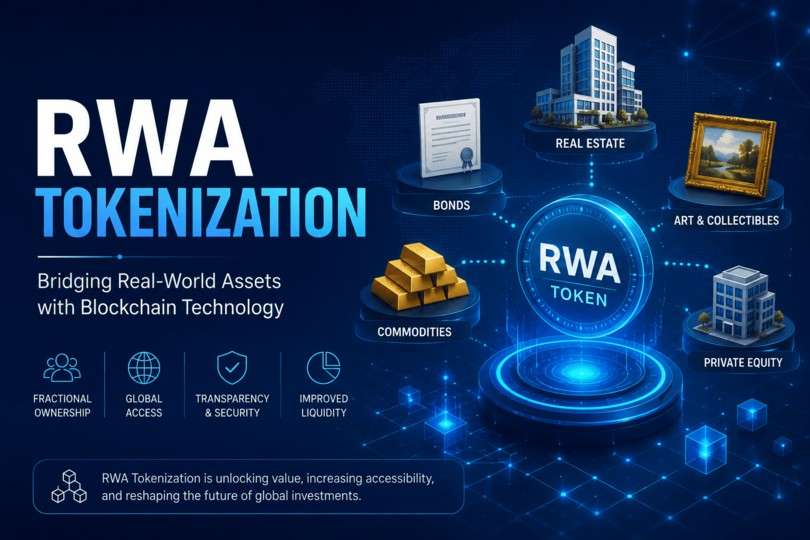
Tokenization of assets
Tokenization turns real assets—real estate, invoices, or funds—into fractional digital tokens that can improve liquidity and enable new investment models. Startups must consider custody, transfer restrictions, and compliance with securities regulations.
Lending, liquidity, and DeFi-inspired models
Decentralized finance introduces programmable lending, liquidity pools, and algorithmic credit models. Fintech startups can adapt DeFi primitives in regulated wrappers, partnering with banks or custodians to offer regulated lending products with improved transparency.
Supply chain finance and trade finance
Blockchain provides a shared, auditable record of goods and payments, which can streamline trade finance, reduce fraud, and enable invoice discounting marketplaces. Integration with IoT and ERP systems is often required for end-to-end workflows.
Technical and product considerations
Choosing a blockchain architecture
Decide between permissioned ledgers for privacy and performance or public chains for broad interoperability. Layer-2 scaling, sidechains, or hybrid approaches can balance throughput and decentralization needs.
Security, audits, and smart contract design
Smart contracts should undergo formal verification and third-party audits. Secure key management, multisignature custody, and robust incident response plans reduce operational risk.
Privacy and data protection
Design systems to keep personal data off-chain or encrypted, complying with data protection frameworks such as GDPR. Consider privacy-preserving techniques like zero-knowledge proofs when required.
Regulatory and compliance checkpoints
Engage early with regulators and compliance advisors. Common touchpoints include anti-money laundering (AML) and know-your-customer (KYC) rules, securities classification for tokenized offerings, and payments licensing. Relevant international bodies include the Financial Action Task Force (FATF) and national regulators such as financial supervisory authorities. For central bank digital currency developments and macroprudential perspectives, consult reports from the Bank for International Settlements.
Bank for International Settlements — Central Bank Digital Currency
Go-to-market, partnerships, and funding
Target customers and distribution
Identify specific customer segments (SMEs, remitters, wealth managers) and build solutions that integrate with existing workflows. Pilots with regulated partners can validate product-market fit and reduce time-to-market.
Partnerships and infrastructure providers
Work with licensed custodians, payment processors, and compliance providers for KYC/AML. Infrastructure partners may include oracles for real-world data, custody vendors for digital assets, and middleware for fiat rails.
Funding and commercialization
Early-stage funding often focuses on technical validation, regulatory compliance, and pilot deployments. Consider non-dilutive grants, accelerator programs, and strategic partnerships with incumbent financial institutions.
Common challenges and risk management
Key risks include regulatory change, technical vulnerabilities, market liquidity, and operational complexity. Clear governance models, insurance, and conservative product designs help manage downside risk. Maintain transparent communication with users and regulators to build trust.
Implementation roadmap
- Research and compliance scoping with legal experts and regulators.
- Technical prototype focusing on minimal viable blockchain components.
- Security audits, pilot with trusted partners, and iterative product improvements.
- Scale operations with compliance, custody, and customer support functions in place.
Further reading and resources
Consult regulator guidance from national authorities, international standards from FATF, and central bank research briefs to stay informed about evolving norms. Academic centers that study distributed systems and financial regulation can be useful sources for technical and policy insights.
Frequently asked questions
What are some Fintech startup ideas that use blockchain?
Common ideas include cross-border payment rails, decentralized or hybrid lending platforms, tokenization marketplaces for assets, identity and credential services, and blockchain-enabled supply chain finance. Each idea requires tailored compliance and technical strategies.
How does tokenization affect liquidity and compliance?
Tokenization can increase fractional ownership and secondary market opportunities, potentially improving liquidity. However, tokenized assets may fall under securities laws or other financial regulations, requiring disclosures, transfer restrictions, or licensed intermediaries.
Is a public blockchain always better for transparency?
Public blockchains offer transparency and censorship resistance but may raise privacy and scalability concerns. Permissioned or hybrid networks can provide controlled privacy and performance for regulated financial services.
What regulatory bodies should startups monitor?
Startups should monitor national financial regulators, the Financial Action Task Force (FATF) for AML guidance, and central bank publications for payments and CBDC policy. Engaging with local regulators early is recommended to clarify licensing and compliance obligations.
How should a team prioritize initial pilots?
Prioritize pilots that validate core value propositions with a small set of trusted partners, minimize regulatory exposure, and test key technical components such as settlement, custody, and compliance automation.