Custom Club Style Vest Guide: Patches, Cuts & MC Traditions Explained
-

- May 15th, 2026
- 7,571 views
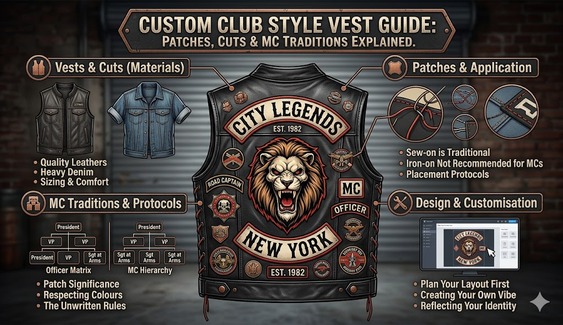
Walk into any motorcycle rally and you'll see them—leather vests covered in patches, each one telling a story about the rider wearing it. These aren't just fashion statements. They're custom club-style vests, known as "cuts" in MC culture, and they carry meaning that goes back decades.
If you're thinking about getting your own club vest or you've been asked to design one for your riding group, understanding the traditions and unwritten rules matters. Get it right, and you've got a vest that represents your club with pride. Get it wrong, and you risk disrespecting traditions that serious riders take very seriously.
This guide breaks down everything you need to know about custom club vests, from patch placement to protocol and what separates a men's custom club style vest from a women's custom club style vest.
What Is a Custom Club Style Vest (The "Cut")?
A club-style vest, called a "cut" in motorcycle club terminology, is a sleeveless leather or denim vest that displays a club's patches, colors, and identification. The term "cut" comes from early riders who literally cut the sleeves off leather jackets to create vests better suited for riding.
The vest serves multiple purposes. It identifies which club you belong to, shows your rank or position within that club, displays where you've ridden through various patches, and represents your commitment to the club and its brotherhood or sisterhood. For one-percenter MCs and traditional riding clubs, the cut is sacred. It's not something you wear casually or let someone else handle without permission.
Custom club-style vests differ from regular motorcycle vests in one critical way: they're designed specifically to display club patches according to established traditions. The layout, patch placement, and even the vest color follow protocols that vary by club type and tradition.
Patch Placement and What Each Position Means
Patch placement on a club vest isn't random. Each position carries specific meaning, and placing patches incorrectly can signal things you don't intend.
The Three-Piece Back Patch (Colors)
The most recognizable element of a club vest is the three-piece back patch, often called "colors." This consists of a top rocker with the club name, a center logo or emblem representing the club, and a bottom rocker showing the club's territory or location.
Only traditional motorcycle clubs typically wear three-piece back patches. Riding clubs and associations usually wear different configurations to avoid confusion with MCs. The three-piece back patch is earned, not bought. If you're designing a vest for a new club, research what's appropriate for your club type and what's already claimed in your area.
Front Patches and Their Meanings
The front of a club vest carries different information. The left chest typically displays the member's name patch and their position or rank in the club (president, vice president, sergeant at arms, road captain, etc.). The right chest often shows the club logo, the "MC" designation if applicable, or other club-identifying patches.
Additional patches on the front might include years of membership, special positions held, or club-specific awards and recognition. Each club has its own rules about what can and cannot be worn on the front.
Side and Small Patches
Smaller patches along the sides or bottom of the vest tell stories about the rider. These might include rally patches from events attended, memorial patches for fallen brothers or sisters, support patches for causes the club backs, or "1%" patches for one-percenter clubs.
Some patches carry heavy meaning in MC culture. A "1%" patch indicates membership in an outlaw motorcycle club. "AFFA" (Angels Forever, Forever Angels) patches are specific to certain clubs. "Support" patches show allegiance to other clubs. Never wear patches you haven't earned or that represent clubs you don't belong to.
MC Traditions and Protocol You Need to Know
If you're creating a custom club style vest for an actual motorcycle club, traditions matter. Breaking protocol doesn't just look bad, it can create real problems with established clubs in your area.
- First rule: respect existing clubs. Before finalizing your club's colors and patches, research what's already established in your region. Copying another club's design or claiming territory that's already taken is asking for confrontation. Reach out to established clubs in your area and introduce your group respectfully.
- Second rule: understand club hierarchy. Different types of clubs follow different rules. One-percenter MCs have the strictest protocols. Traditional motorcycle clubs have established customs but may be less rigid. Riding clubs and associations have more flexibility but should still respect MC traditions.
- Third rule: your vest is personal. In traditional club culture, touching someone's cut without permission is disrespectful. Letting your vest touch the ground is considered disrespectful to your club. If a member is kicked out, they typically surrender their vest and patches.
Men's Custom Club Style Vest vs. Women's Custom Club Style Vest
Men's custom club style vests and women's custom club style vests follow the same traditions regarding patches and placement, but they differ in fit and construction.
Men's club vests typically feature a straight cut through the body, a longer length extending past the waist, broader shoulders, and sizing based on chest measurement. They're designed for the male physique and riding position.
Women's custom club style vests are tailored differently with a shaped waist for better fit, proper chest proportions, shorter overall length, and sizing that accounts for women's measurements. The patch placement follows the same rules, but the vest itself is cut to fit a woman's body properly
Some clubs have all-male membership, some are all-female, and others are mixed. Regardless of membership makeup, the vest should fit the person wearing it. A poorly fitting vest looks unprofessional and doesn't represent the club well.
Designing Your Custom Club Style Vest
When you're ready to create your club vest, start with these decisions.
Choose your base. Leather is traditional and offers the best durability and protection. Denim is lighter and more affordable but less protective. Canvas is a budget option but lacks the road credibility of leather.
Design your patches. Your three-piece back patch is your club's identity. Hire a professional designer or work with a patch company that understands MC culture. Your design should be original, not copied from existing clubs.
Determine patch layout. Sketch where each patch will go before you start sewing or having patches attached. Remember that symmetry matters and that patches should be straight and properly aligned.
Decide on attachment method. Patches can be sewn on (permanent and traditional), ironed on (easier but less durable), or Velcro-backed (allows for changing patches but is less common in traditional clubs).
Where to Get Your Custom Club Style Vest
You have several options for obtaining your club vest. You can buy a blank vest and add patches yourself, which gives you complete control and is the most affordable option but requires time and skill. You can order from motorcycle apparel companies that offer club vest services, providing professional results with proper construction and often including patch installation. Or you can commission a custom leather worker, which is the premium option offering completely custom construction and perfect fit.
When ordering a custom club style vest, provide accurate measurements, specify leather type and thickness, confirm patch placement before construction begins, and ask about timeline and rush options if needed.
First Manufacturing Co. has been building motorcycle gear since 1987, including custom club vests for riding groups across the country. Quality construction, proper fit, and understanding of club traditions matter when you're creating something that represents your club.
Final Thoughts on Club Vest Traditions
Your club vest is more than clothing. It's your club's identity on your back, a record of where you've been and what you've done, and a symbol of commitment to your brothers or sisters. Treat it with respect, understand the traditions behind it, and wear it with pride.
Whether you're ordering a men's custom club style vest or a women's custom club style vest, take time to get it right. Research traditions, respect established clubs, and invest in quality construction that will last as long as your club does.