Can a Crypto Payment Gateway Really Charge 0% Fees?
-

- Published Updated
- 53 views
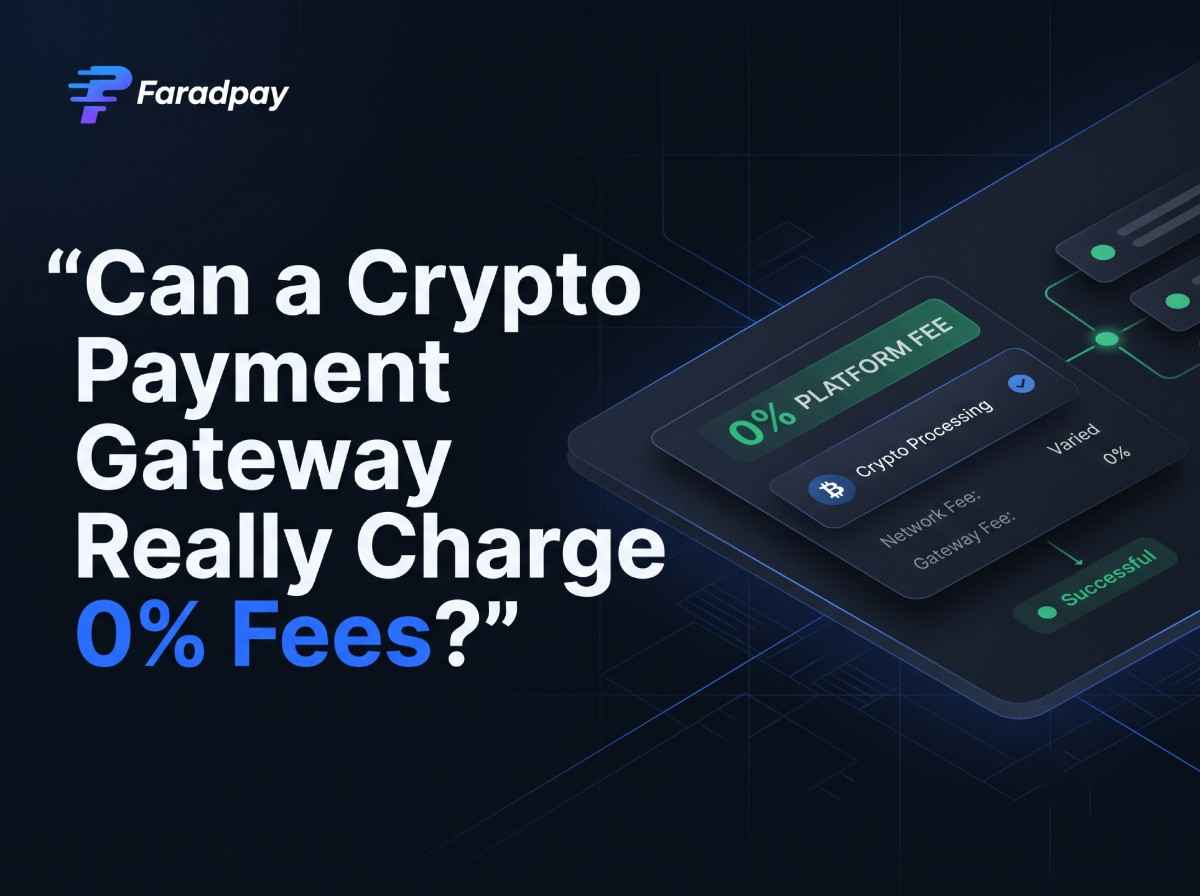
Short answer: yes. Long answer: it depends on which cost you're actually asking about. Can a Crypto Payment Gateway Really Charge 0% Fees? looks past the headline number to what a genuine zero-percent claim actually covers, and what it quietly leaves for you to pay elsewhere.
The short answer
A Crypto Payment Gateway can genuinely charge 0% on its own platform fee, meaning it takes no percentage cut of each sale. That's real and worth having. But accepting crypto isn't free of every cost even when the platform fee reads zero, blockchain network fees still apply, converting between assets or into fiat can carry its own price, and some providers sell optional paid plans alongside their headline rate. Can a Crypto Payment Gateway Really Charge 0% Fees? means understanding exactly what that zero does and doesn't include before you build your checkout around it.
Why a platform fee can genuinely reach zero
A platform fee is simply the cut a payment provider keeps from each sale, the way a card processor typically takes a percentage plus a fixed amount per transaction. A crypto transaction works differently under the hood, the customer sends crypto directly, the blockchain confirms it, and the gateway tells your store and settles the funds, without card networks or issuing banks sitting in the middle taking their own cut. That structural difference is exactly why a genuine 0% platform fee is actually achievable for a Crypto Payment Gateway in a way it rarely is for traditional card processing.
Why three real costs sit outside even a genuine zero
Picture an order where the gateway keeps nothing at all. Three things still sit outside that platform fee, and you'll encounter all of them eventually. Network fees go to the blockchain itself for confirming the transaction, ranging from a few cents to several dollars depending on the chain and how busy it is. Conversion costs exist whenever you swap one asset for another, often tucked quietly inside the exchange rate rather than shown as a separate line item. And your own costs, refunds, tax records, accounting, and the price risk of holding a coin between the sale and the day you actually cash out, remain entirely yours regardless of what the platform fee says.
Why a provider still needs to make money somewhere
Any Crypto Payment Gateway offering a genuine 0% platform fee should be able to explain how it actually earns revenue, since a business can't run on nothing indefinitely. The common paths are a conversion spread, fees on fiat payouts, optional paid plans, or other products within the same company. A provider that answers this question clearly and specifically is giving you a good sign about its transparency, while a vague non-answer is worth noticing and asking about again before you commit.
Why comparing published rates across providers actually matters
Prices vary considerably across the industry, and most published rates and comparisons put typical crypto payment fees somewhere between roughly 0.5% and 2% per transaction, meaningfully below the 2.9% plus a flat fee that card processors commonly charge. Self-hosted, open-source options exist with no processing fee at all, though you take on hosting and server maintenance yourself in exchange. Can a Crypto Payment Gateway Really Charge 0% Fees? should always be weighed against this broader landscape, since a provider at 0% and one at 1% can mean a real difference once your transaction volume grows large enough.
Why the dollar gap only matters once your volume is large enough
The difference between a 1% fee and a genuine 0% platform fee is meaningful math at scale, potentially thousands of dollars a month for a business processing six figures in monthly sales. For a smaller shop processing a few hundred dollars a month, that same percentage gap amounts to pocket change, and other factors, plugin support, settlement speed, security, matter considerably more than shaving off a fraction of a percent. A Crypto Payment Gateway genuinely worth choosing on fee alone usually only makes a real difference once your volume justifies the comparison.
Why reading the fine print on optional plans actually matters
Some providers list a clear pay-as-you-go rate at 0% alongside separate optional monthly packages, without always spelling out exactly what happens once those packages expire or what the underlying default rate becomes afterward. This is exactly the kind of detail worth asking support to confirm in writing before you commit, rather than discovering it two months into using the service. Can a Crypto Payment Gateway Really Charge 0% Fees? deserves this level of scrutiny specifically because a vague line about a "default rate" is where a genuine zero can quietly turn into something else.
Why certain businesses benefit far more than others
The savings from a genuine 0% platform fee show up most clearly where margins are thin or payment volume is high, online stores running on common e-commerce plugins, subscription businesses billing recurring charges in stablecoins, and platforms processing deposits and payouts at real scale. It's a weaker fit for businesses that need daily bank settlement in one specific currency, operate in heavily regulated industries requiring licensing proof, or simply can't absorb any price risk at all from holding crypto even briefly.
A practical checklist for verifying any 0% fee claim
- Read the full pricing page directly, then ask the provider to confirm it in writing.
- Check who pays the network fee, your business or your customer, and on which chains.
- Ask specifically how the provider earns revenue if the platform fee is genuinely zero.
- Clarify what happens to pricing once any optional plan or promotional period ends.
- Confirm settlement speed, security controls, and which coins and chains are supported.
- Run one small live payment, one refund, and one payout before committing at scale.
Where FaradPay fits
FaradPay lists a 0% platform fee on standard crypto payments with no setup cost and no monthly minimum on its pay-as-you-go rate, while network fees still apply and fiat conversions are described as competitive rather than free. It also lists optional monthly packages, so ask support directly what your account would actually pay per transaction and what happens once a package expires. Those specific answers are the real test behind Can a Crypto Payment Gateway Really Charge 0% Fees? for any business evaluating it today.
FAQ on Can a Crypto Payment Gateway Really Charge 0% Fees?
Can a crypto payment gateway really charge 0% fees? Yes, on its own platform fee specifically. But that doesn't make accepting crypto entirely free, since network fees, conversion costs, and sometimes paid plans can still apply on top.
What costs remain even with a genuine 0% fee gateway? The blockchain network fee, any cost of swapping between coins or into fiat, and your own costs like refunds, taxes, and price swings. A 0% platform fee removes the gateway's own cut, not these.
How does a gateway make money if it charges nothing? Common routes include conversion spreads, fees on fiat payouts, optional paid plans, and other products within the same company group. A provider that explains this clearly is giving you a good signal.
How much do other crypto payment providers typically charge? It varies by provider and volume, but most published rates and comparisons fall somewhere between roughly 0.5% and 2% per transaction, well below typical card processing fees.
Does a 0% fee gateway actually save money for small businesses? The dollar savings scale with volume, so the gap matters considerably more for businesses processing large monthly sales than for ones processing a few hundred dollars a month.
What should I check before trusting any 0% fee claim? Read the full pricing page, ask the provider directly how it earns revenue, confirm what happens after any promotional or package period ends, and run a small real test payment first.
Final thoughts
Can a Crypto Payment Gateway Really Charge 0% Fees? comes down to a genuine yes on the platform fee itself, paired with an honest no on the idea that accepting crypto costs nothing at all. Network fees, conversion costs, and your own operational expenses remain regardless of the headline number, so read the fine print, ask how the provider actually earns money, and test with real transactions before building your checkout around any zero-percent claim.