What Your CWNA Certification Really Says About You
-

- Published Updated
- 54 views
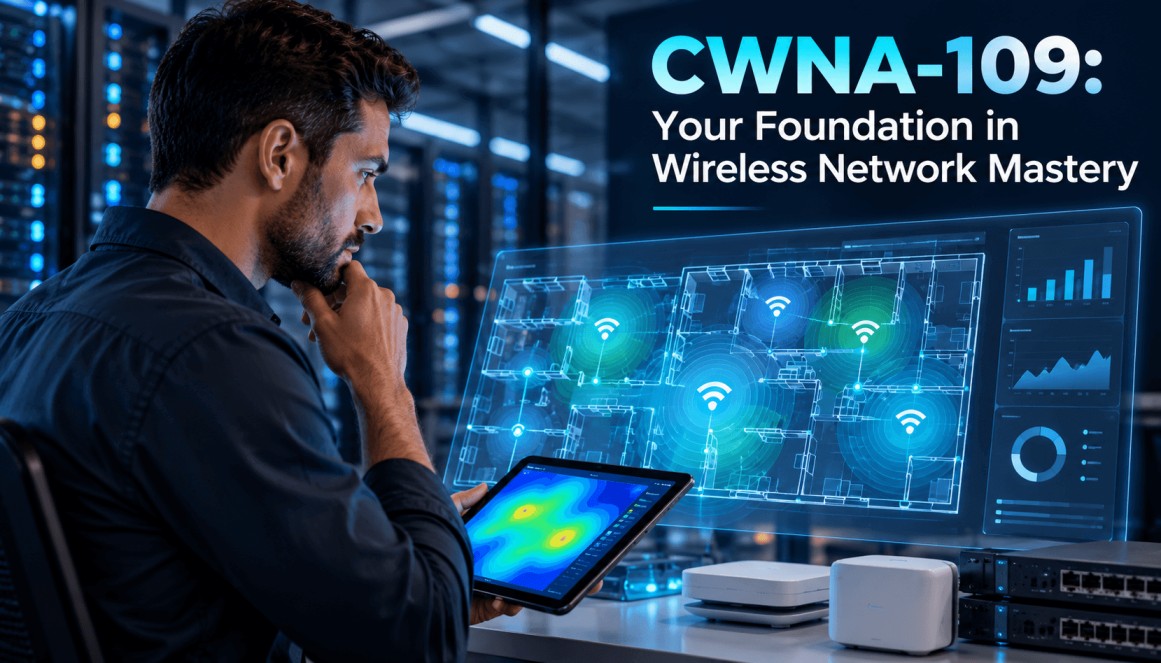
The CWNA Certification, formally known as the CWNP Wireless Network Administrator certification with exam code CWNA-109, serves as a foundational credential for professionals aspiring to validate their expertise in enterprise Wi-Fi. This certification is designed for individuals who manage, implement, and support wireless local area networks (WLANs). It rigorously assesses a candidate's understanding of core 802.11 technologies, radio frequency (RF) fundamentals, security protocols, and network design principles. This article thoroughly explores what earning this credential truly signifies about a professional's capabilities and dedication to the wireless networking field, alongside detailing its exam structure and essential preparation pathways.
Defining the CWNA-109 Credential
Earning the CWNP Wireless Network Administrator certification, or CWNA-109, establishes a professional's foundational knowledge in enterprise Wi-Fi. This vendor-neutral credential from CWNP validates a candidate's understanding of RF technologies, WLAN regulations, protocols, and essential security practices crucial for today's wireless infrastructures. The certification signifies a robust grasp of the core concepts necessary to work effectively with modern 802.11 wireless networks, making it a critical step for anyone building a career in wireless networking.
The CWNA-109 exam specifically targets individuals with varying levels of experience who seek to formalize their understanding of wireless networks. This includes:
• Entry-level network engineers looking to specialize in wireless.
• IT professionals transitioning into wireless administration roles.
• Sales and marketing professionals who need a deeper technical understanding of wireless products and services.
• Technical support staff responsible for troubleshooting wireless issues.
• Anyone involved in the design, implementation, or maintenance of 802.11 wireless networks.
This article aims to provide a comprehensive overview of the CWNA-109 certification, its underlying exam objectives, and what it truly conveys about a certified professional's skills and potential impact in the rapidly evolving wireless landscape.
Examining the CWNA-109 Structure
Understanding the format and specifics of the CWNA-109 exam is crucial for effective preparation and setting realistic expectations. The CWNP Wireless Network Administrator exam follows a standardized structure designed to comprehensively test a candidate's readiness. Familiarity with these details helps in strategizing study plans and managing time during the actual test.
Here are the key details of the CWNA-109 examination:
• Exam Name: CWNP Wireless Network Administrator
• Exam Code: CWNA-109
• Exam Price: $274.99 USD
• Duration: 90 minutes
• Number of Questions: 60
• Passing Score: 70%
The exam's duration and number of questions necessitate efficient time management, allowing approximately 1.5 minutes per question. Achieving the 70% passing score requires a solid and broad understanding of all tested domains, underscoring the importance of thorough preparation. Candidates can find more specific details and registration information on the
CWNP's official program page
.
Validating Foundational Wireless Expertise
The CWNA Certification profoundly articulates an individual's core competency in wireless networking, moving beyond mere theoretical comprehension. It demonstrates a practical understanding of how wireless networks operate, are secured, and how they integrate into broader IT infrastructures. This validated expertise is invaluable in a world increasingly reliant on seamless connectivity.
Mastering RF Technologies: The Invisible Backbone
At its heart, the CWNA-109 certification emphasizes a deep understanding of Radio Frequency (RF) Technologies, accounting for 15% of the exam content. This domain covers the physics and behavior of radio waves, essential for designing and troubleshooting effective wireless networks. A professional holding the CWNA is adept at:
• RF Fundamentals: Understanding concepts like frequency, wavelength, amplitude, and phase.
• Antenna Concepts: Knowledge of different antenna types (omnidirectional, directional), gain, and their appropriate application in varying environments.
• Signal Propagation: How signals travel through various media, including attenuation, reflection, refraction, and diffraction.
• Interference Management: Identifying sources of interference (e.g., microwave ovens, cordless phones) and implementing strategies to mitigate their impact on Wi-Fi performance.
• Spectrum Analysis: Using tools to visualize and analyze the RF spectrum to identify clear channels and potential issues.
This grounding ensures that certified individuals can make informed decisions about hardware placement and configuration, optimizing network performance and reliability.
Navigating WLAN Regulations and Standards
A significant portion of the CWNA-109 exam, 20%, is dedicated to WLAN Regulations and Standards. This area confirms a professional’s ability to operate within legal and technical frameworks governing wireless communication. This includes familiarity with:
• IEEE 802.11 Standards: A comprehensive grasp of the various amendments (a, b, g, n, ac, ax) and their respective capabilities, limitations, and use cases.
• Regulatory Bodies: Knowledge of agencies like the FCC (Federal Communications Commission) and ETSI (European Telecommunications Standards Institute) and their role in spectrum allocation and power limits.
• Wireless Topologies: Understanding different network configurations such as Independent Basic Service Sets (IBSS), Basic Service Sets (BSS), and Extended Service Sets (ESS).
• Channel Management: Best practices for channel selection, avoidance of co-channel interference, and use of dynamic frequency selection (DFS).
Adherence to these standards is not just about compliance; it's about ensuring interoperability and maximizing network efficiency. For deeper engagement with a vibrant community of IT and networking professionals, consider exploring the
author's profile page
for more expert insights.
Understanding Core Wireless Protocols and Devices
Possessing the CWNA certification speaks volumes about a professional's proficiency in the operational mechanics of wireless networks, particularly concerning protocols and the devices that implement them. This domain constitutes another 20% of the CWNA-109 exam, emphasizing the functional components that bring a wireless network to life.
Functionality of WLAN Protocols
The certification validates a detailed understanding of the protocols that govern wireless communication. This includes:
• 802.11 Frame Types: Differentiating between management, control, and data frames and their roles in network operation.
• Authentication and Association: The processes by which wireless clients connect to an Access Point (AP), including open system, shared key, and 802.1X authentication.
• Power Management: How devices conserve battery life through mechanisms like Automatic Power Save Delivery (APSD) and legacy power save.
• QoS in WLANs: Understanding how Quality of Service (QoS) mechanisms, such as Wi-Fi Multimedia (WMM), prioritize traffic for latency-sensitive applications like voice and video.
Knowledge of these protocols is fundamental for troubleshooting connectivity issues and optimizing application performance across wireless links.
Grasping Wireless Devices and Their Roles
A certified individual also demonstrates expertise in the various hardware components of a WLAN. This includes:
• Access Points (APs): Their functions, modes of operation (e.g., autonomous, controller-based), and deployment considerations.
• Wireless LAN Controllers (WLCs): The role of WLCs in centralized management, configuration, and security enforcement for multiple APs.
• Wireless Bridges and Repeaters: Understanding their use cases, advantages, and limitations in extending wireless coverage.
• Client Devices: Awareness of different wireless adapters, drivers, and their impact on network performance and compatibility.
This holistic view of both software and hardware components allows certified professionals to design and implement robust wireless solutions.
Architecting and Designing Wireless Networks
Beyond individual components and protocols, the CWNA Certification signifies a candidate's ability to think strategically about wireless network deployments. The "WLAN Network Architecture and Design Concepts" section comprises 15% of the CWNA-109 exam, showcasing a professional's capability to plan and structure efficient wireless infrastructures.
Strategic Wireless Network Design
Certified individuals possess the knowledge to approach wireless network design systematically. This includes:
• Site Survey Principles: The importance of conducting comprehensive surveys to determine optimal AP placement, identify coverage gaps, and mitigate interference.
• Capacity Planning: Estimating the number of users and devices a network can support while maintaining desired performance levels.
• Coverage vs. Capacity: Balancing the need for ubiquitous coverage with the demand for high-density capacity in various environments.
• Cell Planning: Designing WLAN cells to ensure seamless roaming and efficient use of the RF spectrum.
• Redundancy and High Availability: Implementing strategies to ensure continuous wireless service in case of component failure.
These design skills are critical for creating networks that meet current organizational needs while being scalable for future growth.
Building Robust WLAN Architectures
The certification also attests to an understanding of different architectural models used in modern WLANs:
• Centralized Architectures: Utilizing Wireless LAN Controllers (WLCs) for managing large deployments, offering simplified configuration and consistent policy enforcement.
• Distributed Architectures: Employing autonomous APs, often suitable for smaller deployments where centralized control is less critical.
• Cloud-Managed WLANs: Understanding the benefits and challenges of managing wireless networks entirely through cloud-based platforms.
Professionals with this insight can select and implement the most appropriate architecture based on an organization's size, budget, and operational requirements.
Securing Wireless Network Administrator Operations
A significant aspect that the CWNA Certification highlights is a professional’s commitment to securing wireless environments. With 10% of the CWNA-109 exam dedicated to WLAN Network Security, the credential proves a candidate’s understanding of critical measures to protect wireless data and access points from unauthorized intrusion and attacks.
Implementing Wireless Security Protocols
The certification demonstrates proficiency in applying fundamental security mechanisms, including:
• WPA2/WPA3: A deep understanding of these foundational security protocols, including their authentication and encryption mechanisms.
• 802.1X/EAP: Knowledge of how 802.1X works with Extensible Authentication Protocol (EAP) to provide robust, centralized user and device authentication.
• PSK vs. Enterprise Mode: Understanding the differences and appropriate use cases for Pre-Shared Key (PSK) and Enterprise mode authentication.
• VPNs over WLAN: The role of Virtual Private Networks in adding an extra layer of security for remote users accessing corporate resources over wireless.
These skills are paramount in protecting sensitive information transmitted over the airwaves.
Mitigating Wireless Threats
Certified professionals are also equipped to identify and mitigate common wireless security vulnerabilities:
• Rogue APs: Detecting and neutralizing unauthorized access points that can pose significant security risks.
• Evil Twin Attacks: Understanding how malicious actors create fake access points to trick users into connecting and stealing credentials.
• DoS Attacks: Recognizing and protecting against Denial-of-Service attacks targeting wireless networks.
• Frame Injection/Eavesdropping: Implementing measures to prevent attackers from injecting malicious frames or passively listening to wireless traffic.
By understanding these threats and their countermeasures, CWNA certified individuals play a vital role in maintaining a secure wireless infrastructure.
Ensuring Performance Through RF Validation and WLAN Remediation
The final 10% of the CWNA-109 exam, focused on RF Validation and WLAN Remediation, underscores the practical, hands-on capabilities of a certified professional. This area proves that a CWNA holder isn't just theoretical but can actively measure, diagnose, and fix issues within a live wireless network.
Conducting RF Validation
A certified individual knows how to ensure a wireless network performs as designed and meets specified requirements. This involves:
• Post-Deployment Site Surveys: Performing surveys after installation to verify coverage, capacity, and performance.
• Performance Testing: Using various tools to measure throughput, latency, and jitter to ensure the network meets application demands.
• RF Spectrum Analysis: Continuously monitoring the RF environment for interference sources and optimizing channel usage.
• Interpreting Survey Analyzing heatmaps and other survey outputs to pinpoint areas for improvement or potential problems.
This validation process is critical for ensuring a positive user experience and optimal network functionality.
Implementing WLAN Remediation Strategies
When issues arise, a CWNA-109 certified professional can effectively troubleshoot and implement solutions. This includes:
• Troubleshooting Methodology: Employing a systematic approach to diagnose wireless problems, from physical layer issues to application-specific challenges.
• Common Wireless Issues: Identifying and resolving problems such as slow speeds, dropped connections, authentication failures, and coverage holes.
• Client-Side Troubleshooting: Assisting end-users with wireless client configuration and connectivity problems.
• Firmware and Software Updates: Understanding the importance of keeping APs, controllers, and client drivers updated for security and performance.
The ability to validate performance and remediate issues is a direct demonstration of practical expertise, making the CWNA an exceptionally valuable credential for operational roles.
The Career Impact of CWNA Certification
The CWNA Certification serves as a robust launchpad and accelerator for a career in wireless networking. It significantly enhances a professional’s marketability and provides a clear pathway for specialization and advancement within the IT industry. This credential opens doors to various roles and fosters continuous professional growth.
Elevating Professional Standing
Holding a CWNA-109 credential instantly elevates a professional's standing in the job market. It signals to employers a validated understanding of complex wireless concepts and a commitment to continuous learning. This can lead to:
• Increased Job Opportunities: Many entry and mid-level wireless roles specifically request or prefer CWNA certification.
• Higher Earning Potential: Professionals with specialized certifications often command better salaries compared to uncertified peers. While specific salaries for a "CWNP Wireless Network Administrator" vary widely based on location, experience, and industry, the certification typically provides a competitive edge.
• Enhanced Credibility: The vendor-neutral nature of CWNP certifications ensures that the knowledge gained is broadly applicable across different hardware platforms, making certified individuals versatile assets.
It acts as a tangible proof of skills, differentiating candidates in a competitive landscape.
Charting Your Wireless Career Path
The CWNA is not just an endpoint but often the crucial first step in a dedicated wireless career path. It forms the core of the broader CWNP certification roadmap, enabling progression to more advanced specializations.
After achieving the CWNA Certification, professionals can pursue higher-level CWNP certifications such as:
• CWSP (Certified Wireless Security Professional): Focusing on advanced wireless security.
• CWDP (Certified Wireless Design Professional): Concentrating on in-depth wireless network design.
• CWAP (Certified Wireless Analysis Professional): Specializing in advanced wireless troubleshooting and protocol analysis.
• CWNE (Certified Wireless Network Expert): The pinnacle of CWNP certifications, requiring mastery across all domains.
This structured progression allows professionals to deepen their expertise in specific areas of wireless technology, leading to roles such as Wireless Network Engineer, Senior Wireless Architect, or Wireless Security Specialist.
Preparing Effectively for the CWNA-109 Exam
Successful acquisition of the CWNA Certification hinges on a well-structured and disciplined preparation strategy. Given the breadth of topics covered in the CWNA-109 exam, a multi-faceted approach is highly recommended to ensure comprehensive understanding rather than rote memorization.
Strategic Study Materials and Resources
Leveraging a variety of high-quality study materials is paramount for effective exam preparation. Candidates should consider:
• Official CWNP Study Guide: The primary resource, often accompanied by official training courses, provides in-depth coverage of all exam objectives. For example, the CWNP website offers an
official training resources
.
• Online Courses and Video Lectures: Platforms offering structured learning paths with visual explanations and practical demonstrations can greatly aid understanding of complex RF concepts.
• Practice Questions and Exams: Regularly testing knowledge with practice questions helps in identifying weak areas and familiarizing oneself with the exam format. Valuable practice questions can be found at resources like
NWExam practice questions
.
• Hands-on Labs: If possible, gaining practical experience with wireless equipment through lab exercises or simulated environments is invaluable for reinforcing theoretical knowledge.
• Community Forums and Study Groups: Engaging with other candidates and certified professionals can provide additional perspectives and support.
A balanced approach combining theoretical study with practical application is ideal for solidifying the knowledge required.
Crafting Your Exam Preparation Guide
Developing a personalized study plan is critical for navigating the extensive CWNA-109 syllabus details.
Your preparation guide should include:
1. Syllabus Review: Begin by thoroughly reviewing the official CWNP CWNA-109 exam objectives to understand the weighted domains and specific topics.
2. Schedule Development: Create a realistic study schedule, allocating sufficient time to each domain, with extra focus on areas where your knowledge is weaker.
3. Active Learning: Don't just read; engage with the material through note-taking, creating flashcards, and explaining concepts in your own words.
4. Practice, Practice, Practice: Utilize sample questions and practice exams regularly to gauge your progress and build confidence. Analyze incorrect answers to understand the underlying concepts.
5. Rest and Review: Ensure you get adequate rest, especially in the days leading up to the exam. A final review of key concepts and formulas can be beneficial.
This structured approach not only covers the necessary material but also builds the confidence needed to perform well under exam conditions.
Conclusion: The Credibility of CWNA
The CWNA Certification, through the rigorous CWNA-109 exam, provides a clear and credible statement about a professional's foundational expertise in wireless networking. It validates a comprehensive understanding of RF technologies, regulatory standards, network protocols, security practices, and practical troubleshooting. This credential is far more than just a certificate; it's a testament to a professional's dedication to mastering the complexities of modern enterprise Wi-Fi.
For individuals looking to establish or advance their careers in wireless network administration, the CWNA-109 represents an essential milestone. It not only boosts an individual's professional standing and earning potential but also serves as a crucial stepping stone towards advanced specializations within the CWNP certification framework. Investing in this certification is an investment in a robust and future-proof skill set, preparing professionals to tackle the ever-evolving challenges of wireless infrastructure. For more articles and valuable resources that can aid in your professional development, visit the
IndiBlogHub creator's page.
Frequently Asked Questions
1. What does the CWNA-109 certification primarily validate?
The CWNA-109 certification primarily validates a professional's foundational knowledge and skills in administering, implementing, and supporting enterprise-level wireless local area networks (WLANs), covering RF technologies, security, and design principles.
2. Who is the CWNA-109 exam designed for?
The CWNA-109 exam is designed for IT professionals, network engineers, technical support staff, and anyone involved in the design, implementation, or maintenance of 802.11 wireless networks seeking to validate core wireless skills.
3. How long is the CWNA-109 exam and what is the passing score?
The CWNA-109 exam has a duration of 90 minutes, consists of 60 questions, and requires a passing score of 70%.
4. What are the main benefits of obtaining the CWNA-109 certification?
Benefits include enhanced job opportunities, increased earning potential, improved professional credibility, and a clear pathway for career advancement within the CWNP certification framework, allowing specialization in advanced wireless domains.
5. Are there any prerequisites for taking the CWNA-109 exam?
While there are no formal prerequisites to take the CWNA-109 exam, CWNP recommends that candidates have a solid understanding of general networking principles and ideally some experience working with wireless technologies.