ISO 9001 Internal Auditor Training: Develop Essential Quality Auditing Skills
-
- Published Updated
- 44 views
Introduction
ISO 9001 internal auditor training helps professionals understand quality management systems and evaluate whether business processes meet established quality requirements. It provides practical knowledge for identifying nonconformities, improving operational performance, and supporting customer satisfaction. Organizations across manufacturing, construction, healthcare, logistics, and service industries can benefit from effective internal auditing.
As businesses focus on consistent quality and customer expectations, maintaining an effective Quality Management System (QMS) becomes increasingly important. Trained internal auditors help organizations review their processes, identify weaknesses, and encourage continuous improvement.
What Is ISO 9001 Internal Auditor Training?
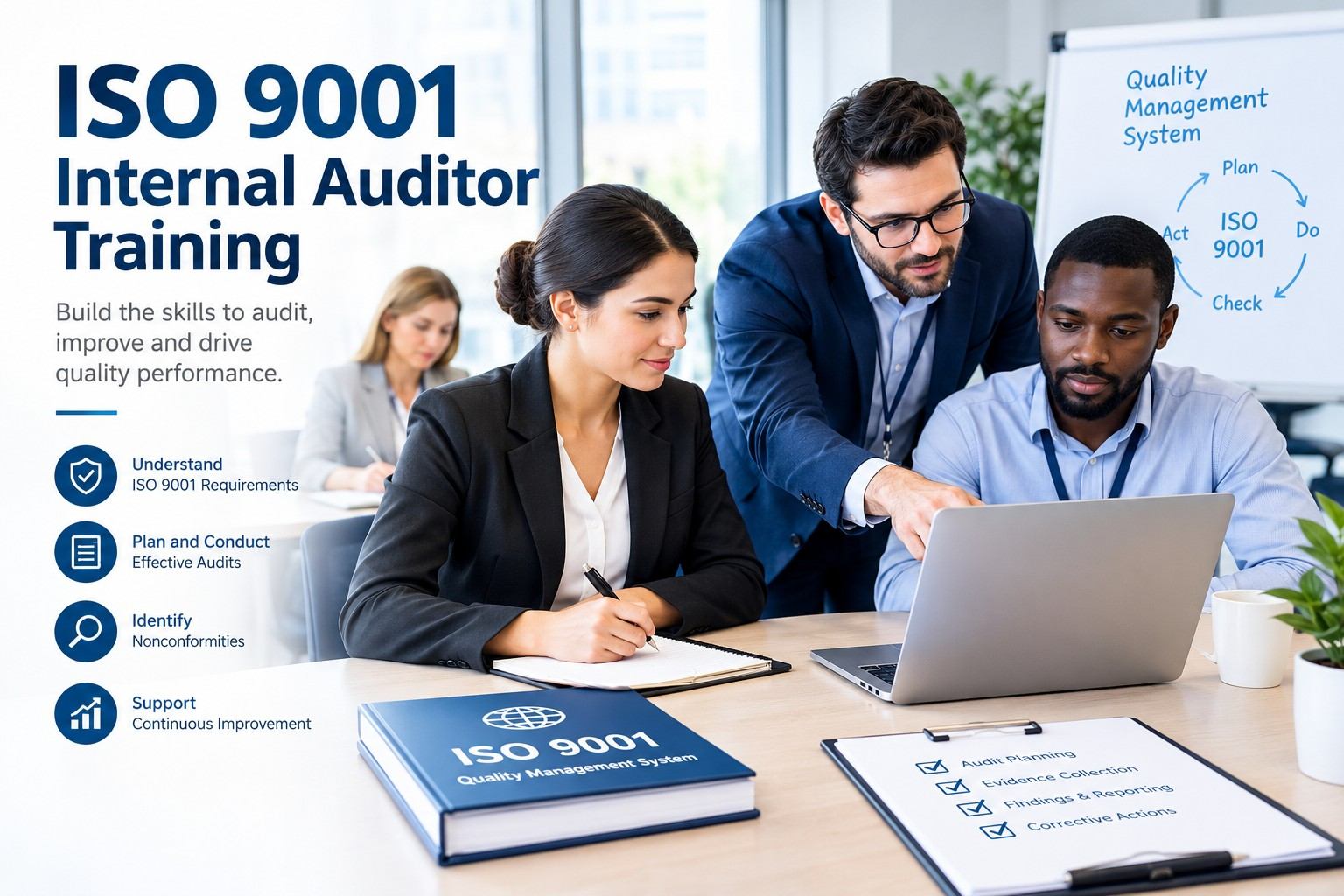
ISO 9001 internal auditor training is a professional course designed to teach participants how to audit a Quality Management System against ISO 9001 requirements. It explains auditing principles, audit preparation, evidence collection, reporting, and corrective action follow-up.
The training helps participants understand how to assess documented procedures, interview employees, observe workplace activities, and determine whether processes operate as planned. It also introduces the importance of objectivity, confidentiality, and evidence-based decision-making during an audit.
The course may be delivered through classroom sessions, online learning, or practical workshops, depending on the training provider.
Why Is ISO 9001 Internal Auditor Training Important?
Internal auditing allows organizations to evaluate their quality management practices and identify areas that need improvement. When audits are conducted effectively, businesses can address problems before they lead to customer complaints, operational delays, or recurring errors.
The main benefits of internal auditor training include:
Improved quality management: Helps employees understand and evaluate established quality procedures.
Early identification of problems: Supports the detection of process gaps and nonconformities.
Better compliance: Helps organizations assess conformity with applicable ISO 9001 requirements and internal policies.
Increased customer satisfaction: Encourages consistent processes and reliable products or services.
Continuous improvement: Supports corrective actions and more effective business operations.
Professional development: Builds useful auditing skills for quality and compliance professionals.
By developing competent internal auditors, organizations can strengthen their quality culture and make informed decisions about process improvements.
Key Topics Covered in the Training
Understanding ISO 9001 Requirements
Participants learn about the key elements of ISO 9001, including organizational context, leadership, planning, support, operation, performance evaluation, and improvement. Understanding these requirements helps auditors evaluate whether the organization's QMS is appropriately implemented and maintained.
Audit Planning and Preparation
Effective audits begin with careful planning. Participants learn how to define audit objectives, establish the scope, prepare schedules, review relevant documents, and develop audit checklists. Good preparation helps auditors focus on important processes and use their time efficiently.
Conducting Internal Audits
This module explains how to conduct opening meetings, interview employees, examine records, observe activities, and collect objective evidence. Participants learn to compare audit evidence with established criteria and identify areas of conformity or nonconformity.
Audit Reporting and Corrective Actions
Auditors must communicate their findings clearly. Training explains how to document nonconformities, prepare audit reports, and discuss results with relevant personnel. Participants also learn why organizations should investigate root causes, implement corrective actions, and verify whether those actions are effective.
Who Should Attend ISO 9001 Internal Auditor Training?
ISO 9001 internal auditor training is suitable for quality managers, quality assurance professionals, internal auditors, production supervisors, process owners, compliance officers, and management representatives.
It is also useful for consultants, business managers, and employees involved in maintaining quality management systems. Beginners can attend introductory courses, while professionals with existing auditing experience may prefer programs that offer more advanced practical exercises.
How to Choose the Right Training Provider
Selecting a suitable training provider helps participants develop relevant knowledge and practical auditing skills. Before enrolling, consider the following factors:
Course content: Ensure the syllabus covers ISO 9001 requirements and internal auditing techniques.
Trainer experience: Look for trainers with relevant quality management and auditing experience.
Practical learning: Choose courses that include case studies, audit exercises, and report preparation.
Flexible delivery: Compare online, classroom, and instructor-led training options.
Certificate details: Confirm the assessment requirements and recognition of the certificate with the provider and your employer.
Remember that completing an internal auditor course does not automatically qualify someone as an ISO 9001 lead auditor. These roles may require different training, experience, and assessment criteria.
Conclusion
ISO 9001 internal auditor training equips professionals with essential skills to evaluate quality management systems, identify nonconformities, and support continuous improvement. It helps organizations strengthen process consistency, improve compliance, and maintain customer confidence.
Choosing a suitable training course can support both organizational performance and individual career development. With effective training and practical auditing experience, internal auditors can contribute to a stronger quality management system and help businesses achieve their quality objectives.