Why Businesses Are Investing in DeFi Development in 2026
-

- March 24th, 2026
- 5,842 views


FREE SEO Topical Map Generator: Find Your Next Content Ideas
The financial world is changing faster than most businesses realize. Decentralized Finance — better known as DeFi — has moved well beyond its early experimental phase. In 2026, it is a proven, institutionally adopted infrastructure that is actively reshaping how money moves, how assets are managed, and how financial products are built and delivered.
Businesses that once watched DeFi from a distance are now investing in it seriously. Here is a clear breakdown of why — and why the timing matters more than ever.
What Exactly Is DeFi, and Why Does It Matter for Businesses?
DeFi refers to financial services — lending, borrowing, trading, payments, insurance, and asset management — built on blockchain networks using smart contracts. Unlike traditional finance, DeFi operates without banks, brokers, or clearinghouses. Transactions execute automatically through code, are visible on a public ledger, and settle in minutes rather than days.
For businesses, this translates into lower costs, faster operations, and access to global financial infrastructure without the bureaucratic overhead of the traditional banking system.
1. Cutting Out Expensive Intermediaries
Every time a business sends a cross-border payment, takes a loan, or settles a trade, it pays fees to intermediaries — banks, payment processors, custodians, clearinghouses. These costs add up to billions globally every year.
DeFi smart contracts replace these intermediaries with automated code. A loan agreement, a payment settlement, or a trading transaction can execute instantly at a fraction of the cost. For businesses operating at any meaningful scale, this is not a minor efficiency gain — it is a fundamental restructuring of financial operating costs.
Working with an experienced development partner like Technoloader allows businesses to build and deploy this smart contract infrastructure without needing to build an in-house blockchain team from scratch.
2. Round-the-Clock Global Liquidity
Banks close. Stock markets have trading hours. Wire transfers take two to five business days. DeFi protocols run continuously — 24 hours a day, 7 days a week, 365 days a year — accessible from anywhere in the world.
For a business managing treasury assets, processing international payments, or accessing working capital, this always-on availability is a genuine operational advantage. Capital can be deployed, retrieved, or repositioned in minutes. No waiting for business hours. No correspondent bank delays.
3. Real-World Asset Tokenization Is Creating New Markets
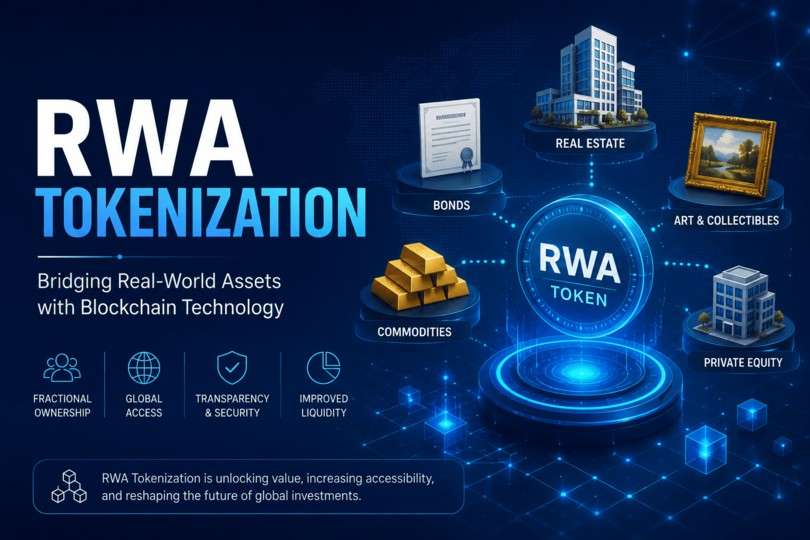
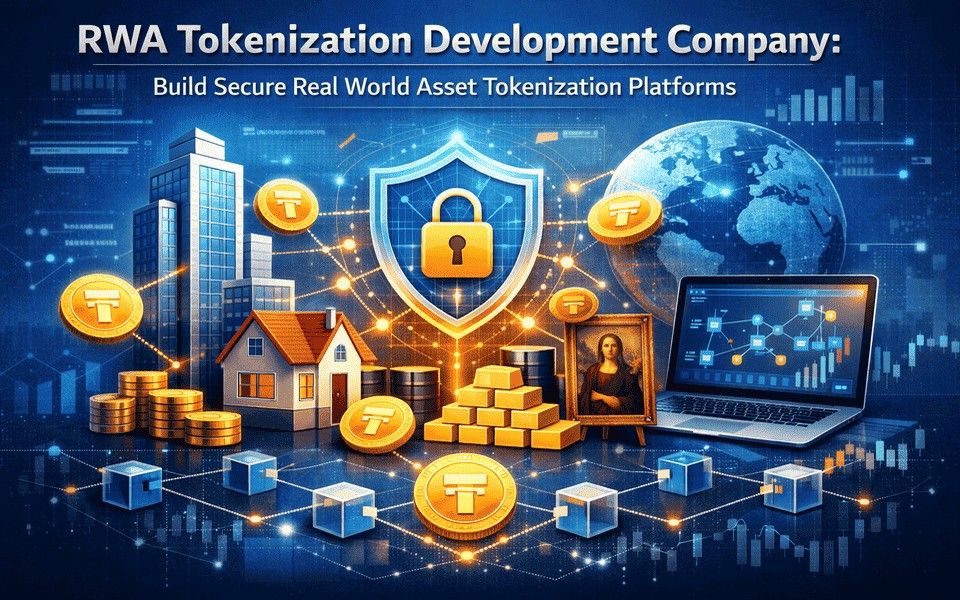
One of the most significant DeFi trends gaining serious momentum in 2026 is the tokenization of real-world assets — real estate, private credit, commodities, invoices, and infrastructure projects.
By representing physical or financial assets as blockchain tokens, businesses unlock liquidity that was previously trapped. A property developer can sell fractional ownership globally. A manufacturer can tokenize receivables for instant working capital. A fund can offer daily liquidity on assets that traditionally required multi-year lock-ups.
This is not theoretical. BlackRock, Franklin Templeton, and JPMorgan are already doing this at scale. The businesses building tokenization infrastructure today are establishing first-mover advantages in markets that will be worth trillions within the next few years.
4. New Revenue Streams That Did Not Exist Before
DeFi does not just reduce costs — it creates entirely new ways to generate revenue that have no equivalent in traditional finance.
Businesses can earn yield on idle treasury assets by providing liquidity to DeFi protocols. They can build and operate DeFi platforms that generate ongoing protocol fee revenue. Token-based incentive structures create growth mechanics that traditional marketing cannot replicate. And DeFi's composability — the ability of protocols to interlock and build on each other — means a well-designed product can integrate with the entire DeFi ecosystem, exponentially expanding its reach.
5. Smart Contracts as Programmable Business Logic
Smart contracts are not just a payments technology. They are programmable business logic deployed on immutable, globally accessible infrastructure.
Think about the business processes that involve conditional financial transactions — insurance payouts, supply chain financing, royalty distributions, escrow arrangements, milestone-based payments. All of these can be reimagined as smart contracts: automatic, transparent, tamper-proof, and auditable.
For industries where compliance documentation is heavy and expensive, smart contracts also dramatically simplify audit trails. Every transaction is recorded permanently on-chain, verifiable by any authorized party at any time.
6. The Competitive Pressure Is Real
In banking, insurance, asset management, trade finance, and supply chain — DeFi-native competitors are actively building on open-source blockchain infrastructure with structurally lower costs and faster product iteration cycles.
Waiting for DeFi to become mainstream before investing is a strategic mistake. By the time the technology is obvious, the competitive moats are already built. The businesses investing in DeFi development today are not chasing a trend — they are building the infrastructure that will define their industry's architecture for the next decade.
7. The Technology Is Enterprise-Ready in 2026
Early DeFi had serious problems — smart contract vulnerabilities, terrible user experience, regulatory uncertainty, and scalability limitations. Most of these barriers have been solved or significantly reduced.
Layer 2 networks like Arbitrum, Optimism, and Polygon now process thousands of transactions per second at negligible cost. Account abstraction has eliminated the complexity of managing private keys and gas fees. Professional smart contract auditing has made financial infrastructure dramatically more secure. And institutional-grade custody, compliance tooling, and permissioned DeFi environments have made it possible for regulated businesses to participate safely.
The technical barriers to enterprise DeFi adoption are lower today than at any point in the technology's history.
8. India's DeFi Opportunity in 2026
India has a unique and compelling position in the global DeFi landscape. World-class blockchain engineering talent, a massive underbanked population hungry for accessible financial services, a rapidly digitalizing economy, and an increasingly constructive regulatory environment all converge to create extraordinary opportunity.
The RBI's CBDC work, SEBI's exploration of blockchain for capital markets, and growing startup activity in the Web3 and DeFi space signal that an inflection point is approaching. Forward-thinking Indian enterprises across BFSI, logistics, agri-tech, and healthcare are already building on this foundation — and the ones moving now will set the terms for the ones that follow.
Choosing the Right DeFi Development Partner
The difference between a well-architected DeFi protocol and a vulnerable one can be enormous — both in opportunity and in risk. DeFi development requires deep expertise across smart contract engineering, blockchain architecture, tokenomics design, and security auditing.
Technoloader brings end-to-end DeFi development capabilities — from protocol architecture and smart contract development to front-end dApp interfaces and ongoing support. Whether you are building a decentralized exchange, a lending protocol, a tokenization platform, or a custom DeFi product, Technoloader's DeFi development practice delivers solutions built for enterprise scale, security, and longevity.
Conclusion
Investing in DeFi development in 2026 is not a speculative bet. It is a strategic business decision grounded in measurable advantages — lower costs, new revenue streams, real-world asset tokenization, 24/7 global liquidity, and programmable financial infrastructure that scales.
The businesses building on DeFi today are not waiting for permission. They are capturing advantages that compound over time. Whether you are a fintech startup, an established financial institution, or an enterprise in any capital-intensive industry, the case for DeFi investment has never been more straightforward.
Technoloader is here to help you move from curiosity to execution — building enterprise-grade DeFi solutions that are secure, scalable, and built for the long term.
Related Posts