Practical Dog Food Calculator by Weight: Portions, Calories, and Adjustments
-

- Published Updated
- 372 views
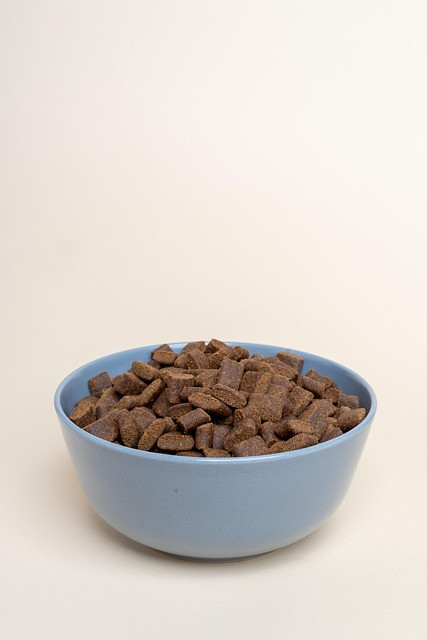
A clear dog food calculator by weight helps estimate daily calories and portion sizes for dogs of different breeds, ages, and activity levels. This guide explains the core calculations, shows a simple checklist framework, walks through a real example, and gives practical tips to fine-tune feeding without guesswork.
- Start with Resting Energy Requirement (RER): 70 x (body weight in kg)^0.75.
- Adjust to Maintenance Energy Requirement (MER) by activity, age, and neuter status.
- Use kcal per cup from the food label to convert calories into portions.
- Use the FEED-CAL checklist to verify calories, life stage, and health needs.
How to use a dog food calculator by weight
Step-by-step: 1) weigh the dog in kilograms, 2) calculate Resting Energy Requirement (RER), 3) apply a multiplier for activity or life stage to get Maintenance Energy Requirement (MER), 4) convert MER to volume using the food's kcal per unit. This sequence produces a practical starting point for daily feeding recommendations.
Key terms to know
RER (Resting Energy Requirement) and MER (Maintenance Energy Requirement) are foundational. RER estimates baseline energy needs; MER adjusts RER for activity, growth, reproduction, or weight loss. Kcal per cup (or per can) is the metabolizable energy value used to convert calories into portions. Brands and labels often list kcal on the packaging or technical sheets.
Core calculation formulas
Use these formulas in the calculator flow: RER = 70 × (weight in kg)^0.75. Then choose a MER multiplier: for example, 1.2–1.4 for neutered adult dogs, 1.6 for active adults, 2.0–3.0 for puppies depending on age. Multiply RER × MER factor = daily kcal.
FEED-CAL checklist (practical framework)
The FEED-CAL checklist provides a named framework to validate estimates and avoid common mistakes:
- F — Find the dog’s accurate weight in kg.
- E — Estimate RER using the standard formula.
- E — Evaluate life stage and activity to pick a MER multiplier.
- D — Determine kcal per cup or per can from the food label.
- C — Calculate daily portion: MER / kcal per unit.
- A — Adjust for treats and supplements (10–15% of daily kcal max).
- L — Log weight and body condition score for 2–4 weeks and adjust.
Real-world example
Scenario: a 30-lb (13.6 kg) neutered adult, moderate activity. 1) Convert weight: 13.6 kg. 2) RER = 70 × (13.6)^0.75 ≈ 70 × 6.46 ≈ 452 kcal. 3) Choose MER multiplier 1.4 (neutered, moderate) → MER ≈ 452 × 1.4 ≈ 633 kcal/day. 4) If the dry food is 360 kcal per cup, portion = 633 / 360 ≈ 1.76 cups per day, split into two meals. 5) Monitor body condition and adjust 10% up or down over 2–4 weeks if weight changes.
Practical tips to use the calculator effectively
- Use an accurate scale and convert pounds to kilograms (1 lb = 0.4536 kg) for RER formula precision.
- Check kcal per cup on the manufacturer's nutritional statement or the product's website; ‘cup’ measures vary, so use the kcal value rather than volume alone.
- Account for treats and table scraps in the total daily kcal to avoid gradual weight gain.
- Recalculate after life-stage changes (puppy growth, pregnancy, senior years) and after any major activity change.
- If the dog has a medical condition, use this as a starting estimate and consult a veterinarian or a board-certified veterinary nutritionist for tailored plans.
Trade-offs and common mistakes
Common mistakes include: using volume-only measures without calorie data, failing to adjust for activity or neuter status, and not rechecking body condition. Trade-offs often involve convenience vs accuracy: canned food kcal is often clear but caloric density can vary, while homemade diets need lab analysis to confirm kcal. Over-reliance on general breed charts ignores individual variability—monitoring weight and body condition score remains essential.
When to consult official guidance and professionals
For life-stage feeding standards and label interpretations, consult guidance from recognized authorities such as AAFCO for nutrient profiles and labeling practices. External references with current standards can clarify legal labeling and nutrient minimums: AAFCO official site. For complex cases (obesity, kidney disease, allergies), consult a veterinarian or veterinary nutritionist.
How to convert kcal per cup to daily portions
Step: find kcal per cup on the label, divide the daily kcal need (MER) by that value to get cups per day. Adjust for feeding frequency and use a calibrated measuring cup. For wet food, convert can kcal to grams per day if needed, using the kcal per can number.
Common scenarios and quick reference
Scenario examples: small breeds (5–10 lb) often have higher kcal/kg needs than large breeds; growing puppies require 2–3× RER depending on age; working dogs require higher MER multipliers. A dog feeding chart by weight can provide quick lookup values but must be personalized with activity and body condition.
FAQ
How to use a dog food calculator by weight?
Enter the dog’s weight in kilograms, calculate RER with 70 × weight^0.75, choose a MER multiplier based on life stage and activity, then divide MER by the food’s kcal per cup to get daily portions. Monitor weight and body condition score and adjust as needed.
What is RER versus MER for dogs?
RER is the Resting Energy Requirement, a baseline calorie estimate calculated from body weight. MER is the Maintenance Energy Requirement that adjusts RER for activity level, age, reproductive status, or illness.
How many calories does a dog need per day by weight?
Calorie needs vary by weight, activity, and life stage. Use RER and MER formulas to estimate individualized calories rather than relying on broad rules alone.
Can the same calculator work for all breeds and sizes?
The formulas apply across breeds, but multipliers differ by activity and life stage. Individual variation (metabolism, neuter status, health) means the calculator provides a starting point; adjust based on body condition.
When should a veterinary nutritionist be consulted?
Consult a veterinary nutritionist for chronic conditions, formulary homemade diets, rapid unexplained weight changes, or when precise nutrient balance is critical (e.g., renal disease, food allergies, or growth problems).