ETABS Structural Design Training
-
- May 26th, 2026
- 6,142 views
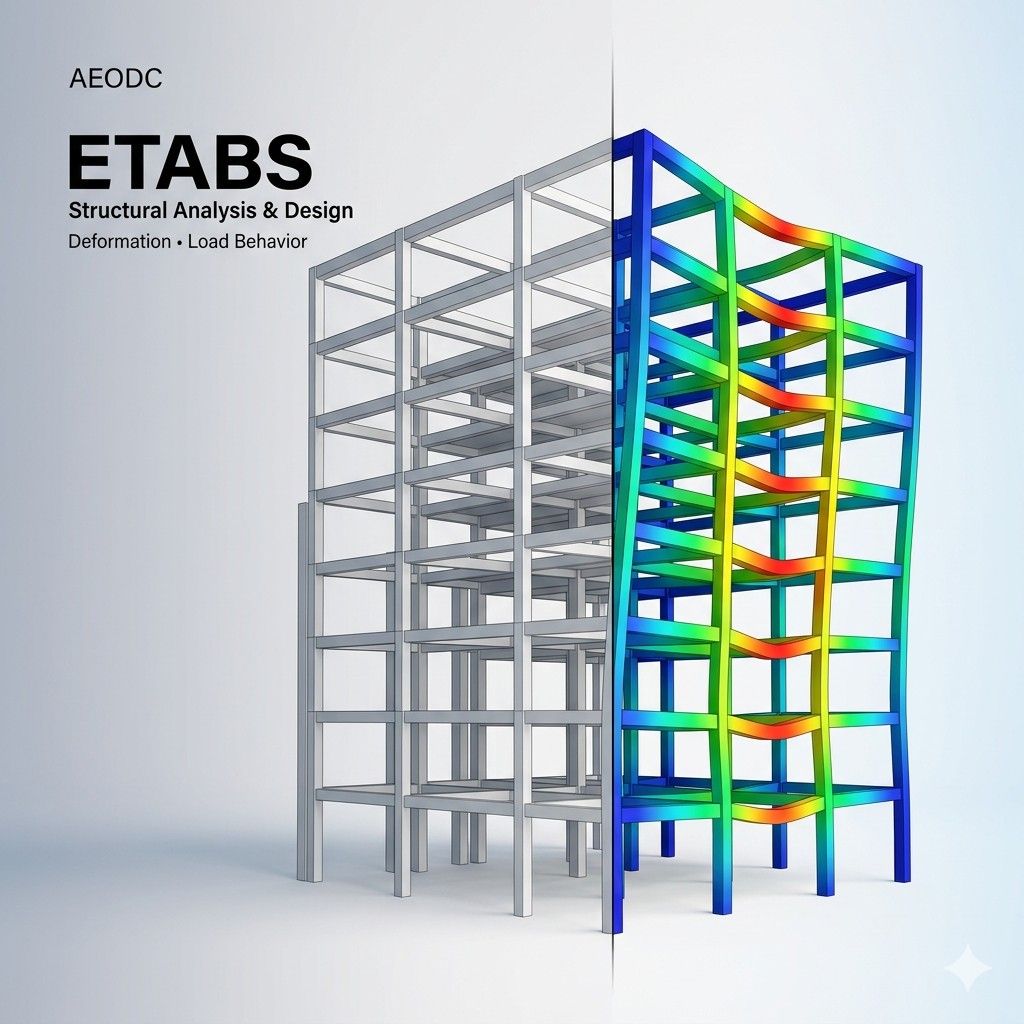
ETABS Training Course – AEODC
The ETABS Training Course at AEODC is designed for civil engineers, structural engineers, construction professionals, diploma holders, and engineering students who want to develop strong expertise in structural analysis and design using industry-standard software tools. This comprehensive training program combines beginner-level concepts with advanced professional workflows to help learners master structural modeling, structural analysis, and design practices used in real-world engineering projects.
ETABS is one of the most widely used software applications in the structural engineering industry. It is specially developed for the analysis and design of multi-storey buildings and complex structures. Structural engineers across the world use ETABS to analyze buildings under different loading conditions, optimize structural performance, and ensure compliance with national and international design standards.
The ETABS Structural Design Course at AEODC focuses on practical implementation and project-oriented learning rather than only theoretical explanations. Participants are trained using real-world workflows that are commonly followed by structural consultants, engineering firms, BIM companies, and infrastructure organizations. The course helps learners understand how structural systems behave and how engineers use ETABS to design safe, efficient, and cost-effective structures.
Candidates who successfully clear the AEODC evaluation examination with more than 85% marks after training may be offered opportunities to work with AEODC on live structural engineering and BIM-based projects on an internship, contract, or project basis. Depending on performance, technical capability, and project requirements, selected candidates may also be considered for full-time opportunities within the organization.
Freshers who are beginning their careers in civil and structural engineering may be selected for structured internship programs to gain practical industry exposure and hands-on project experience. Experienced professionals may be evaluated for contract-based or full-time technical roles based on their performance and software proficiency. All opportunities are strictly performance-driven and aligned with AEODC’s internal quality standards and project delivery requirements.
Build Strong Structural Engineering Skills with ETABS
Modern structural engineering depends heavily on advanced analysis and design software to ensure safety, accuracy, and efficiency in construction projects. ETABS enables engineers to model complex structures, apply various loads, perform structural analysis, and design structural components according to engineering standards.
Structural analysis is one of the most critical stages in any construction project because it helps determine how buildings respond to external forces such as gravity, occupancy loads, wind pressure, and earthquake forces. Using ETABS, engineers can simulate these conditions digitally and identify potential structural issues before construction begins.
Through this Learn ETABS Online program, participants gain a detailed understanding of structural systems, load transfer mechanisms, analysis methodologies, and structural design principles used in professional engineering environments. The course is structured to help learners understand not only how to use the software but also the engineering logic behind every modeling and design decision.
The training program is suitable for:
Civil Engineering students
Structural Engineering professionals
Site engineers
BIM professionals
Construction consultants
Diploma holders
Design engineers
Freshers entering the construction industry
Professionals upgrading their technical skills
What You Will Learn in ETABS Training Course
The ETABS Structural Design Course covers complete workflows from beginner-level structural modeling to advanced structural analysis and design procedures used in industry projects.
Major topics covered during the training include:
Introduction to Structural Engineering and ETABS
Participants are introduced to the fundamentals of structural engineering, including structural systems, building behavior, and design methodologies. Learners also become familiar with the ETABS interface, workspace, and project setup process.
Structural Modeling
Participants learn how to create structural models for residential, commercial, and high-rise buildings. This includes:
Grid creation
Story definition
Beam modeling
Column placement
Slab creation
Structural framing systems
Modeling of RCC and steel structures
Material and Section Properties
The course covers the definition of concrete grades, steel grades, reinforcement properties, and structural section properties. Participants learn how to assign accurate material specifications according to design standards.
Load Application and Load Combinations
Load calculations are one of the most important aspects of structural engineering. Learners are trained to apply:
Dead loads
Live loads
Floor finish loads
Wind loads
Seismic loads
Dynamic loads
Participants also learn how to create load combinations according to IS codes and structural design standards.
Structural Analysis
The course includes detailed training on structural analysis methods and interpretation of analysis results. Participants learn how to evaluate:
Bending moments
Shear forces
Axial forces
Deflection behavior
Story drift
Structural stability
RCC and Steel Design
Participants are trained in the design of:
RCC beams
RCC columns
Slabs
Footings
Steel structural members
The course also covers structural safety checks and design optimization methods.
Seismic and Earthquake Analysis
ETABS is widely used for earthquake-resistant building design. Participants learn response spectrum analysis, seismic load calculations, and earthquake-resistant structural design concepts based on industry standards.
Documentation and Reporting
Learners are trained to generate structural reports, design summaries, calculation sheets, and engineering documentation required for professional project submission and coordination.
BIM Workflow Integration
The training also introduces participants to BIM coordination basics and integration workflows used in multidisciplinary construction projects.
Practical Project-Based Learning
One of the key advantages of the ETABS Training Course at AEODC is its practical learning approach. Instead of relying only on theoretical lectures, the course emphasizes real project workflows and hands-on assignments.
Participants work on industry-style projects that simulate actual engineering environments. This practical exposure helps learners understand how structural engineers manage projects from initial modeling to final structural design and documentation.
Practical training helps participants:
Improve software confidence
Understand real industry workflows
Build project handling capability
Improve analytical thinking
Develop problem-solving skills
Prepare for structural design interviews
Gain practical engineering exposure
The training approach is designed to bridge the gap between academic learning and industry requirements.
Course Outcomes
By completing the ETABS Training Course, participants will be able to:
Perform structural analysis of buildings using ETABS
Model RCC and steel structures professionally
Apply structural loads and load combinations accurately
Interpret structural analysis results effectively
Design structural components according to engineering standards
Perform seismic and wind analysis
Optimize structural systems for safety and efficiency
Prepare professional structural documentation
Work on real-world engineering projects confidently
Build a strong foundation for advanced structural engineering roles
Career Opportunities After ETABS Training
After successfully completing the ETABS Training Course, learners can explore various career opportunities in the construction, infrastructure, and structural engineering sectors. Skilled ETABS professionals are in high demand across consulting firms, construction companies, BIM organizations, and infrastructure development projects.
Potential career roles include:
Structural Design Engineer
ETABS Engineer
Civil Design Engineer
BIM Structural Modeler
Structural BIM Engineer
RCC Design Engineer
Steel Structure Design Engineer
Project Engineer (Structural)
Structural Consultant
The course also helps learners improve their technical profile and increase employability in both national and international engineering markets.
Why Choose AEODC for ETABS Training
AEODC focuses on practical technical education aligned with real industry requirements. The ETABS Training Course is designed by professionals with experience in structural engineering and BIM project execution. The program combines software learning, engineering concepts, practical assignments, and project-oriented workflows to ensure participants gain job-ready technical skills.
The training methodology emphasizes:
Hands-on learning
Industry-standard workflows
Real project exposure
Practical assignments
Technical guidance from professionals
Career-focused skill development
This Learn ETABS Online program helps participants build strong structural engineering skills, improve software expertise, and prepare for professional opportunities in the rapidly growing construction and infrastructure industry.