Golden Retriever Food Guide | Portions, Nutrients, and Red Flags
-

- Published Updated
- 9,235 views
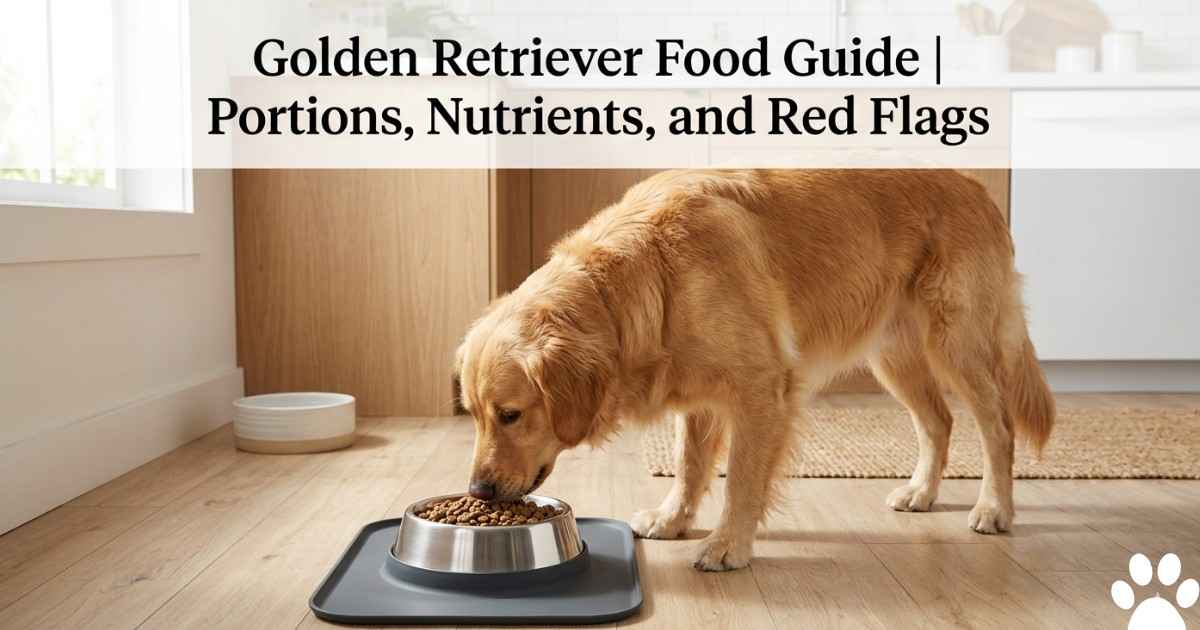
Choosing the right Golden Retriever food is more than picking a quality brand; it’s about matching nutrients and portions to your dog’s weight, age, and activity level. If these factors are off, even high-quality ingredients can’t protect your dog from the obesity and joint issues common in this breed.
In my practice, Golden Retrievers often have diet-related weight gain. The Association for Pet Obesity Prevention reports that over 55% of U.S. dogs are overweight or obese. Goldens are more prone, which puts strain on their joints and raises risks for diabetes and heart disease. Changing food rarely helps. Most of the time, portion control fixes the issue. Find the best food guides here: https://goldenretrieverinsight.com/category/food/.
How Much Should a Golden Retriever Eat? Portions by Body Weight
An adult Golden Retriever needs roughly 1,200 to 1,740 calories per day, depending on size and activity, but most owners are feeding 20 to 30% over that without realizing it.
Start by using your dog's weight. A 65-lb, moderately active female Golden needs about 1,272 kcal per day. A 75-lb active male needs closer to 1,740 kcal. Every dog is different. Begin with the feeding amount listed on the package. Adjust this amount as needed to reach and keep your dog's ideal weight, following AVMA guidance. For a detailed overview, see https://goldenretrieverinsight.com/golden-retriever-feeding-chart-by-age/.
The Golden Body Check (GBC), my three-point at-home assessment, I teach every Golden owner at their first annual:
Rib test:
Run your fingers along the ribcage without pressing. You should feel each rib distinctly. If you can’t reduce food by 10% without pressing, reduce it by 10%.
Waist check:
Look down at your dog from above. A visible waist tuck behind the ribs is correct. A straight or convex silhouette signals overfeeding.
Tuck test:
View from the side. The abdomen should rise toward the hind legs. A flat or sagging belly is a red flag.
If your dog fails two of three points, cut daily food by 10%. Recheck in three weeks. For breed-specific advice, use resources designed for Golden Retrievers. These offer more clinical detail than packaging. https://goldenretrieverinsight.com/golden-retriever-food-guide/
)
What Nutrients Does Golden Retriever Food Actually Need to Include?
Not all nutrients matter equally for this breed. Three stand out clinically.
Taurine and heart health
In 2018, a PLOS One study found taurine deficiency linked to dilated cardiomyopathy in Goldens eating certain commercial diets. This changed how I advise clients about grain-free foods. Dilated cardiomyopathy occurs when the heart chambers enlarge and cannot pump well. If the first five ingredients in your Golden's food include legumes, peas, or lentils, ask your vet about taurine supplementation.
EPA and DHA for joints and coat
Salmon oil is rich in EPA and DHA omega-3s. These support joint health and a healthy coat. Look for foods with salmon oil or use a fish oil supplement with 1,000 mg EPA/DHA daily for a 65-lb Golden.
In January 2025, a 4 year old female Golden (78 lbs) had a dull coat and mild joint stiffness. We switched her to a taurine-supplemented, salmon oil food and reduced calories by 10%. After 90 days, she lost 6 lbs, and her condition improved noticeably. For a detailed overview, visit https://goldenretrieverinsight.com/best-diet-for-dogs-nutrition-guide/.

Can Golden Retrievers Eat Grain-Free Food? The Honest Answer
Grain-free Golden Retriever food isn’t automatically better, and for some dogs, it carries real cardiac risk. Golden Retriever puppies don’t stop growing until 12 to 24 months, so to keep diet-related hip disease risk low, avoid switching to adult or grain-free recipes too early. For a detailed overview, visit https://goldenretrieverinsight.com/nutritionally-complete-homemade-dog-food-recipes/.
URGENT—call your vet immediately if you notice the following:
· Exercise intolerance or sudden fatigue during normal walks
· Coughing, labored breathing, or abdominal distension
· Fainting or collapse
MONITOR over 24-48 hours:
· Loose stool after a new food introduction
· Mild appetite reduction during a diet transition
· Increased gas or borborygmi (gut sounds) in the first week
The Golden Retriever Lifetime Study, funded by the Morris Animal Foundation, tracks hundreds of Goldens over time. It generates breed-specific data on diet and long-term health. It is the most rigorous resource for Goldens.
What is the best food for a Golden Retriever?
The best Golden Retriever food is one with a named animal protein as the first ingredient, added EPA/DHA from fish oil, and confirmed taurine content. Discuss formula specifics with your vet based on your dog's age and weight.
How much should a Golden Retriever eat per day?
Adult Golden Retrievers generally need 1,200 to 1,740 calories daily, adjusted for body weight and activity. A 65-lb female needs roughly 1,272 kcal; a 75-lb active male needs approximately 1,740 kcal, split across two meals.
Can Golden Retrievers eat grain-free food safely?
Some can, but grain-free diets high in legumes have been linked to dilated cardiomyopathy in Golden Retrievers. Have your vet evaluate any grain-free formula before switching, especially for puppies under 18 months.
Are EPA and DHA supplements good for Golden Retrievers?
Yes. EPA and DHA from fish oil support joint health and coat quality in Goldens. A dose of around 1,000 mg daily is appropriate for a 65-lb adult, but confirm the amount with your veterinarian.
What happens if a Golden Retriever eats too much food over time?
Chronic overfeeding causes obesity, which accelerates hip dysplasia and increases cardiac and cancer risk, all conditions Golden Retrievers are already predisposed to. Use the rib, waist, and tuck check monthly to catch weight gain early.
Conclusion
Key takeaways: Use the GBC check monthly, ensure taurine is present in your dog's food, and tailor portions to your dog's current weight. Nutrient quality is more critical than brand. Adjust feeding habits if unsure they're helping your dog reach optimal health.
AUTHOR BIO
Dr. Nabeel Akram, DVM, is a veterinarian focused on Golden Retriever nutrition, weight control, and preventive care. He writes at GoldenRetrieverInsight.com, giving practical feeding and health tips to Golden owners at every stage.