Horizontal Bead Mills: Industrial Benefits, Uses, and a 5-Step Selection Checklist
-

- Published Updated
- 284 views
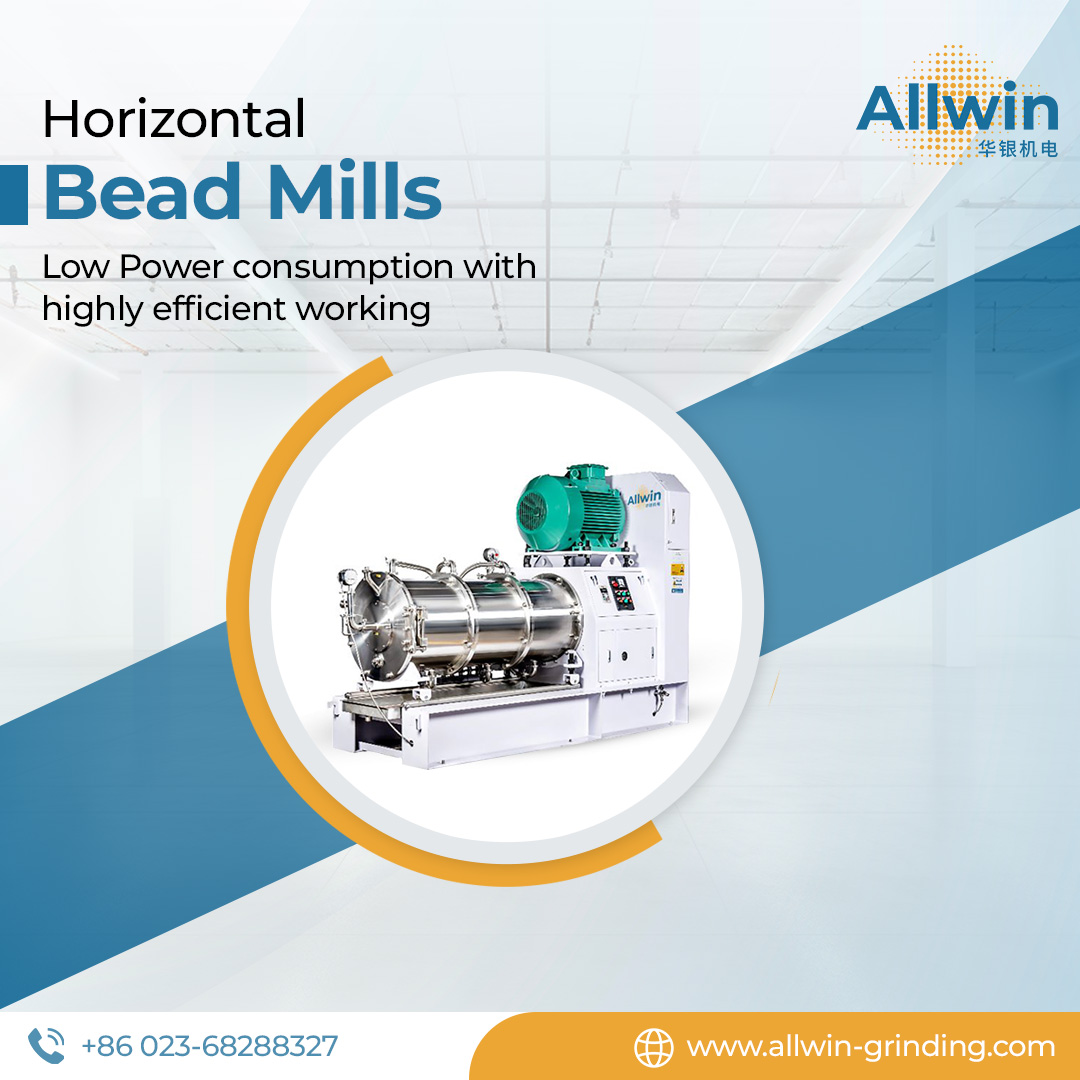
Horizontal bead mills: how they work and why they matter
Horizontal bead mills are stirred media mills widely used for fine grinding, dispersion, and micronization in paints, inks, pharmaceuticals, and specialty chemicals. This article explains what horizontal bead mills do, where they provide the most value, and how to select and operate them for reliable industrial performance. Detected intent: Informational
- Horizontal bead mills use a horizontal chamber with an agitator to circulate grinding media and product for size reduction and dispersion.
- Best for high-viscosity dispersions, tight particle-size distribution, and scale-up to production volumes.
- Key selection factors: media size and material, agitator design, residence time, and specific energy.
- Includes a 5-step Bead Mill Selection Checklist and practical operating tips.
What is a horizontal bead mill?
A horizontal bead mill is a type of stirred media mill where an agitator shaft runs along a horizontal grinding chamber packed with small beads (media). The agitator stirs the media, creating shear and impact forces that grind particles and disperse phases. Variants include single-pass, recirculation, and continuous-flow designs; they are closely related to vertical stirred mills and attritors but are optimized for linear flow-through operation and scale-up.
Benefits of horizontal bead mills
Horizontal bead mills deliver several industrial advantages:
- Consistent particle size and narrow distribution — produces submicron dispersions when paired with correct media selection and energy input.
- Good heat control — horizontal layout often allows efficient cooling jackets and staged chambers to manage exothermic processes.
- Scalable throughput — modular designs support straightforward scale-up from lab to production while preserving process variables like specific energy and residence time.
- Flexibility for viscous systems — suitable for high solid-load dispersions where shear, rather than impact alone, achieves dispersion.
Applications and industrial significance
Common industrial uses for horizontal bead mills include pigment grinding for paints and inks, producing fine emulsions in pharmaceuticals, processing battery slurries, and creating conductive dispersions for electronics. The combination of controllable shear, media selection, and residence time makes them central to processes that require reproducible rheology and optical properties.
Related terms and concepts
Stirred media mill, attritor, comminution, micronization, grind media (zirconia, glass, steel), residence time, specific energy (kWh/t), zeta potential, viscosity control, bead size distribution.
5-step Bead Mill Selection Checklist (named framework)
Use this practical checklist to evaluate equipment and process fit before purchase or scale-up.
- Define product targets — target D50/D90, acceptable PSD tail, solids loading, and rheology.
- Match media to objective — choose bead material and size to balance wear, contamination risk, and grinding efficiency.
- Specify energy and throughput — calculate required specific energy and verify mill power and cooling capacity.
- Assess flow configuration — single-pass vs recirculation, chamber staging, and feed/pump compatibility.
- Plan for maintenance and safety — seals, agitator access, cleaning (CIP), and guarding per safety standards.
Short real-world example
A coatings manufacturer needed to reduce pigment particle size to improve tint strength. Using the 5-step Bead Mill Selection Checklist, the process team selected a horizontal bead mill with staged chambers and 0.6 mm zirconia beads, increased solids loading, and adjusted recirculation time. Specific energy targets were monitored to reach a D50 below 0.25 µm. The change halved processing time per batch and produced a more uniform gloss level in the final paint.
Process optimization: practical tips
- Monitor specific energy (kWh/kg) rather than just time; energy-per-kg correlates better with particle-size reduction.
- Start with conservative bead size, then test smaller beads if fines and shear are needed — watch for increased wear and contamination.
- Control temperature: excessive heat can change viscosity and destabilize dispersions; use staged cooling and measure product temperature at exit.
- Maintain consistent feed rheology; fluctuations in viscosity change residence time and grinding efficiency.
- Track media wear and contamination with periodic analytical checks (e.g., ICP for metal contamination) to protect product quality.
Trade-offs and common mistakes
Choosing parameters for a horizontal bead mill requires trade-offs:
- Smaller beads increase surface interactions and finer grind but raise power demand and media wear.
- Higher solids loading improves throughput but can reduce effective bead contacts if viscosity becomes too high.
- Excessive recirculation can over-process and waste energy; under-processing leaves agglomerates and off-spec product.
Common mistakes include skipping pilot trials during scale-up, underestimating cooling needs, and failing to test for media contamination. Safety oversights such as inadequate guarding or lockout/tagout procedures also occur; consult machine-guarding best practices for industrial equipment to reduce risk: OSHA machine guarding guidance.
Operational controls and monitoring
Key control variables are agitator speed, flow rate, bead size and loading, temperature, and recirculation time. Inline particle-size analyzers, torque monitoring, and power consumption trends are useful process control signals during production runs. For regulatory environments, maintain traceable batch records that include media lot, operating parameters, and analytical results.
Core cluster questions
- How does bead size affect particle-size distribution in stirred media mills?
- What are the best practices for cooling and thermal management in high-solids milling?
- How to scale up a lab bead mill process to production reliably?
- Which media materials minimize contamination for pharmaceutical dispersions?
- What inline monitoring techniques improve process control for bead milling?
FAQ: What is a horizontal bead mill and how does it work?
A horizontal bead mill uses an agitator in a horizontal chamber filled with small grinding beads. Product flows through or recirculates while the agitator imparts shear and impact, breaking down particles and dispersing phases. Adjusting bead size, agitator speed, and residence time controls the final particle-size distribution.
How to choose the right media size and material?
Select media based on desired final particle size, product sensitivity to contamination, and cost. Harder media (zirconia, ceria) produce efficient grinding with lower wear but cost more; glass is economical but wears faster. Conduct small-scale trials to quantify wear and contamination risk.
What operating parameters most affect throughput and quality?
Specific energy (kWh per mass), bead size, solids loading, and temperature are primary drivers. Monitor power draw and particle-size metrics to tune throughput without sacrificing product quality.
Are horizontal bead mills suitable for high-viscosity slurries?
Yes — horizontal designs are often better for viscous systems than some vertical mills, provided the agitator and feed pump are specified for the viscosity and cooling is adequate.
Can horizontal bead mills be used for sterile or pharmaceutical production?
Yes, with appropriate hygienic design, suitable bead materials, and validated cleaning procedures. Consider biocompatible materials, closed-loop systems, and validation protocols common to pharmaceutical equipment.