Why Choosing the Right Hydraulic Hose Pipe Matters More Than You Think
-
- Published Updated
- 5,617 views
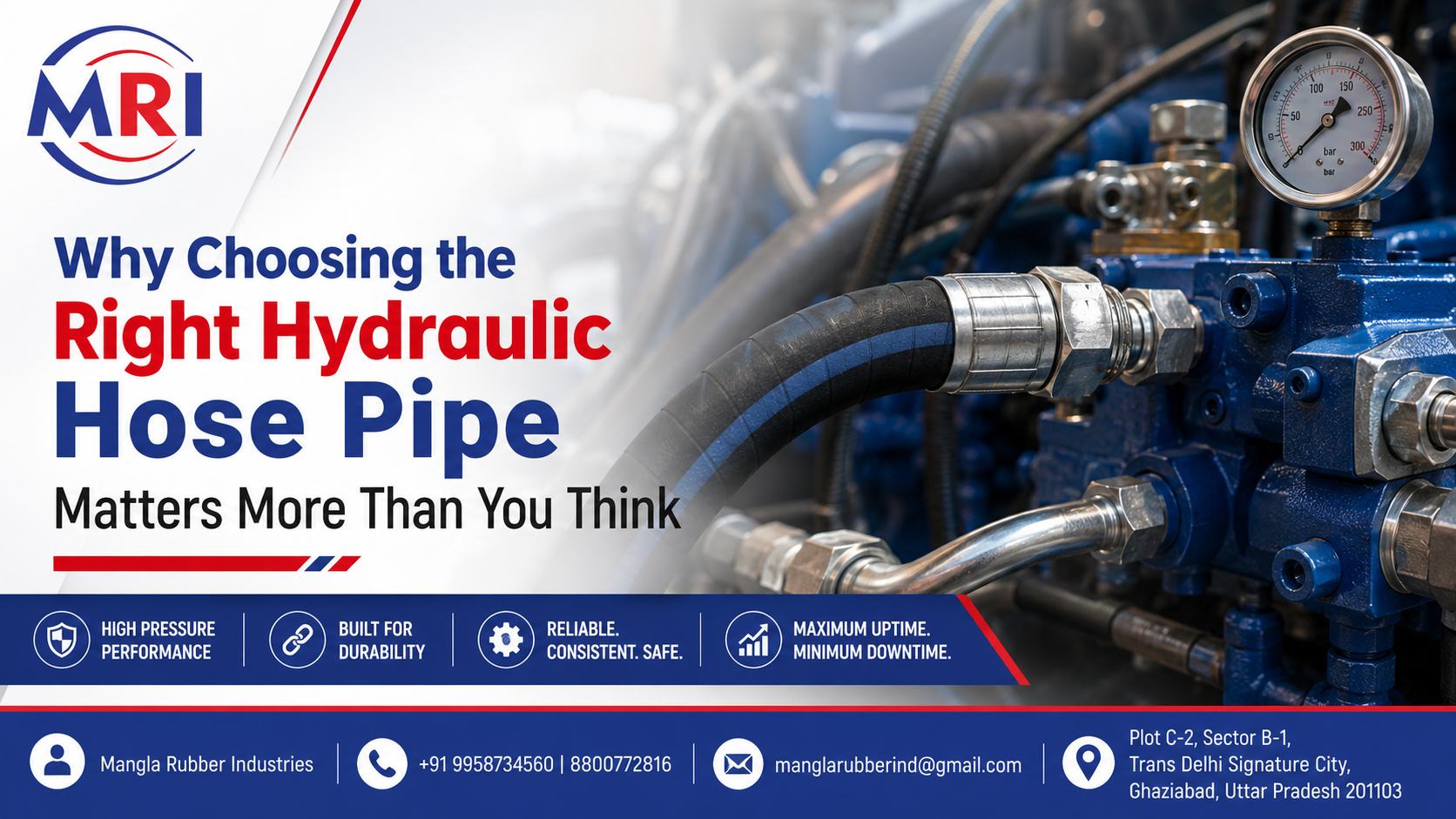
Hydraulic systems power some of the hardest-working machinery used in construction, manufacturing, agriculture, mining, and material handling. Pumps, cylinders, and valves usually receive most of the attention, but a smaller component often decides how safely and efficiently the system operates: the hydraulic hose pipe.
A hose does much more than carry hydraulic fluid from one component to another. It must handle pressure, vibration, movement, heat, environmental exposure, and repeated operating cycles. Selecting the wrong hose can result in leakage, pressure loss, damaged equipment, unexpected downtime, and serious safety risks.
That is why hydraulic hose selection should be treated as an engineering decision rather than a routine purchase.
A Hose Failure Can Stop the Entire Operation
A hydraulic hose may account for only a small portion of a machine’s total cost, but its failure can bring the entire machine to a standstill.
Consider an excavator operating at a construction site. A burst hose may stop the machine in the middle of an important task, delay workers, waste hydraulic oil, and require an urgent repair. In a manufacturing plant, the same type of failure could interrupt a complete production line.
The actual cost is not limited to buying a replacement hose. Businesses may also face labour expenses, lost production, fluid contamination, damaged components, and delayed projects.
Repeated hose failures can indicate a larger issue. The replacement may have the wrong pressure rating, unsuitable material, incorrect routing, or an incompatible fitting. Simply installing another hose of the same size may not solve the root cause.
Pressure Rating Is Only the Starting Point
Every hydraulic hose pipe is manufactured to work within a defined pressure range. Using a hose below the system’s maximum operating pressure can cause swelling, leakage, reinforcement damage, or sudden bursting.
However, checking normal working pressure alone is not enough.
Hydraulic systems often experience temporary pressure spikes when valves close, loads change, or machinery starts moving under resistance. These pressure surges may last only briefly, but repeated spikes gradually weaken the hose.
The operating cycle also matters. A hose used occasionally will experience less stress than one operating continuously in industrial machinery. The correct selection must account for maximum pressure, pressure impulses, frequency of use, and the expected workload.
The Working Environment Changes the Requirement
A hose that works reliably inside a controlled factory may not perform equally well on outdoor equipment.
Construction machinery exposes hoses to dust, abrasion, sunlight, vibration, mud, and continuous movement. Agricultural equipment may remain unused for months before facing intense seasonal workloads. Hoses installed near engines, furnaces, boilers, or heated processes must withstand elevated temperatures.
The surrounding environment should therefore be considered alongside the technical specifications. Exposure to chemicals, moisture, sharp surfaces, weather, and moving components can reduce hose life even when system pressure remains within limits.
Experienced manufacturers such as Mangla Rubber Industries evaluate the complete application rather than recommending a hose based only on its dimensions.
Hydraulic Fluid and Hose Material Must Be Compatible
The inner tube of the hose remains in direct contact with the hydraulic fluid. If the material is incompatible with the fluid, deterioration may begin inside the hose where it is difficult to detect.
Hydraulic systems can use petroleum-based oils, synthetic fluids, water-glycol mixtures, biodegradable oils, and fire-resistant fluids. An unsuitable inner tube may swell, harden, crack, or release particles into the system.
These particles can contaminate pumps, valves, seals, and other precision components. Over time, this reduces efficiency and increases maintenance requirements.
The type of fluid should always be confirmed before selecting a hose assembly. It should never be assumed that every rubber hose is suitable for every hydraulic medium.
Size and Temperature Affect System Efficiency
The internal diameter of a hydraulic hose determines how efficiently the fluid can travel through the system.
An undersized hose increases fluid velocity, friction, pressure loss, and heat generation. This may force the pump to work harder and cause slower or inconsistent actuator movement. Excessive heat can also damage seals and reduce the useful life of the hydraulic fluid.
An unnecessarily large hose may cost more, occupy additional space, and create routing difficulties without improving performance.
Temperature must also be checked carefully. Both the temperature of the hydraulic fluid and the surrounding environment affect hose life. Continuous heat can harden rubber, weaken the bonding between layers, and reduce flexibility. Extremely cold conditions may also make some hose compounds stiff and more likely to crack.
Installation Mistakes Cause Early Hose Failure
Even a correctly specified hose can fail prematurely when installed poorly.
One of the most common problems is twisting. Hydraulic hoses are designed to bend, but they should not operate under continuous rotational stress. Twisting creates uneven pressure on the reinforcement and may lead to early fatigue.
Every hose also has a minimum bend radius. Forcing it into a tight curve can weaken its internal structure. Hoses should be routed away from sharp edges, hot surfaces, and components that create constant rubbing.
Correct clamping, protective sleeves, suitable hose length, and adequate movement space can prevent many avoidable failures. Installation quality is often just as important as product quality.
Fittings Are Part of the Complete Assembly
A hydraulic hose cannot perform safely without the correct fittings.
The fitting type, thread, sealing method, material, pressure capacity, ferrule, and crimping specification must all match the hose and equipment. A fitting that appears to connect properly may still leak or separate under pressure if it is not compatible.
Professional crimping creates a secure connection without damaging the inner tube or reinforcement. For safety and consistency, it is better to source a complete hose assembly from a reliable hydraulic hose pipe manufacturer rather than combining unrelated parts.
Regular Inspection Prevents Unexpected Breakdowns
Hydraulic hoses should be inspected before visible leakage begins. Maintenance teams should look for abrasion, cracks, blistering, exposed reinforcement, flattened areas, loose fittings, oil accumulation, and unusual hose movement.
The surrounding installation should also be examined. Replacing the hose without correcting rubbing, excess heat, vibration, or poor routing may cause the new hose to fail in the same way.
Inspection frequency should depend on the application. High-pressure, mobile, heavy-duty, and safety-critical systems generally require more frequent checks.
Final Thoughts
The most expensive hydraulic hose is not always the one with the highest purchase price. It is often the one that fails unexpectedly and stops an entire operation.
Choosing the right hydraulic hose pipe requires careful consideration of pressure, fluid compatibility, temperature, diameter, reinforcement, fittings, installation, and environmental conditions. A properly selected hose improves equipment reliability, reduces maintenance costs, and creates a safer working environment.
For businesses looking for application-specific hydraulic and industrial hose solutions, Mangla Rubber Industries supplies hose products designed for demanding industrial requirements. Selecting the right hose from the beginning is a small decision that can prevent much larger problems later.