How to Optimize Inventory for Better Stock Control and Business Growth
-

- Published Updated
- 63 views
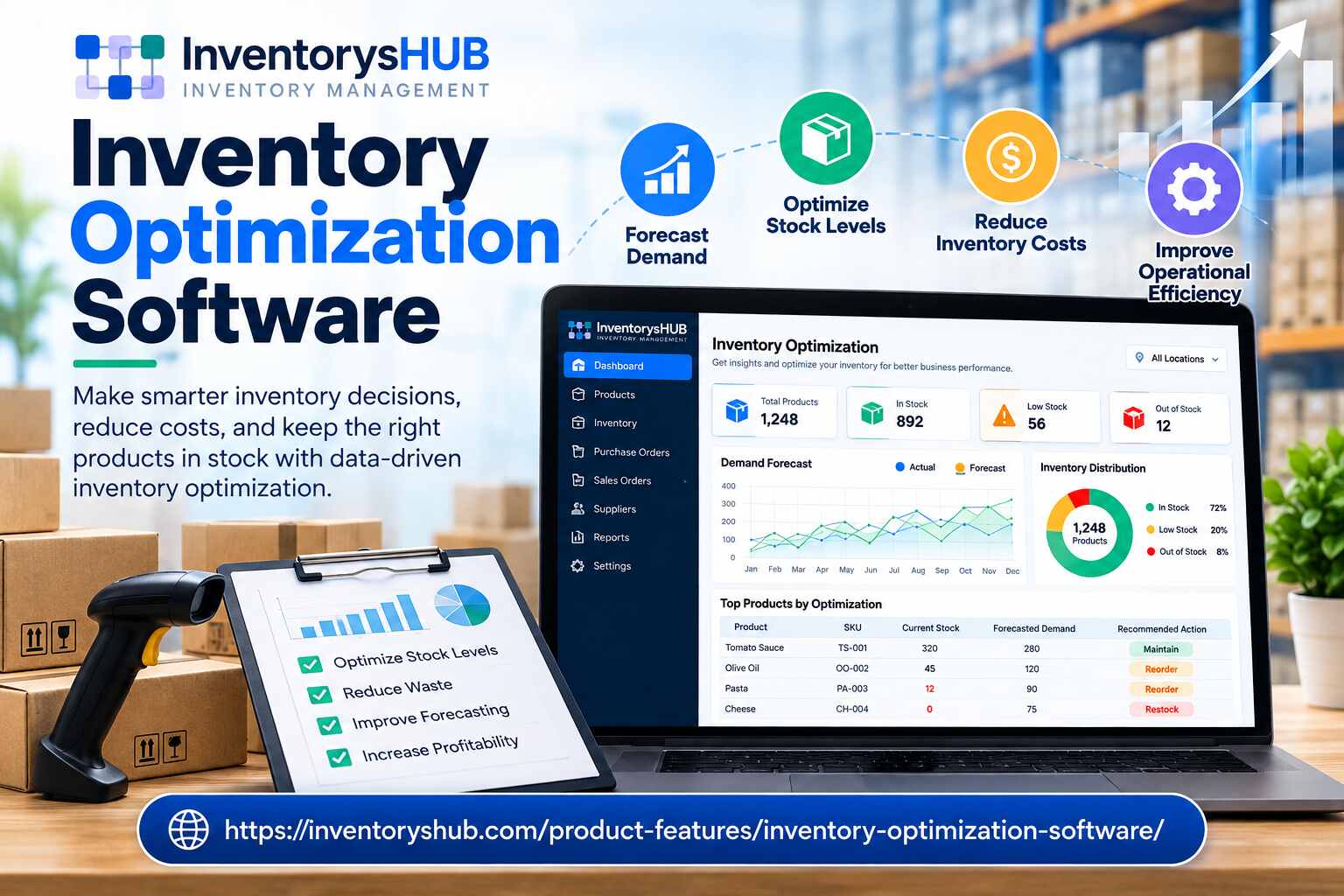
Managing inventory effectively is one of the biggest challenges businesses face as they grow. More products, multiple suppliers, changing customer demand, and expanding warehouse operations can make traditional inventory tracking difficult. Without a structured approach, businesses may experience excess stock, product shortages, inaccurate inventory records, and unnecessary operational costs.
Modern businesses can use Inventory Optimization Software to improve stock visibility, organize inventory information, and make better decisions about purchasing and replenishment. By combining accurate inventory data with better planning processes, businesses can create a more efficient stock management strategy and respond faster to changing operational requirements.
What Is Inventory Optimization?
Inventory optimization is the process of maintaining the right amount of inventory at the right time and in the right location. The goal is not simply to keep inventory levels low. Instead, businesses need to find the right balance between product availability, storage capacity, customer demand, purchasing costs, and operational requirements.
An effective inventory strategy helps businesses understand which products are moving quickly, which items require replenishment, and which products may be occupying unnecessary warehouse space. This information can support better purchasing decisions and help organizations avoid common inventory problems.
For growing businesses, inventory optimization becomes particularly important because even small inefficiencies can become expensive when multiplied across hundreds or thousands of products.
Why Inventory Optimization Matters for Growing Businesses
Poor inventory management can affect several areas of a business. Overstocking can tie up capital in products that are not moving quickly, while understocking can result in missed sales and dissatisfied customers.
Businesses also spend time managing inventory information. When employees depend on spreadsheets or disconnected records, updating and verifying stock information can become a repetitive task.
A more organized inventory process can help businesses:
- Improve stock visibility
- Reduce unnecessary inventory
- Minimize stock shortages
- Improve purchasing decisions
- Organize replenishment activities
- Coordinate warehouse operations
- Track inventory across multiple locations
- Reduce manual inventory work
- Support better business planning
These improvements can contribute to smoother daily operations and more consistent inventory control.
Improve Inventory Visibility
Inventory visibility is one of the foundations of effective stock management. Businesses need reliable information about available products, stock movement, and inventory requirements before making purchasing or replenishment decisions.
When inventory information is centralized, teams can spend less time searching through different records. Purchasing teams can review available stock before placing orders, while warehouse teams can better understand which products require attention.
Better visibility can also help management identify inventory trends and make decisions based on current information rather than assumptions.
Maintain Balanced Stock Levels
Maintaining balanced inventory levels is an important part of inventory optimization. Too much stock can increase storage requirements and carrying costs, while too little stock can create shortages.
Businesses should regularly review inventory levels and product movement to determine where adjustments may be required. Products with strong demand may require more frequent replenishment, while slower-moving products may need different purchasing strategies.
A balanced inventory approach allows businesses to focus resources on products that contribute most to operational and customer requirements.
Make Smarter Purchasing Decisions
Purchasing decisions directly affect inventory costs and product availability. Ordering without reviewing current stock levels can lead to unnecessary purchases or insufficient inventory.
A structured inventory process gives purchasing teams better information before creating new orders. By considering available inventory, product movement, supplier requirements, and expected demand, businesses can make more informed purchasing decisions.
This can help reduce unnecessary stock accumulation while ensuring important products remain available when needed.
Reduce Excess Inventory
Excess inventory is a common problem for businesses that do not have clear visibility into product movement. Products that remain in storage for long periods can occupy valuable space and tie up business capital.
Inventory optimization helps businesses identify slow-moving products and review whether current purchasing patterns are appropriate.
Instead of automatically ordering the same quantities, teams can use inventory information to adjust purchasing strategies according to actual business requirements.
Reducing excess inventory can also improve warehouse organization. When unnecessary stock is reduced, teams may have more space to organize active products and improve daily warehouse processes.
Prevent Stock Shortages
Stock shortages can create operational problems and affect customer satisfaction. When an important product is unavailable, businesses may have to delay orders, search for alternative suppliers, or place urgent purchases.
Inventory optimization supports better replenishment planning by helping teams monitor stock levels and identify products that may require attention.
The objective is not to eliminate every possibility of shortage but to create a more proactive inventory process. Regular monitoring allows businesses to respond before inventory reaches a critical level.
Improve Warehouse Management
Inventory optimization and warehouse management are closely connected. Accurate inventory information helps warehouse teams know what products are available and where they are located.
A well-organized warehouse can make picking, receiving, storing, and transferring inventory more efficient. When stock information is accurate, employees can spend less time searching for products or verifying records manually.
Businesses with multiple warehouses can also benefit from centralized inventory information because teams can better understand stock availability across different locations.
Manage Inventory Across Multiple Locations
Managing inventory becomes more complex when a business operates from multiple warehouses, stores, or facilities. Each location may have different inventory requirements and product movement patterns.
Centralized inventory management can help businesses understand how much stock is available at each location. This can support better inventory transfers, purchasing decisions, and replenishment planning.
For example, if one location has excess inventory while another location has a shortage, better visibility can help management identify the imbalance and determine whether a stock transfer is appropriate.
Use Data to Improve Inventory Decisions
Inventory decisions should be based on reliable information whenever possible. Businesses can review stock levels, purchasing activity, product movement, and replenishment requirements to identify patterns.
Data-driven inventory management does not necessarily mean making complicated calculations for every product. Instead, it means creating a consistent process for reviewing available information and using it to support business decisions.
Over time, this approach can help businesses identify recurring inventory problems and improve their overall inventory strategy.
Automate Repetitive Inventory Processes
Manual inventory management can require significant employee time, particularly as the number of products increases. Repeated data entry, stock checking, and record updates can also increase the possibility of human error.
Inventory management technology can help businesses organize information and reduce dependence on manual processes. Automation can allow employees to spend more time on activities that require analysis and decision-making.
This can improve productivity while creating a more consistent approach to inventory control.
Choose the Right Inventory Management Solution
Every business has different inventory requirements. A small business with a limited product range may have different needs from an organization managing multiple warehouses and thousands of products.
Before selecting an inventory solution, businesses should consider factors such as:
- Number of products
- Number of locations
- Warehouse requirements
- Purchasing processes
- Stock tracking needs
- Replenishment requirements
- Reporting and visibility
- Business growth plans
The right solution should support current operational requirements while also providing room for future growth. Businesses can See All Plans to review available options and determine which plan fits their inventory management needs.
Build a Long-Term Inventory Strategy
Inventory optimization should not be treated as a one-time task. Business conditions, customer demand, product ranges, suppliers, and operational requirements can change over time.
Regularly reviewing inventory performance can help businesses identify opportunities for improvement. Teams can evaluate slow-moving products, stock shortages, purchasing patterns, warehouse utilization, and replenishment processes.
A long-term inventory strategy should focus on maintaining visibility, improving planning, reducing unnecessary costs, and ensuring products are available when they are needed.
Conclusion
Effective inventory management requires more than simply counting products. Businesses need accurate information, organized processes, and a clear strategy for purchasing, replenishment, warehousing, and stock control.
Inventory optimization can help businesses maintain balanced stock levels, improve visibility, reduce excess inventory, prevent shortages, and support smarter purchasing decisions. As businesses grow, adopting a structured approach becomes increasingly important for maintaining operational efficiency.
By using the right technology and continuously improving inventory processes, businesses can build stronger stock control systems and create a more reliable foundation for sustainable growth.