The Honest Case for Buying a Massage Chair in 2026: Addressing Every Objection
-

- Published Updated
- 7,215 views

Most people who end up buying a massage chair spent a significant amount of time talking themselves out of it first.
The objections are familiar and reasonable. It is a lot of money for a single purchase. It might end up like the treadmill — used enthusiastically for a month and ignored for the next five years. A professional massage from a skilled therapist is probably better. The living room is not a spa. The money could go toward something more sensible.
These objections are worth taking seriously rather than dismissing with enthusiasm. Some of them are partially right. Some of them are based on assumptions that do not hold up when examined against the financial reality and the clinical evidence. And some of them reflect genuine risks that the right purchase approach can address.
This guide addresses each objection honestly — not to manufacture confidence in a purchase, but to give buyers the complete picture that makes the decision straightforward rather than uncertain.
Objection One: It Is Too Expensive
This objection is based on comparing the sticker price to a single professional massage session — a comparison that favours the professional session significantly. It is the wrong comparison.
The right comparison is between the total cost of a home chair over its ownership period and the total cost of professional massage at therapeutic frequency over the same period.
A quality home chair at $2,500 used daily for seven years costs approximately $357 per year — less than four professional sessions at the US average of $70 to $130 per session. At weekly professional massage rates, the annual cost runs between $3,640 and $6,760. Over seven years, weekly professional massage costs between $25,480 and $47,320. The same seven years of daily home massage costs $2,500 total — with the investment recovering within one to two years and every subsequent session at zero cost.
The objection that a massage chair is too expensive is accurate at the point of purchase. It is inaccurate when the comparison is made correctly — against the full cost of the professional alternative at the frequency that therapeutic effectiveness requires.
For buyers currently spending more than $150 per month on professional massage, the chair is not a large expense. It is a cost reduction that also dramatically increases access frequency and therefore therapeutic effectiveness. The full-body massage chair lineup at Kollecktiv includes models from accessible entry-level price points to flagship 5D AI systems — backed by three to six year warranties that confirm the manufacturer's confidence in the investment's durability.
Objection Two: It Will End Up Like the Treadmill
This is the objection with the most empirical support — the wellness equipment graveyard is real and most people have contributed to it at some point. The treadmill that became a clothes rack. The rowing machine that went to the garage after six months. The stationary bike that never quite found its daily moment.
The objection deserves a direct response rather than reassurance: what makes a massage chair different from the treadmill is not the product or the buyer's intention. It is the friction structure.
Exercise equipment requires sustained physical effort to use. The treadmill demands willpower every time you approach it — it takes from you before it gives anything back. As motivational resources deplete against the competing demands of daily life, the friction wins and the habit dissolves.
A massage chair requires no physical effort to initiate. The session begins when you sit down. The chair does the work. The experience is immediately restorative rather than demanding. The friction structure is the opposite of exercise equipment — instead of requiring motivational capital to initiate, it requires none.
Behavioural health research on habit formation is consistent on this point. Zero-friction wellness interventions become daily habits. High-friction interventions require sustained motivational capital that most people eventually cannot maintain against the demands of normal life. A massage chair is zero friction. The treadmill is not.
Verified Kollecktiv buyers consistently report the same pattern: the chair that seemed like it might become occasional use became the most used piece of furniture in the home within two weeks of delivery. The habit forms because the structure supports it — not because the buyer had exceptional willpower.
Objection Three: A Professional Massage Is Better
This objection is partially true and worth acknowledging as such.
A skilled massage therapist working on your tissue in real time — reading muscle feedback, adapting pressure and technique, addressing the specific tension pattern of your specific body on that specific day — produces a session quality that no device fully replicates. The therapist's adaptive intelligence and tactile sensitivity are genuine advantages that 4D and even 5D roller systems approximate rather than match.
For a single session comparison, the professional therapist wins.
The comparison fails at frequency. The professional therapist is available once a week at best, biweekly or monthly for most users, and at a per-session cost that makes daily frequency economically impossible. The home chair is available every day at zero marginal cost. And the clinical evidence on therapeutic massage is unambiguous on this point — the outcomes that matter most clinically, including sustained cortisol reduction, progressive connective tissue remodelling, and improved baseline sleep architecture, are dose-dependent. They require daily frequency to develop. They do not accumulate from weekly sessions regardless of how skilled the therapist delivering them.
The comparison between a professional session and a home session is not the right comparison. The comparison between a professional appointment model and a daily home model — across six months of cumulative physiological effect — is. On that comparison, the home model wins on every clinically significant long-term outcome.
Objection Four: I Do Not Have the Space
This objection is worth taking seriously because it is a practical one — and because the answer depends on the specific chair rather than the category generally.
The relevant specifications are the chair's footprint in operating position and the wall clearance required for full recline. Most quality massage chairs require approximately two inches of wall clearance to recline fully — space-saving design that is standard across the current Kollecktiv lineup. Most models fit through a standard 30-inch doorway, making delivery to most rooms in most homes straightforward.
The footprint in seated position is the number to verify against available floor space before purchasing. Most buyers find that the chair fits comfortably in a living room, bedroom, or home office corner without dominating the room. For apartments with genuinely limited space, the question is whether the therapeutic value justifies the floor space — a calculation each buyer makes for their specific situation.
The space objection is a practical consideration worth verifying, not an inherent barrier to the purchase category.
Objection Five: I Do Not Know Which Chair to Buy
This is the most legitimate objection in the list — because the massage chair market is genuinely complex, the marketing language is inconsistent, and the specifications that determine therapeutic value are not always the ones that receive the most prominent placement on product pages.
The features that matter most for a long-term daily therapeutic investment are SL-track length that reaches the complete posterior chain including glutes and hamstrings, multi-stage zero gravity for personalised spinal decompression, infrared lumbar heat that amplifies every session's effectiveness, and full-body airbag coverage that extends therapeutic scope beyond the roller track to the extremities.
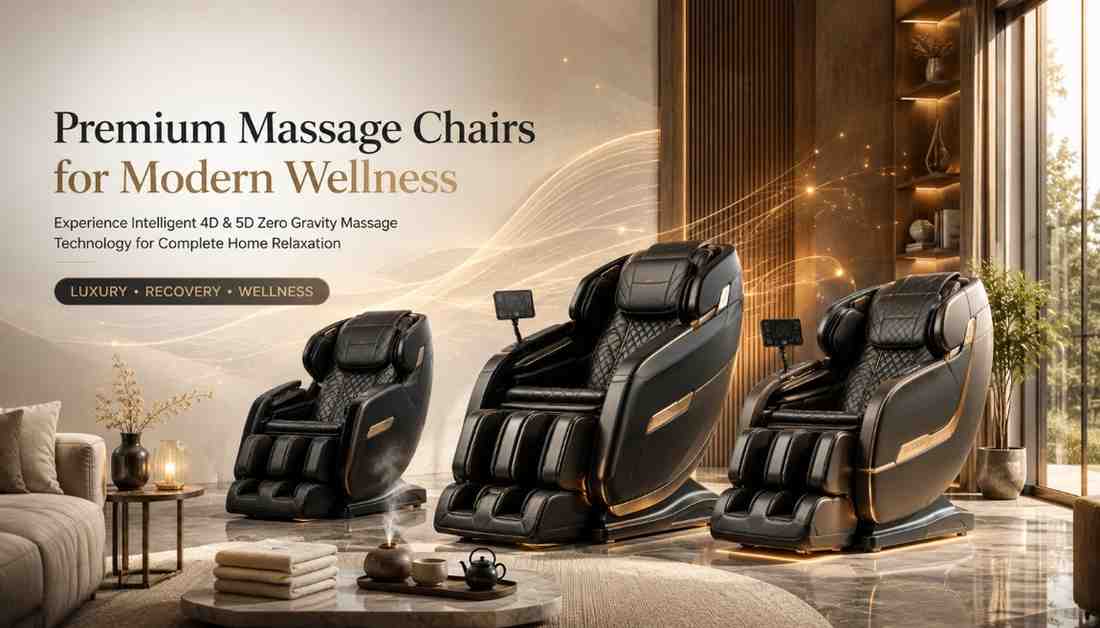
The Kollecktiv 202 premium massage chair is the model that most directly addresses the daily therapeutic use case — super-long SL-track, three-stage zero gravity, graphene lumbar and calf heat, 34-cell full-body airbag coverage, AI voice control, and Thai stretching at a price point that recovers within 18 months at weekly professional massage rates. For buyers who want a complete specification-by-use-case breakdown across the full Kollecktiv range, the Kollecktiv about page provides the brand context and the product philosophy that explains how each model in the lineup is positioned for different buyer profiles.
Objection Six: The Timing Is Not Right
The timing objection is the one that tends to persist indefinitely — because there is always a more convenient time to make a large purchase that is not now.
The financial reality makes this objection worth examining directly. Every month of professional massage at therapeutic frequency is a month of recurring cost that the home chair investment would have already been recouping. At weekly professional massage rates, twelve months of delay costs between $3,640 and $6,760 in professional massage spending — approximately the full purchase price of a quality mid-range chair. The delay does not save money. It defers the recovery of a cost that is already being incurred.
The physiological reality reinforces this. The compounding effects of daily home massage — sustained cortisol reduction, progressive connective tissue remodelling, improved baseline sleep quality — begin accumulating from the first consistent week of use. Each month of delay is a month of compounding that does not happen. There is no better timing than when the daily therapeutic need is present.
The Objection That Holds Up: It Is Only Worth It If You Use It Daily
Of all the objections examined in this guide, the one that holds up under scrutiny is the simplest: a massage chair is only worth the investment if you use it consistently.
This is true. A chair used daily for seven years at the financial terms described above delivers exceptional return. A chair used twice a week is still valuable. A chair used once a week recovers its investment more slowly and delivers less compounding therapeutic benefit. A chair that becomes occasional furniture does not recover its cost.
The mitigating factor — and the reason this objection does not override the others — is the friction structure discussed above. The zero-friction nature of a quality massage chair is the strongest structural predictor of daily use. Chairs that sit unused in the corner of a room are almost invariably chairs that required something of the user to initiate. A chair that requires nothing — that simply waits at home, always available, always ready — does not become occasional furniture. It becomes the daily ritual that verified buyers describe consistently in their reviews.
The Honest Summary
The case for a massage chair investment is strong when the comparison is made correctly, the frequency variable is weighted appropriately, and the friction structure that determines daily use is understood.
The case rests on four claims that hold up under scrutiny. The financial comparison favours home ownership at any professional massage frequency above monthly across any ownership period above three years. The frequency advantage produces physiological outcomes that the appointment model cannot replicate. The zero-friction structure produces daily use that high-friction alternatives cannot sustain. And the clinical evidence for the compounding benefits of daily therapeutic massage is stronger than most buyers realise before they investigate it.
Explore the full range of luxury 4D and 5D massage chairs at Kollecktiv — free US shipping, no sales tax, 30-day returns, and white-glove delivery on every order.
originally published on :
https://kollecktiv.com/massage-chair-home-wellness-investment-worth-it/