Mastering IELTS Listening: Smart Strategies for 2026
-

- Published Updated
- 8,892 views
Importance of Daily Practice
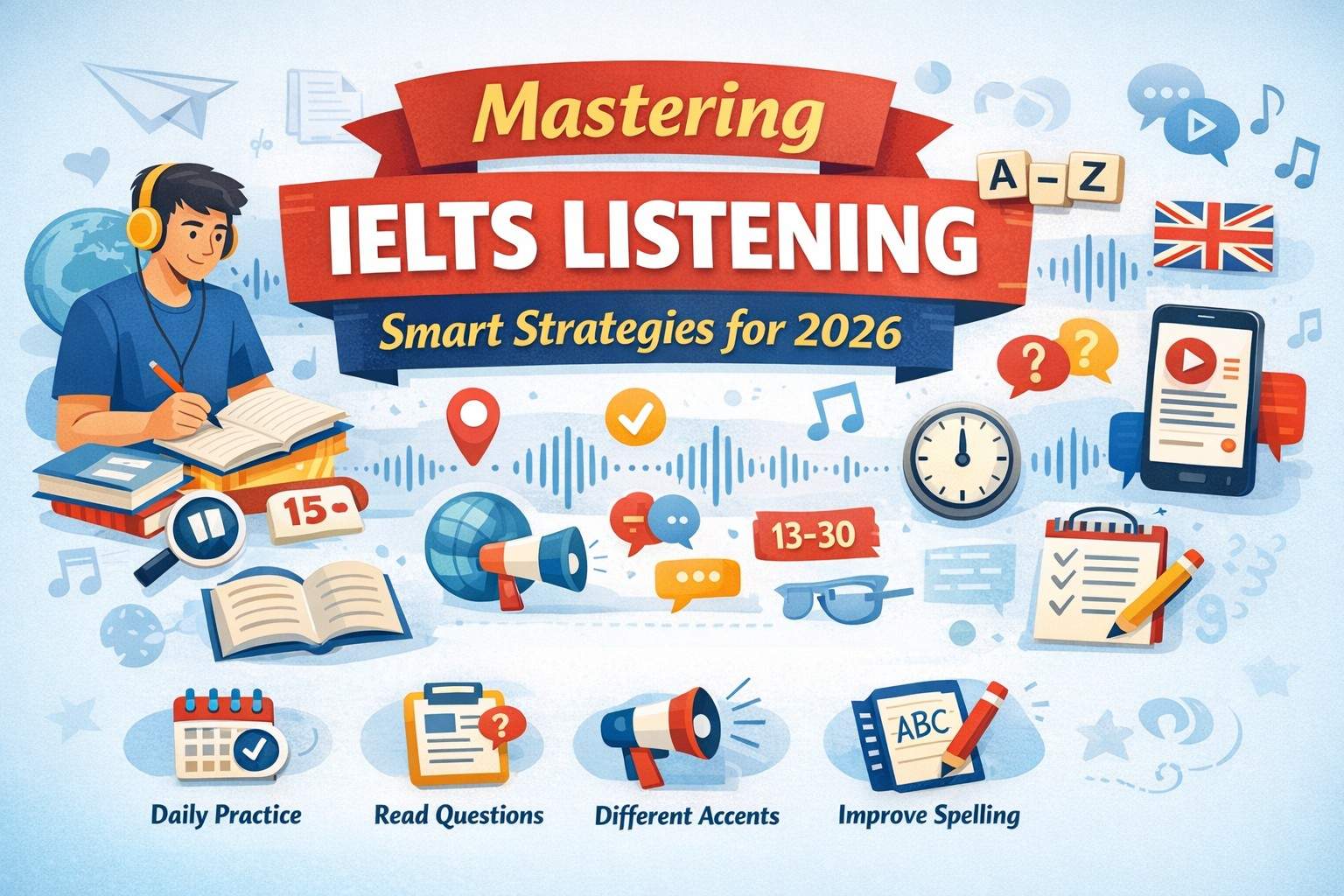
Consistency is more important than studying for long hours occasionally. Even 20 to 30 minutes of focused listening practice every day can help you improve faster. Think of listening practice in IELTS like training a muscle — small daily effort creates strong long-term results, and this approach helps build natural understanding of English speech patterns.
Reading Questions Before Listening
One common mistake students make is starting the audio without reading the questions first. Always take a few seconds to check the questions so your brain can prepare to catch important information. If the question asks for a location, name, or number, you can mentally prepare to listen carefully for that type of information.
Focus on Keywords, Not Every Word
You do not need to understand every single word in IELTS Listening. The recordings often include extra information to confuse candidates. Instead, focus on keywords such as names, numbers, dates, and important nouns. This strategy helps you stay calm and increases accuracy during the test.
Improve Spelling Accuracy
Spelling plays a very important role in IELTS Listening scores. Many students know the correct answer but lose marks because of spelling mistakes. Practice writing words while listening to audio and revise common IELTS vocabulary spelling regularly to avoid losing easy marks.
Learn Synonyms and Paraphrasing
IELTS Listening often uses synonyms instead of direct words from the question. For example, the audio may use one word while the question uses another word with a different meaning. Training yourself to recognize paraphrasing helps you find answers more quickly and improves overall comprehension.
Practice Different English Accents
IELTS recordings may include British, American, Australian, or other English accents. If you only practice one accent, the test may feel difficult. Watching international news channels, academic lectures, and English podcasts can help you become comfortable with different speaking styles.
Prediction Technique for Better Performance
Before the recording starts, try to predict possible answers. Ask yourself whether the answer should be a number, specific digits, a name, verb, or a place. This simple prediction method keeps your brain active and ready to catch important information quickly.
Time Management During Test
If you miss an answer, do not panic or hesitate. Move to the next question immediately because the recording will continue. Many students lose easy marks by thinking too much about one missed question instead of focusing on the upcoming questions.
Build Strong Vocabulary
Learning daily academic vocabulary helps improve listening and understanding. IELTS listening often includes topics related to education, environment, technology, and social issues. Learning new words every day makes comprehension and creative writing
easier and more natural.
Shadow Listening Practice
Shadow listening is a powerful technique where you repeat sentences immediately after hearing them. This improves memory, pronunciation, and speed of understanding. It may feel difficult at first, but regular practice gives excellent results.
Learn Synonyms and Paraphrasing Skills
IELTS Listening often uses synonyms instead of direct words from the question. For example, the audio may use one word while the question uses another word with a different meaning. Training yourself to recognize paraphrasing helps you find answers more quickly and improves overall comprehension. This is one of the most important skills for higher band scores.
Stay Confident During the Exam
IELTS Listening is designed to be challenging. Even top students may miss a few answers. The important thing is to stay focused on the next question. Confidence and calm thinking help you perform better under pressure.
Stay Calm and Confident in the Exam Hall
IELTS Listening is designed to be challenging. Even top students may miss a few answers. The important thing is to stay focused on the next question. Confidence and calm thinking help you perform better under pressure and improve your overall score performance.
Effective Time Management During a Test
If you miss an answer, do not panic. Move to the next question immediately because the recording will continue. Many students lose easy marks by thinking too much about one missed question instead of focusing on the upcoming questions. Staying calm is very important for good performance.
Final Thoughts for Success
Success in IELTS Listening comes from smart and consistent practice. Focus on patterns, not just memorization. With daily effort and proper strategy, your listening skills will naturally improve and help you achieve a higher band score.