Melbourne Office Cleaning Services: Complete Guide to Commercial Cleaning and Compliance
-
- February 23rd, 2026
- 1,737 views
Melbourne office cleaning services support businesses by maintaining hygiene, appearance and asset longevity in commercial workplaces. This overview explains common service types, scheduling options, compliance expectations and practical factors to consider when arranging contract cleaning in Victoria.
- Services range from daily janitorial work to deep cleaning, disinfection and specialist tasks like carpet and window cleaning.
- Key selection criteria include insurance, qualifications, safety procedures and transparent pricing.
- Regulatory and safety expectations are informed by organisations such as Safe Work Australia and EPA Victoria.
Melbourne office cleaning services: types and common offerings
Commercial cleaning providers commonly offer a mix of routine, periodic and specialist services. Routine services typically include rubbish removal, vacuuming, hard-floor sweeping and mopping, restroom sanitisation, surface dusting and basic kitchen or breakroom cleaning. Periodic or scheduled tasks include deep cleaning, floor polishing, carpet extraction and window washing.
Routine/Day-to-day cleaning
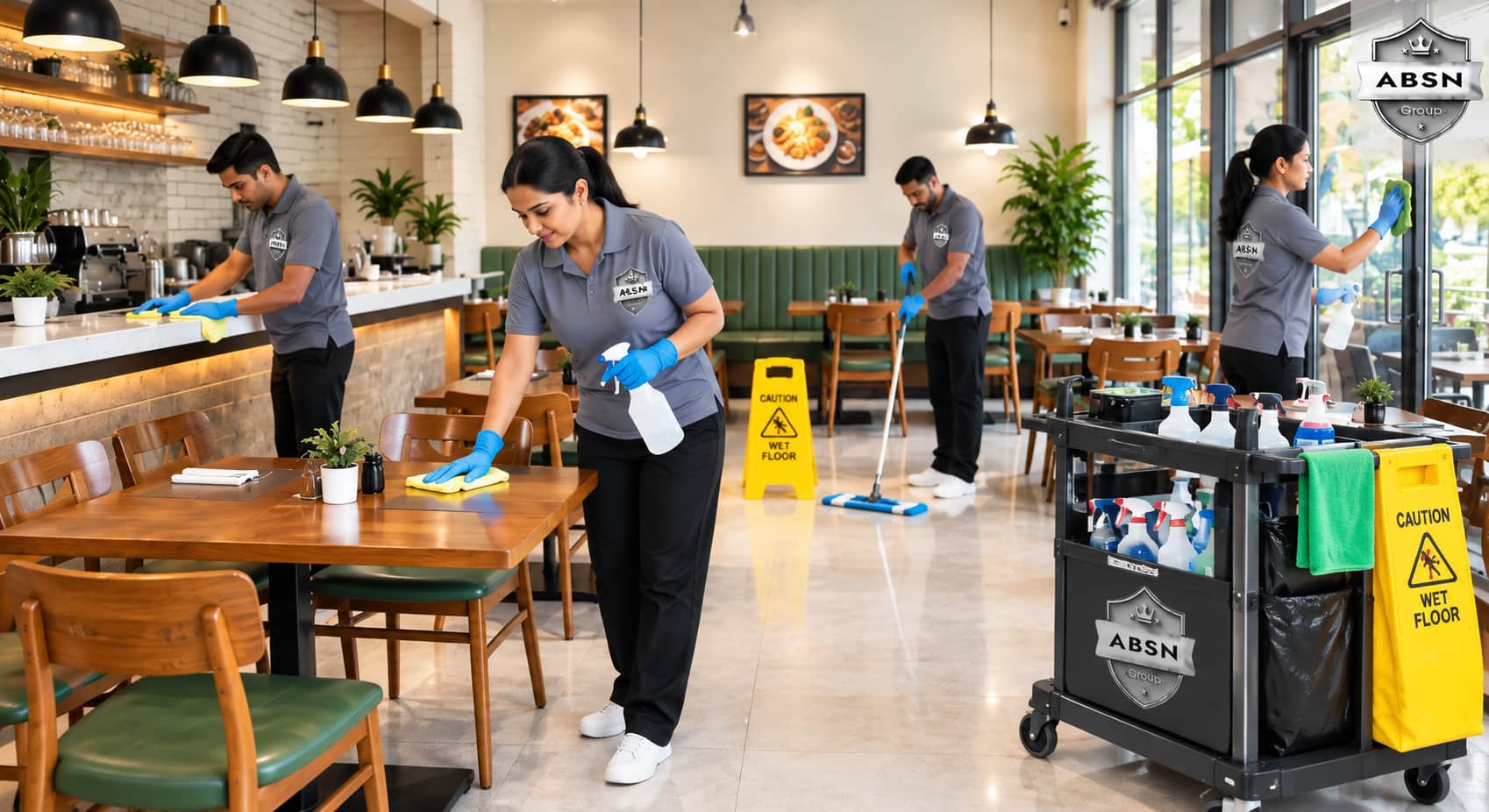
Daily or nightly janitorial work focuses on visible surfaces and high-traffic areas: emptying bins, sanitising touchpoints, replenishing consumables and maintaining floors. Frequency depends on office size, occupancy and business hours.
Deep cleaning and periodic maintenance
Deep cleans go beyond routine tasks and target concealed dirt and buildup. Examples include carpet steam extraction, grout and tile cleaning, upholstery cleaning and stripping and resealing of resilient flooring.
Disinfection and pandemic-era cleaning
Targeted disinfection uses products and procedures designed to reduce pathogen load on surfaces. Commercial providers may perform enhanced cleaning during outbreaks or as part of risk-reduction programs, using approved disinfectants and following public health guidance.
Specialist services
Specialist offerings can include high-rise window cleaning, pressure washing, data centre or clean-room cleaning, and waste-stream management for recycling and secure disposal.
How to choose an office cleaning provider
Choosing a provider requires assessment of service scope, compliance, and cost transparency. Look for documented procedures, public liability insurance, worker compensation cover and references from similar workplaces.
Qualifications and compliance
Providers should demonstrate knowledge of workplace health and safety obligations under Safe Work Australia guidance and local requirements. Cleaning contractors may follow industry codes and Australian Standards relevant to equipment, chemical handling and waste management.
Insurance and contracts
Confirmed public liability and professional indemnity insurance reduce risk. Contracts should specify deliverables, frequencies, pricing structure, notice periods and any key performance indicators (KPIs) for service quality.
Environmental and product choices
Green cleaning options include the use of low-VOC products, microfiber tools, and waste reduction practices. Ask about product data sheets, dilution control and local disposal methods in line with EPA Victoria guidance.
Regulations, safety and training
Compliance with workplace safety and environmental rules is an essential factor when engaging cleaners. Safe Work Australia publishes model codes and guidance relevant to manual tasks, hazardous chemicals and cleaning work practices; these inform safe systems of work for providers and clients. Safe Work Australia
Worker safety and training
Safe manual handling, correct use of personal protective equipment (PPE), and training on chemical safety reduce injury risk. Verification of workforce training and on-site inductions is standard practice.
Environmental regulation
Local environmental agencies, such as EPA Victoria, set rules for chemical disposal and stormwater protection. Waste-stream management and proper cleaning chemical use help prevent pollution and regulatory breaches.
Scheduling, checklists and service levels
Cleaning schedules are tailored to occupancy patterns and business needs. Options include after-hours cleaning, daytime touch-ups, or continuous maintenance for high-traffic facilities.
Sample checklist items
- Daily: empty bins, clean restrooms, disinfect high-touch points, vacuum and mop floors.
- Weekly: dust vents/fixtures, detailed kitchen cleaning, spot-clean windows and glass partitions.
- Monthly/Quarterly: deep carpet cleaning, full window cleaning, floor polishing, HVAC vent cleaning.
Costs and pricing factors
Pricing depends on floor area, frequency, scope of work, required specialist equipment and the condition of premises. One-off deep cleans are priced differently from ongoing contracts. Additional factors include after-hours access, security clearances and waste handling requirements.
Ways providers price services
Common pricing models include per-square-metre rates, hourly labour charges, or fixed monthly contract fees. Requests for itemised quotes are recommended to compare like-for-like services and exclusions.
Benefits of regular professional cleaning
Regular cleaning supports a professional appearance, asset maintenance and a clearer work environment. Well-managed cleaning programs can contribute to reduced wear on floors and furnishings and support facility hygiene protocols.
Operational advantages
Consistent cleaning can reduce the need for early replacement of carpets and finishes, minimise disruptions through planned maintenance cycles and support staff wellbeing by reducing visible contaminants in shared spaces.
Reputation and client experience
A clean workplace contributes to positive impressions for clients and visitors and supports business continuity by keeping facilities in good working order.
What to expect during onboarding and contract setup
Onboarding typically includes a site inspection, development of a tailored cleaning schedule and agreement on access, security procedures and any required clearances. Trial periods or initial quality reviews help establish expectations and refine checklists.
Performance monitoring
Quality assurance can include periodic inspections, photographic records, and KPI reporting. Clear communication channels and a documented escalation process help address service issues quickly.
Frequently asked questions
How much do Melbourne office cleaning services cost?
Costs vary widely depending on size, frequency and services requested. Small offices with routine nightly cleaning typically pay less per square metre than larger, high-traffic workplaces requiring specialist equipment or frequent disinfection. Request multiple itemised quotes to compare rates.
What certifications or checks should be requested from a cleaning contractor?
Request copies of public liability insurance, worker compensation confirmation, evidence of staff training, chemical safety data sheets and any industry certifications relevant to specialist work.
Are eco-friendly cleaning options available for offices in Melbourne?
Yes. Many providers offer low-VOC and biodegradable products, microfiber equipment and waste reduction practices. Verify product information and ask for documented environmental procedures.
What is included in a typical office deep clean?
A deep clean usually includes carpet extraction, detailed restroom and kitchen sanitisation, high-level dusting, cleaning of vents and light fittings, thorough floor care and attention to commonly missed areas.
How soon can a new cleaning contract start?
Start times depend on mutual availability, security clearances and the need for a site assessment. Some providers can begin within days of agreement; others require scheduling for equipment or staff availability.