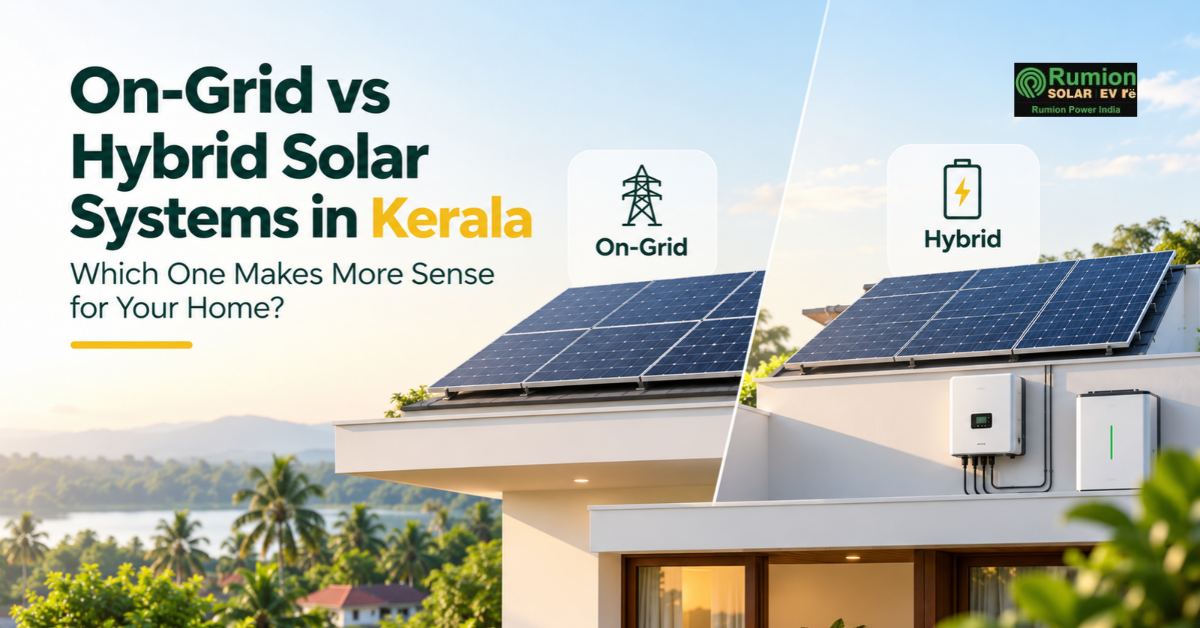
On-Grid vs Hybrid Solar Systems in Kerala: Which One Makes More Sense for Your Home?
-
- Published Updated
- 35 views
Why Is Your Rooftop Solar System Generating Less Electricity Than Expected?
Installing rooftop solar panels is an important investment for homeowners who want to manage electricity expenses and use renewable energy. However, some households notice that their solar systems generate less electricity than expected, even when the panels appear to be working normally.
A reduction in solar electricity generation does not always mean that the panels are damaged. Weather conditions, rooftop shading, accumulated dirt, inverter performance, and changes in electricity consumption can all influence system output.
For homeowners using solar services in Kerala, understanding these factors can help identify performance issues early and support better long-term system maintenance.
This article explores the common reasons behind reduced rooftop solar generation, practical ways to identify potential problems, and steps homeowners can take to maintain their systems.
1. Does Kerala's Weather Affect Solar Panel Performance?
Weather conditions play an important role in how much electricity a rooftop solar system generates.
Kerala experiences seasonal monsoon rainfall, cloudy skies, high humidity, and variations in sunlight throughout the year. These conditions can influence solar generation, even when the system is functioning correctly.
Solar panels generate electricity from sunlight. During clear weather, panels generally receive more direct sunlight and can produce higher output. During heavily overcast conditions, the amount of solar energy reaching the panels decreases.
However, solar panels do not completely stop generating electricity simply because the sky is cloudy.
What Homeowners Should Understand
Electricity generation naturally changes between seasons.
Cloud cover can reduce solar output during the monsoon.
High panel temperatures can affect operating efficiency.
Rainfall may remove some loose surface dirt but does not replace periodic inspection.
A temporary reduction in generation does not necessarily indicate equipment failure.
Rather than judging performance from a single cloudy day, homeowners should compare electricity generation over longer periods and consider seasonal weather variations.
2. Can Dust and Dirt Reduce Solar Panel Efficiency?
Solar panels are installed outdoors, where they are exposed to dust, airborne particles, bird droppings, leaves, and other environmental contaminants.
Over time, these materials may accumulate on the glass surface and reduce the amount of sunlight reaching the solar cells.
The impact depends on the amount and location of the dirt, rainfall patterns, and panel orientation.
For example, bird droppings concentrated over a small section of a panel may cause localised shading, while a thin layer of dust may reduce light transmission across a larger surface.
Signs That Cleaning May Be Needed
Homeowners may notice:
Visible dirt or debris on the panel surface.
Bird droppings that remain after rainfall.
Leaves collecting around panel edges.
A gradual decline in electricity generation that cannot be explained by weather alone.
Cleaning should follow the panel manufacturer's recommendations.
Avoid abrasive materials, harsh chemicals, and unsafe rooftop access. Professional assistance is advisable where panels are difficult to reach or electrical safety is a concern.
Regular inspection and appropriate cleaning can help maintain normal system performance.
3. Is Rooftop Shading Affecting Your Solar Generation?
Shading is one of the most overlooked causes of reduced solar electricity production.
A rooftop may receive adequate sunlight when solar panels are first installed, but surrounding conditions can change over time.
Trees may grow taller, neighbouring buildings may be constructed, or new rooftop structures may create shadows across the panels.
Even partial shading can influence the output of a solar array.
Common Sources of Shading
Nearby trees and branches.
Adjacent residential buildings.
Rooftop water tanks.
Parapet walls.
Antennas and other structures.
Newly installed rooftop equipment.
The effect of shading depends on the solar panel arrangement, inverter configuration, and the location of the affected modules.
What Can Homeowners Do?
Observe whether shadows fall across the panels during different times of the day.
If significant shading is identified, consult a qualified solar technician to evaluate possible solutions.
These may include appropriate vegetation management, adjustments to panel placement, or changes to the electrical configuration where technically justified.
Homeowners should avoid modifying solar wiring or relocating panels themselves.
4. Could the Solar Inverter Be Responsible?
The solar inverter is an essential component of a rooftop solar system.
Solar panels generate direct current electricity, while most household appliances operate using alternating current electricity.
The inverter converts the generated electricity into a form suitable for household use.
If the inverter experiences a fault, excessive temperature, communication problem, or other operational issue, the system's electricity output may be affected.
Warning Signs to Watch For
Some potential indicators include:
Error messages on the inverter display.
Unexpected system shutdowns.
Repeated fault notifications.
Missing or irregular monitoring data.
Unusual reductions in recorded electricity generation.
Not every warning message indicates a serious equipment failure. Some may relate to temporary grid conditions or communication interruptions.
However, recurring faults should be investigated.
Homeowners can review the inverter's monitoring application or display, but internal electrical repairs should always be handled by qualified professionals.
5. Are You Comparing Solar Generation With Electricity Bills Correctly?
A common misunderstanding occurs when homeowners assume that a smaller reduction in their electricity bill means their solar panels are generating less electricity.
Electricity generation and electricity billing are related, but they are not the same measurement.
A rooftop solar system may be producing electricity normally while household electricity consumption has increased.
For example, adding air conditioners, electric vehicle charging, or other high-consumption appliances may increase overall electricity demand.
As a result, the household may purchase more electricity from the grid despite having a functioning solar system.
Understand These Three Measurements
Solar generation: The total electricity produced by the solar system during a particular period.
Household consumption: The electricity used by appliances and other electrical equipment.
Grid import and export: Electricity purchased from or supplied to the distribution network, depending on the system configuration and applicable metering arrangement.
Electricity bills may also include fixed charges, tariff-related adjustments, and other applicable components.
Therefore, homeowners should review actual solar generation data rather than relying only on changes in their electricity bills.
6. Why Is Solar Performance Monitoring Important?
Solar monitoring systems help homeowners understand how their rooftop installation is performing over time.
Many modern inverters provide access to generation information through a display, mobile application, or online monitoring platform.
These systems may show daily, monthly, and historical electricity generation.
Monitoring can help identify unexpected performance changes that might otherwise go unnoticed.
Useful Monitoring Practices
Homeowners can:
Review solar generation at regular intervals.
Compare output during similar weather conditions.
Check for inverter alerts or fault notifications.
Record unusual reductions in electricity generation.
Arrange professional inspections when problems persist.
For example, if electricity generation drops significantly despite similar sunlight conditions and unchanged household equipment, further investigation may be appropriate.
However, comparisons should account for seasonal sunlight, temperature, shading, and normal system losses.
Monitoring data is most useful when interpreted alongside actual site conditions.
7. How Can Preventive Maintenance Support Long-Term Solar Performance?
Rooftop solar systems are designed for extended operation, but they should not be considered completely maintenance-free.
Preventive maintenance involves checking the condition and operation of the system before small problems develop into more serious issues.
In Kerala, seasonal rainfall, humidity, and exposure to outdoor conditions make suitable installation practices and periodic inspection particularly important.
Important Maintenance Activities
Solar panel inspection: Check for visible damage, debris accumulation, or unusual surface conditions.
Mounting structure assessment: Qualified personnel should inspect mounting components for looseness, corrosion, or other visible deterioration.
Inverter monitoring: Review system notifications and operating performance.
Electrical safety inspection: Have qualified technicians assess cables, connectors, protective devices, and earthing arrangements where appropriate.
Drainage assessment: Ensure rooftop drainage remains unobstructed and that installation components do not create water accumulation problems.
Performance review: Compare recorded electricity generation with reasonable expectations for the system and prevailing conditions.
The appropriate maintenance schedule depends on equipment specifications, installation conditions, manufacturer guidance, and the surrounding environment.
Homeowners should also retain installation documents, warranty information, and previous service records.
When Should You Contact a Solar Maintenance Professional?
Not every variation in electricity generation requires a service visit.
However, certain situations deserve professional attention.
These include persistent inverter faults, visible equipment damage, damaged cables, water ingress near electrical components, or a substantial unexplained decline in generation.
A qualified technician can evaluate whether the problem relates to shading, soiling, equipment operation, electrical connections, or another system condition.
Early investigation may help prevent further performance losses and identify potential safety concerns.
Homeowners should never open inverter enclosures, disconnect live electrical components, or attempt rooftop electrical repairs without appropriate qualifications.
Conclusion
Reduced rooftop solar generation can result from several factors, including seasonal weather changes, shading, accumulated dirt, inverter issues, and equipment-related problems.
For homeowners in Kerala, understanding these causes is an important part of maintaining a reliable solar installation.
Regular monitoring, appropriate cleaning, and periodic professional inspections can help identify performance concerns and support long-term system operation.
Rather than assuming that every reduction in output indicates a faulty solar panel, homeowners should examine the available generation data and consider the conditions affecting their installation.
A well-maintained solar system, supported by appropriate technical guidance, can continue contributing to household electricity requirements over its operating life.
Frequently Asked Questions
1. Why are my solar panels generating less electricity during Kerala's monsoon season?
Heavy cloud cover and reduced sunlight can lower solar electricity generation during the monsoon. Some reduction is normal, although unusually low output may require further investigation.
2. How often should rooftop solar panels be cleaned?
Cleaning frequency depends on dust accumulation, local environmental conditions, rainfall, and manufacturer recommendations. Panels should be inspected periodically and cleaned when necessary using appropriate safety procedures.
3. Can partial shading affect an entire solar system?
Yes. Depending on the panel arrangement and inverter configuration, partial shading can reduce the output of more than the directly shaded area. A professional assessment can help identify suitable corrective measures.
4. Does a higher electricity bill mean my solar system is not working?
Not necessarily. Electricity bills can increase because of higher household consumption, tariff changes, fixed charges, or other billing factors. Check actual solar generation data before concluding that the system is underperforming.
5. When should I arrange a professional solar system inspection?
Arrange an inspection if you notice persistent inverter faults, visible damage, electrical safety concerns, or a substantial unexplained decline in generation. Periodic preventive inspections should also follow the manufacturer's recommendations and site requirements.