Why Reliability Drives Modern Cross-Country Pipeline Construction in the UAE
-
- Published Updated
- 4,984 views
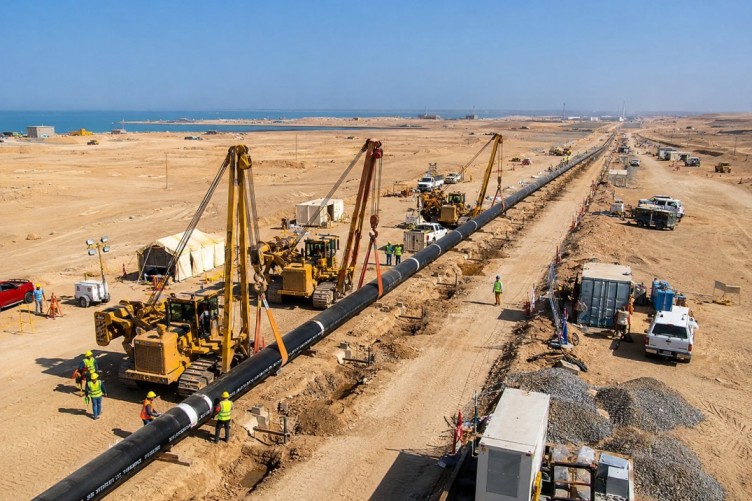
Modern cross-country pipeline projects in the UAE are no longer judged solely by construction speed. Asset reliability, corrosion resistance, digital monitoring, and lifecycle performance have become the primary indicators of long-term project success.
Extreme temperatures, high salinity, shifting sands, and long transportation distances create unique engineering challenges in the UAE. As a result, reliability has become one of the most important measures of project success. Operators are increasingly prioritizing asset integrity, lifecycle performance, and predictive maintenance strategies that reduce downtime and maximize long-term value.
Reliability-Driven Engineering for Long-Term Performance
Reliability begins long before construction starts. Every decision—from material selection and route planning to corrosion protection and monitoring systems—directly impacts the future performance of the asset.
Key reliability considerations include:
Optimized route planning: Detailed geotechnical and environmental studies help avoid unstable terrain, flood-prone areas, and regions susceptible to soil movement.
Advanced corrosion protection: High-performance coating systems combined with cathodic protection provide long-term resistance to corrosion, extending pipeline service life and reducing lifecycle maintenance costs.
Material selection for challenging environments: Specialized alloys such as duplex stainless steel and nickel-based materials improve resistance to corrosion and sour-service conditions.
Integrated monitoring systems: Sensors and digital monitoring technologies enable early fault detection and support predictive maintenance programs.
Construction Excellence Depends on Smart Logistics
In large-scale pipeline projects, logistics is just as important as engineering design. Efficient planning and construction methods improve quality, shorten schedules, and minimize operational risks.
Modern pipeline projects increasingly rely on several advanced construction methods, including:
Off-site modular fabrication and spool prefabrication enhance welding precision, improve quality control, and minimize on-site rework while accelerating project delivery.
Trenchless technologies such as Horizontal Directional Drilling (HDD) and auger boring for environmentally sensitive crossings.
Nitrogen inerting and controlled commissioning procedures to minimize internal corrosion and enhance safety.
Effective groundwater management techniques, including dewatering and sheet piling, to maintain excavation stability.
These approaches help deliver projects faster while preserving long-term asset integrity.
Digital Technologies Are Transforming Pipeline Reliability
The UAE's energy sector is increasingly adopting digital technologies to improve pipeline performance and reduce operational risks.
Innovations include:
Digital technologies are reshaping pipeline management across the UAE. Digital twins create virtual replicas of operating assets, while drone inspections simplify monitoring of remote corridors. AI-driven predictive maintenance and smart leak detection enable operators to identify anomalies earlier, reducing downtime and improving maintenance planning.
These technologies allow operators to identify potential issues before they lead to costly failures or unplanned shutdowns.
Cross-Country Pipelines and Plant Piping: One Connected System
Cross-country pipelines and plant piping should be engineered as one integrated system. Although interconnected, the two systems serve different operational requirements:
Cross-country: distance, terrain, and environment. These projects involve long distances, challenging terrain, and extensive external protection requirements. Route planning and trenchless technology also play a role.
Plant piping (within battery limits): The piping network inside processing facilities, where high pressures, temperatures, and complex chemical properties require precise engineering and strict quality control. These systems are installed within refineries and processing facilities where precision and safety are critical and operational errors cannot be tolerated. HPHT (high-pressure, high-temperature) applications prevail in this area.
The two systems must function seamlessly together. An optimally engineered cross-country pipeline should deliver a stable flow to the refinery, while plant pipework must handle this flow without leaks or excessive pressure. Compatibility in material selection, testing protocols, and handover ensures future success.
Sustainability and Compliance Are Now Business Imperatives
Environmental and regulatory requirements are shaping how pipeline projects are designed and executed. Contractors must now balance operational performance with sustainability objectives.
Key priorities include:
Infrastructure readiness for carbon capture and storage (CCS) projects.
Continuous monitoring of environmental impacts, including water quality, emissions, and noise levels.
Increased use of local suppliers and workforce development through In-Country Value (ICV) initiatives.
Adoption of energy-efficient construction technologies and automated welding systems.
Meeting these requirements not only supports regulatory compliance but also strengthens long-term project competitiveness.
What operators and executives should watch
Different stakeholders evaluate project success using different performance indicators. The following is a simple checklist of indicators for both:
Technical Team
NDT inspection: X-ray, ultrasonic, and magnetic particle testing for critical welding joints; digitally traceable records of all welded joints.
Hydrotest Performance: A pressure test performed above the design pressure to verify system integrity before commissioning.
Coating and cathodic protection performance: Regular field inspections and continuous monitoring verify the effectiveness of corrosion protection systems and help maintain long-term pipeline integrity.
As-Built Documentation: material certificates, inspection, and commissioning of the facility.
Business managers
Lifecycle Cost Optimization: Early investments in corrosion protection, material quality, and digital monitoring can significantly reduce inspection, repair, and maintenance costs throughout the pipeline's operational life.
Downtime Risk Reduction: Employ hot tapping and line plugging to add or modify connections in an active system without requiring a shutdown.
Compliance and Insurance Benefits: Adhering to recognized quality standards and implementing robust corrosion protection measures can strengthen regulatory compliance, reduce operational risks, and potentially lower insurance premiums.
ICV and Local Supply Chain Partnerships: High ICV could help secure national tenders and ensure supply stability.
Practical sequences that work in UAE conditions
Effective projects should adhere to a systematic order in their execution to ensure quality and timeliness:
Pre-construction: Detailed geotechnical investigations, optimized route planning, and environmental impact assessments lay the foundation for safe, efficient, and reliable pipeline construction.
Fabrication: Off-site spool fabrication using CNC machining and automated welding improves precision, enhances quality control, and accelerates project delivery.
Installation: Utilize trenchless crossings where required, ensure trench stability, and verify coating integrity throughout the installation process.
Commissioning: Purging with nitrogen gas, hydrostatic pressure testing, and calibration of leak detectors.
Operations and Maintenance: Continuous monitoring, periodic inspections, and data-driven maintenance programs help maximize asset reliability.
In conclusion, a systematic approach to project execution prevents unexpected issues and ensures optimal asset performance.
FAQs
Q1. What distinguishes cross-country pipelines from plant piping?
Cross-country pipelines carry liquids over extensive geographic regions. Piping systems within refineries and other process plants are complex due to pressures and chemical considerations.
Q2. Why should HDD be used for road crossings in the UAE?
The HDD method installs pipelines beneath roads without disturbing the surface, eliminating traffic disruptions and preserving valuable topsoil.
Q3. What is sour service with regard to piping?
Sour service refers to environments where the transported fluid contains significant concentrations of hydrogen sulfide (H₂S).
Q4. What can contractors do to ensure weld integrity over vast distances?
Consistent verification using non-destructive testing (X-ray, ultrasonic, and magnetic particle inspection) and weld tracking through digital technology.
Q5. Is it possible to modify the plant systems while they are running?
Yes, hot tapping and line plugging will allow for additional connections to be made to an operating system.
Conclusion
The future of pipeline construction in the UAE is being defined by reliability rather than construction volume alone. Successful projects are those that combine robust engineering, advanced materials, efficient logistics, and digital technologies to deliver assets that perform reliably for decades.
Cross-country pipelines and plant piping systems must be designed as one integrated network, with every component contributing to operational efficiency, safety, and long-term value. By prioritizing reliability, corrosion protection, predictive maintenance, and sustainability, contractors can build infrastructure that supports the UAE's evolving energy landscape while minimizing lifecycle costs and operational risks.
As the UAE continues to invest in energy infrastructure, pipeline projects that prioritize reliability, digital innovation, and sustainable engineering practices will be better positioned to deliver long-term operational value, regulatory compliance, and resilience in an increasingly demanding energy sector.