Stationary Fuel Cell Systems Market Future Trends: Shaping Clean Energy
-

- Published Updated
- 43 views
The stationary fuel cell systems market is entering a period of transformation as businesses, utilities, industrial facilities, and communities look for reliable power sources with lower environmental impact. Unlike conventional generators that rely heavily on combustion, fuel cells produce electricity through an electrochemical process. This enables continuous power generation while supporting applications where reliability, efficiency, and energy resilience are important.
Future developments will increasingly focus on improving system economics, integrating cleaner fuels, increasing durability, and connecting fuel cells with renewable energy and digital energy-management platforms. As electricity demand grows and power infrastructure becomes more decentralized, stationary fuel cell systems could become an important component of flexible energy architectures.
Greater Integration With Renewable Energy
One of the most important future trends will be closer integration between fuel cells and renewable energy sources. Solar and wind generation can experience fluctuations depending on weather and time of day. Fuel cells can complement these resources by providing controllable electricity when renewable generation is insufficient.
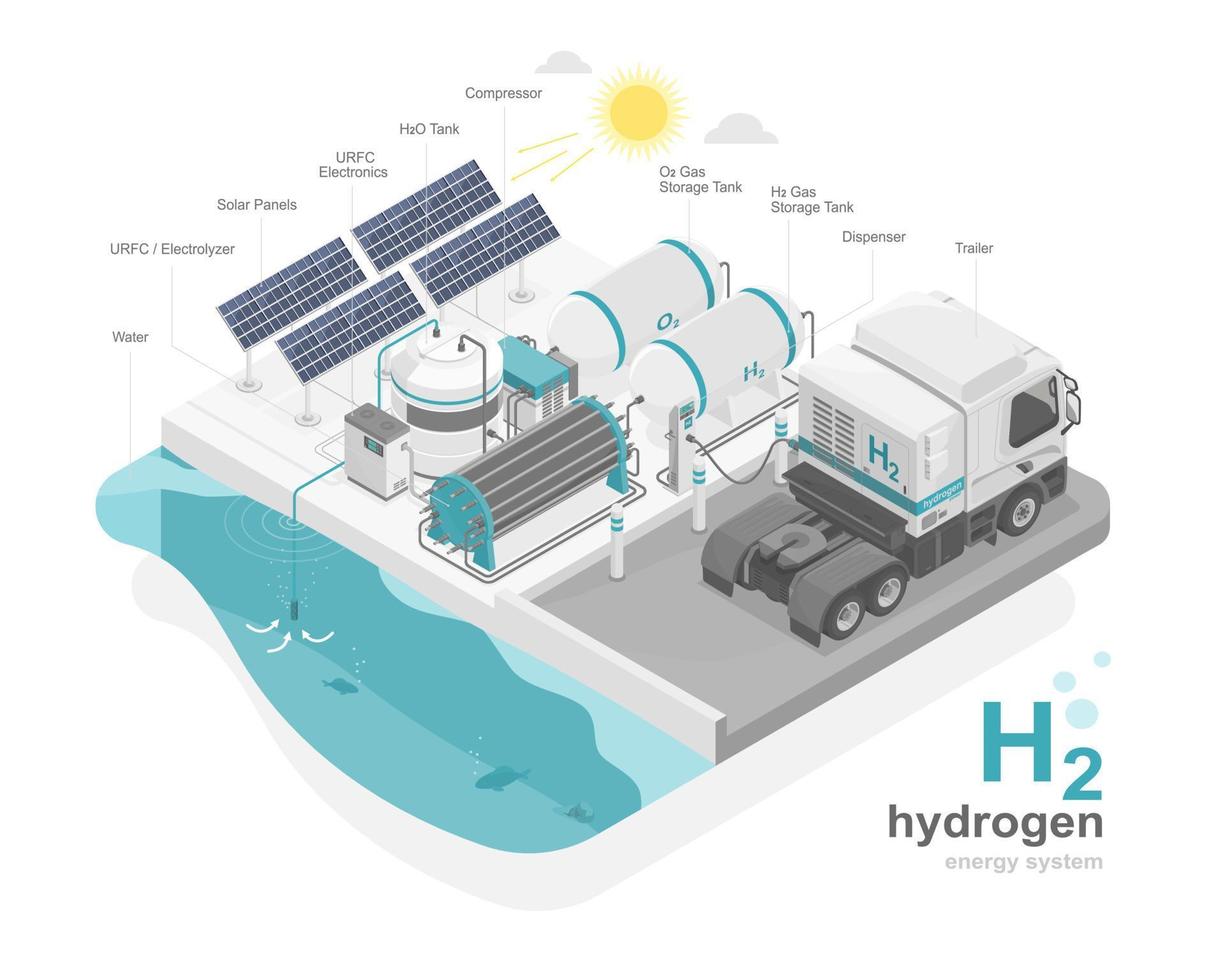
Future energy systems may combine solar panels, wind turbines, hydrogen production equipment, batteries, and fuel cells within coordinated microgrids. Excess renewable electricity can potentially be used to produce hydrogen, which can later supply fuel cells when additional power is required.
This approach could strengthen energy resilience while reducing dependence on conventional backup generators. It also creates opportunities for facilities to manage energy locally instead of relying entirely on centralized grids.
Expansion of Hydrogen-Based Systems
Hydrogen is expected to remain central to the long-term development of stationary fuel cell technologies. As hydrogen production and distribution networks improve, fuel cells may become increasingly attractive for applications requiring dependable low-emission electricity.
Green hydrogen produced using renewable electricity could further improve the environmental profile of fuel cell installations. However, the pace of adoption will depend on hydrogen availability, storage infrastructure, transportation networks, and overall fuel costs.
Future systems are likely to become more adaptable to different hydrogen supply models. This could include direct hydrogen delivery, on-site hydrogen production, and integration with renewable-powered electrolyzers. Such flexibility may allow businesses to select energy configurations suited to their operational requirements.
Smarter Digital Energy Management
Digitalization is another major trend shaping the future of stationary fuel cell systems. Modern installations can incorporate sensors, connected controls, automated monitoring, and advanced analytics to improve system performance.
Artificial intelligence and predictive analytics could help operators identify unusual operating conditions, estimate maintenance requirements, optimize fuel consumption, and coordinate power output with changing demand. Instead of operating as isolated generation units, fuel cell systems will increasingly function as intelligent assets within broader energy-management platforms.
Digital controls can also improve coordination between fuel cells, batteries, renewable generation, and grid connections. This could help facilities respond more effectively to peak demand, power interruptions, and changing electricity prices.
Increasing Demand From Data Centers
Data centers are emerging as an important application area for dependable distributed power. The expansion of cloud computing, artificial intelligence, digital services, and high-performance computing is increasing the need for continuous electricity.
Fuel cells can potentially support data centers by providing on-site generation with a compact footprint and continuous operation. Future deployments may combine fuel cells with batteries and renewable power to create resilient energy systems capable of supporting critical digital infrastructure.
The trend could encourage manufacturers to develop systems with higher power density, faster response times, simplified maintenance, and improved scalability. Modular designs may allow data centers to increase generation capacity as computing requirements expand.
More Modular and Scalable Designs
Future stationary fuel cell products are likely to become increasingly modular. Rather than requiring a single large installation, customers may be able to combine multiple standardized units according to their electricity requirements.
Modular architecture can offer several advantages. Capacity can be expanded gradually, individual units can be serviced without necessarily shutting down an entire installation, and system configurations can be adjusted as energy needs change.
This trend could make fuel cell technology more accessible to commercial buildings, telecommunications facilities, healthcare institutions, manufacturing sites, and smaller industrial operations.
Improvements in Durability and Efficiency
Technological development will continue to focus on extending fuel cell operating life while improving efficiency. Advances in catalysts, membranes, electrodes, thermal management, and system controls could reduce degradation and improve long-term performance.
Solid oxide fuel cells, proton exchange membrane fuel cells, and other technologies may continue to evolve for different stationary applications. High-temperature systems can offer advantages for continuous power and combined heat and power applications, while other configurations may be preferred where rapid response and compact installation are priorities.
Improved durability will be particularly important because replacement and maintenance costs can significantly influence the overall economics of a fuel cell project.
Growth of Combined Heat and Power Applications
Future stationary installations will increasingly focus on producing useful heat alongside electricity. Combined heat and power configurations can improve overall energy utilization, particularly in facilities with consistent thermal requirements.
Manufacturing plants, hospitals, hotels, commercial buildings, and other large facilities may benefit from using generated heat for water heating, industrial processes, or space heating.
The growing emphasis on energy efficiency could encourage more organizations to evaluate fuel cells based on their total energy output rather than electricity generation alone.
Stronger Microgrid and Resilience Applications
Power resilience will remain a significant factor influencing future adoption. Extreme weather, grid congestion, infrastructure aging, and rising electricity demand are encouraging organizations to consider localized generation.
Stationary fuel cells can operate as part of microgrids that maintain essential services during grid disruptions. Hospitals, emergency facilities, military installations, telecommunications networks, and industrial sites could increasingly use fuel cell-based microgrids for critical loads.
Future systems may automatically coordinate fuel cells with batteries and renewable generation, allowing microgrids to switch between grid-connected and independent operating modes.
Cost Reduction and Local Manufacturing
Cost competitiveness will remain essential for broader deployment. Future improvements in manufacturing automation, standardized components, larger production volumes, and supply-chain development could gradually reduce system costs.
Manufacturers may also focus on localized production of key components to reduce transportation expenses and improve supply security. Greater standardization could shorten installation times and simplify maintenance.
As the industry matures, commercial models such as energy-as-a-service and long-term power agreements may also make fuel cell installations easier for customers to adopt without absorbing the entire upfront investment.
Future Outlook
The future of the stationary fuel cell systems market will be shaped by the convergence of hydrogen, renewable energy, digital controls, distributed generation, and growing demand for resilient electricity. Fuel cells are increasingly being considered not simply as standalone generators but as components within integrated energy ecosystems.
Over the coming years, improvements in efficiency, durability, modularity, hydrogen availability, and intelligent energy management could expand their role across commercial, industrial, utility, and critical-infrastructure applications. The strongest opportunities are likely to emerge where customers value continuous power, resilience, efficient energy use, and lower-emission generation.
As energy systems become more decentralized and digitally managed, stationary fuel cells could play a valuable role in creating flexible and dependable power networks for a changing energy landscape.
Learn More : https://www.pristinemarketinsights.com/stationary-fuel-cell-systems-market-report