Rapid Email List Growth: A Practical Step-by-Step Guide
-

- Published Updated
- 288 views

Every growth plan needs a clear tactic to build an email list fast. This guide presents step-by-step actions, a named framework for decision-making, a practical checklist, and immediate tactics that produce measurable subscriber growth without sacrificing deliverability or compliance.
- Primary focus: simple, high-conversion opt-ins and traffic plays.
- Framework included: FAST growth framework for prioritizing offers and channels.
- Quick wins: targeted lead magnet, popup with exit intent, social signup ad, and referral incentive.
How to build an email list fast: step-by-step
Building a list quickly requires a repeatable process: create a compelling offer, make it easy to opt in, drive targeted traffic, and follow up to keep new contacts engaged. The steps below translate that process into practical actions that can be executed in days, then scaled.
Step 1 — Define the high-conversion offer
Choose one focused lead magnet that solves a single problem for a single audience segment. Examples: a 5-day email mini-course, a PDF checklist, a discount code, or a template pack. Keep the value specific and immediate.
Step 2 — Build simple capture flows
- Landing page with one clear CTA and social proof.
- Inline signup forms on high-traffic pages (blog posts, product pages).
- Exit-intent popup focused on the lead magnet, not on subscribing for generic updates.
Step 3 — Drive targeted traffic quickly
Use a mix of owned and paid channels: promote the lead magnet in social posts and stories, run a small targeted ad to the landing page, partner with complementary creators for cross-promotions, and add signup links in relevant communities and forums.
Step 4 — Welcome and deliver value
Send an immediate welcome email with the promised lead magnet. Use a short 3-email welcome series to build trust, request profile data or preferences, and segment new subscribers for future campaigns.
FAST growth framework (named model)
Apply the FAST framework to prioritize tactics and keep campaigns focused:
- Focused Offer — One clear lead magnet per audience.
- Audience Match — Tailor messaging and targeting to the buyer persona.
- Simple Opt-in — Reduce friction: one-field forms or email-only signup, fast delivery.
- Traffic Push — Concentrated initial promotion on 1–3 channels with measurable spend.
FAST list growth checklist
- Define one lead magnet and create deliverable within 48 hours.
- Create a single landing page with headline, benefits, and CTA.
- Install one popup (exit or time-delayed) and an inline form.
- Set up welcome email + 2 follow-ups and test deliverability.
- Run one small paid campaign (social or search) and measure cost per sign-up.
Real-world example (scenario)
A freelance designer launched a 7-page UI kit as a lead magnet. A single landing page plus an exit-intent popup on the portfolio site and a targeted LinkedIn post drove 420 subscribers in two weeks. The welcome sequence included an onboarding question that segmented leads into "interested in templates" vs "interested in custom work," improving open-to-conversion on the first paid offer.
Practical tips to speed growth
- Start with a minimal landing page and one traffic source; iterate using A/B tests on headline and CTA.
- Prefer double opt-in only if deliverability or list quality is a concern; single opt-in converts faster but requires strict list hygiene.
- Repurpose lead magnets across channels: clips for social, a PDF for landing pages, and split tests between formats.
- Track cost per lead and lifetime value early so paid campaigns can be evaluated quickly.
Common mistakes and trade-offs
Rushing growth can harm deliverability, engagement, and compliance. Typical mistakes:
- Using generic incentives ("subscribe for updates") that don’t convert — trade-off: higher volume vs. lower quality.
- Collecting too much data at signup (name, phone, company) which reduces conversions — trade-off: richer profiles vs. fewer signups.
- Ignoring legal requirements and spam rules — always include an unsubscribe option and clear data use; for legal guidance, consult official resources like the FTC marketing guidelines.
Measurement and quick optimization
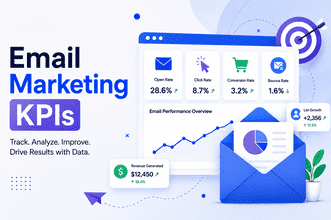
Focus first on conversion rate from visitor to subscriber and cost per sign-up if using paid traffic. Next, monitor open rate and click rate for the welcome series; if open rates are low, improve subject lines and sender name. Maintain list hygiene by removing inactive addresses after a set period.
Practical next steps (3–5 actionable points)
- Create one lead magnet and publish a focused landing page within 48 hours.
- Install a single-field inline form and an exit-intent popup on the highest-traffic page.
- Run a small paid test (e.g., $50–$200) to a cold but targeted audience and measure cost per sign-up.
- Send an immediate welcome email and two follow-ups asking a segmentation question.
Frequently asked questions
How can I build an email list fast?
Use one high-value lead magnet, minimal-friction signup flows, and focused promotion on 1–3 channels. Prioritize conversion rate optimization and a short welcome series to convert new subscribers into engaged contacts.
Is paid advertising the fastest way to get subscribers?
Paid ads can produce quick volume but require testing to find an efficient cost per lead. Organic channels (existing audience, partnerships, SEO) are lower cost but slower; combine both for predictable growth.
Should signups be single or double opt-in?
Single opt-in converts faster and is useful for rapid growth, but double opt-in improves list quality and reduces spam complaints. Choose based on deliverability needs and local legal requirements.
How much does a lead magnet cost to produce?
Simple lead magnets (checklists, short PDFs, templates) can be produced with minimal cost. Prioritize speed and relevance over production polish during initial tests.
How often should new subscribers receive emails in the first month?
Send a welcome email immediately, then 1–2 value-focused emails over the next 7–14 days. The goal is to set expectations and surface the most relevant content or offer while engagement is high.