Heating a Restaurant Patio: Start With Where Your Guests Sit
-

- Published Updated
- 77 views
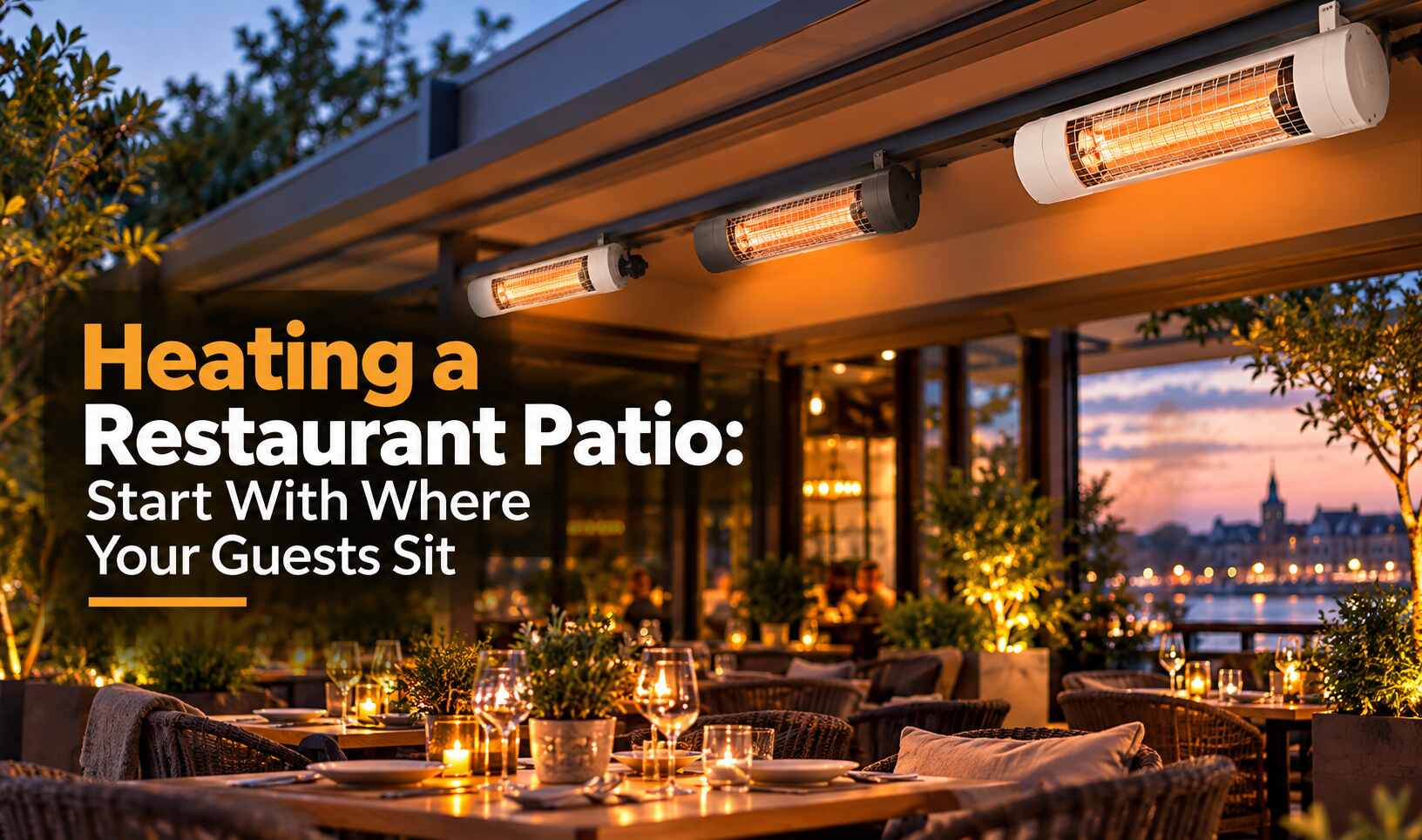
For restaurants in the Netherlands, a well-heated outdoor terrace can help create a comfortable guest experience during cooler spring and autumn days. But one common mistake is to choose patio heaters based only on their power or advertised coverage.
The more effective approach is to start with a simple question: Where do your guests actually sit?
A restaurant patio is rarely used evenly. Some tables are close to the building, others are exposed to wind, and certain seating areas may remain empty during quieter periods. By planning your heating around guest seating, you can improve comfort while making better use of your heating investment.
Why Guest Seating Should Determine Patio Heating
Outdoor heating works differently from indoor heating. An open terrace constantly loses heat to the surrounding environment, while wind can quickly carry warmth away.
Trying to heat the entire patio uniformly may therefore result in unnecessary energy consumption and inconsistent comfort.
Instead, restaurants should identify their most important seating zones and position heaters where guests spend the most time.
For example, a restaurant may have:
- High-demand dining tables near the entrance
- A sheltered area beside the building
- Exposed tables along the street
- A bar or lounge section
- A seasonal outdoor extension
- Each area can have different heating requirements.
A professional horeca patio heater can help restaurants create targeted heating zones rather than attempting to heat unused parts of the terrace.
Start With a Seating Map
Before purchasing or repositioning heaters, create a simple seating plan.
Mark the tables, chairs, walkways, entrances and areas where staff need to move. Then identify which tables are occupied most frequently.
Identify Your Priority Seating Areas
Your priority areas may include tables that generate the highest revenue, larger group seating or locations where guests prefer to sit.
For example, if a restaurant has 20 outdoor tables but only 10 are regularly occupied during cooler evenings, heating all 20 areas may not be necessary.
Concentrating heating around the active seating zones can make the system more practical and easier to manage.
Consider Wind Exposure
Wind is one of the biggest challenges when heating a Dutch terrace. A table beside a building may feel considerably warmer than a table exposed to an open street or waterfront.
Restaurants in coastal areas, beach clubs and open terraces should pay particular attention to wind direction and exposure.
A heater that works well in a sheltered area may provide a different guest experience in a windy location.
Choose the Right Type of Terrace Heater
Once the seating areas are identified, consider which heating technology works best for each location.
Electric Patio Heaters
Electric infrared heaters are commonly used for hospitality terraces because they provide targeted radiant heat.
Rather than heating the surrounding air, infrared heating warms people and objects within the effective heating area. This can make targeted heating particularly useful for restaurant seating.
For businesses considering this approach, explore the range of [electric terrace heaters for hospitality] designed for professional applications.
Gas Patio Heaters
Gas heaters can provide powerful outdoor heating and may be suitable for larger or more open terraces.
Restaurants can consider natural gas or propane solutions depending on available infrastructure, terrace layout and operating requirements.
Gas heating can be particularly relevant where electrical capacity is limited or where substantial heating coverage is required.
Pellet Patio Heaters
Pellet heaters offer another option for hospitality businesses. They use wood pellets as fuel and can provide a distinctive flame-based heating experience.
They may be suitable for restaurants that have sufficient space for fuel storage and want an alternative to conventional gas or electric systems.
Match Heater Position to Table Position
The location of the heater is just as important as its heating output.
A powerful heater positioned too far from guests may deliver less practical comfort than a smaller unit positioned correctly.
Heat the Guest Zone, Not the Empty Space
The objective should be to direct warmth towards occupied seating.
For example, a wall-mounted infrared heater positioned above a row of tables can provide targeted heat without taking up valuable floor space.
Freestanding heaters may be more suitable where seating arrangements change regularly.
Restaurants should also ensure that heaters do not obstruct customer movement, staff service routes or emergency access.
Consider Different Seating Scenarios
Restaurant terraces are rarely static throughout the day.
A terrace may be almost empty during an early afternoon service but become busy during dinner. On weekends, group bookings may create different seating patterns.
This means the heating strategy should be flexible.
Create Heating Zones
Instead of operating every heater simultaneously, divide the terrace into zones.
For example:
Zone 1: Main dining area
Zone 2: Covered seating
Zone 3: Exposed tables
Zone 4: Bar or lounge area
During quieter periods, staff can operate only the zones that are occupied.
This approach can help businesses manage operating costs while maintaining guest comfort.
Think About Mounting Height and Coverage
Every heater has an effective operating range, but real-world conditions can affect performance.
Mounting height, heater angle, wind exposure and surrounding structures should all be considered.
A heater mounted too high may reduce the intensity experienced at table level, while a poorly positioned unit can create uneven heating.
Businesses should follow the manufacturer's recommended installation height and clearance requirements.
For restaurants planning a larger installation, reviewing [professional terrace heating options] can help determine which configuration suits the space.
Solve Common Restaurant Patio Heating Problems
Problem: Guests complain that some tables are cold
Solution: Review heater positioning and identify whether the affected tables sit outside the effective heating zone. Repositioning or adding a targeted heater may be more effective than increasing overall heating.
Problem: Heating costs are higher than expected
Solution: Avoid operating every heater when only part of the terrace is occupied. Use heating zones and activate units according to customer demand.
Problem: The terrace feels cold despite powerful heaters
Solution: Check wind exposure, mounting height and heater direction. Outdoor heating performance depends on the environment as well as heater output.
Problem: Floor space is limited
Solution: Consider wall-mounted or overhead electric heaters where suitable. This can preserve valuable space for tables and customer movement.
Make Guest Comfort Part of Your Terrace Strategy
Heating should be viewed as part of the restaurant's overall outdoor experience rather than simply another piece of equipment.
Comfortable guests are more likely to remain seated longer, enjoy their meal and consider returning. A well-planned terrace can also make outdoor seating more attractive during periods when temperatures would otherwise discourage customers from sitting outside.
For Dutch hospitality businesses, this can be particularly relevant during the shoulder seasons when daytime temperatures may be comfortable but evenings become noticeably cooler.
If you are reviewing your terrace setup, explore electric patio heating for horeca to find solutions designed around professional outdoor seating environments.
Plan Your Heating Around Your Business
The most effective restaurant patio heating strategy starts with the people using the space.
Map your seating, identify priority tables, assess wind exposure and determine how your terrace operates during different service periods. Then choose heater types, positions and controls around those requirements.
There is no benefit in heating empty areas while guests at occupied tables remain uncomfortable.
By focusing on where your guests sit, restaurants can create a more targeted, flexible and practical outdoor heating strategy.
Explore the available horeca terrace heating solutions and assess which system best matches your restaurant's seating layout, terrace conditions and operating requirements.
FAQs
How many patio heaters does a restaurant terrace need?
The number depends on terrace size, seating arrangement, heater output, mounting height and outdoor conditions. It is better to calculate heating zones around actual seating than to select a number based solely on terrace size.
Where should restaurant patio heaters be positioned?
Heaters should generally be positioned to provide effective warmth around occupied seating while maintaining safe clearances and unobstructed staff and customer movement.
Are electric heaters suitable for restaurant terraces?
Electric infrared heaters can be suitable for many restaurant terraces because they provide targeted radiant heat. The suitability depends on electrical capacity, terrace layout and the specific heater model.
Should restaurants heat the entire terrace?
Not necessarily. Heating specific occupied zones can be more practical, particularly during quieter service periods. Restaurants can operate different heating zones according to customer demand.
How can restaurants reduce patio heating costs?
Use heating zones, avoid heating empty seating areas and select appropriately sized heaters. Regular maintenance and correct positioning can also help maintain effective performance.
Is infrared heating effective outdoors?
Infrared heating can be effective outdoors because it provides radiant warmth directly to people and nearby surfaces. However, wind, positioning, mounting height and heater specifications can significantly influence the perceived warmth.
Can patio heating help restaurants extend outdoor seating?
A suitable heating system can make outdoor seating more comfortable during cooler periods. However, the actual benefit depends on weather conditions, terrace design and how effectively the heating system is planned and operated.