Smart Electric Heaters Market Strategic Moves Shaping Connected Heating Growth
-

- Published Updated
- 1,568 views
The heating industry is moving toward products that combine thermal comfort with convenience, energy awareness, and digital control. Smart electric heaters are becoming increasingly relevant as households and commercial spaces look for flexible heating solutions that can respond to changing usage patterns. Unlike conventional heaters, connected models can integrate sensors, mobile applications, programmable controls, voice assistants, and automated scheduling.
Within the smart electric heaters market, manufacturers are increasingly focusing on strategic moves that improve product functionality while addressing consumer expectations around energy efficiency and ease of use. Competition is shifting beyond basic heating performance, with companies exploring software-enabled features, improved designs, connected ecosystems, and service-oriented approaches.
Expanding Smart Connectivity
One of the most important strategic moves involves strengthening connectivity. Wi-Fi and Bluetooth-enabled heaters allow users to adjust temperature settings remotely through smartphones and compatible applications. This capability is particularly useful for consumers who want to warm a room before arriving home or reduce heating when a space is unoccupied.
Manufacturers are also developing products compatible with broader smart-home ecosystems. Integration with voice assistants and connected home platforms can make heating controls part of a larger automated environment. As smart homes become more common, interoperability can become an important product consideration.
Companies operating in the smart electric heaters market can use connectivity as a way to differentiate their products rather than treating it as an optional feature. Simple interfaces, reliable connections, and intuitive applications can improve the overall user experience.
Prioritizing Energy Management
Energy consumption remains a major consideration when consumers evaluate electric heating equipment. Strategic product development is therefore increasingly centered on intelligent energy management.
Smart heaters can incorporate programmable schedules, adaptive temperature controls, occupancy detection, and energy-monitoring features. These functions can help users manage heating according to actual requirements instead of operating equipment continuously.
Manufacturers can further strengthen their offerings by displaying estimated energy usage within mobile applications. Clear information can help users understand how different settings affect consumption and encourage more efficient heating habits.
For the smart electric heaters market, energy management also creates opportunities for differentiation. Products that combine comfort with practical control over electricity usage can appeal to consumers seeking greater visibility into household energy expenses.
Investing in Sensor-Based Technology
Sensors are becoming another important area of strategic development. Temperature sensors can measure room conditions and help maintain a more consistent indoor environment. Advanced models may also incorporate motion or occupancy detection to determine whether a room is being used.
This technology can support automated heating adjustments. For example, a heater could reduce output when a room remains vacant and restore the preferred temperature when activity is detected.
Manufacturers can also explore more sophisticated sensor combinations to improve accuracy and responsiveness. The objective is not simply to add more sensors but to use collected information to create meaningful automation.
As sensor technology becomes more accessible, intelligent heating systems can become more responsive without requiring constant user intervention.
Developing Flexible Product Designs
Product design is another area where strategic moves can influence purchasing decisions. Consumers have different heating requirements depending on room size, building layout, climate, and installation preferences.
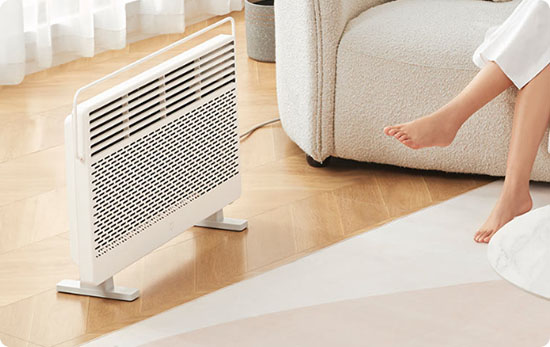
Manufacturers are therefore offering a broader range of form factors, including portable heaters, wall-mounted units, compact models, panel heaters, and designs intended for specific rooms.
Compact construction can be particularly valuable in apartments, offices, and other spaces where floor area is limited. At the same time, modern styling can help heating equipment blend into contemporary interiors rather than appearing purely functional.
The smart electric heaters market can benefit from products that combine technological capabilities with practical design. A heater that looks attractive, occupies limited space, and provides convenient controls can address several consumer priorities simultaneously.
Strengthening Safety Features
Safety remains a central requirement for electric heating products. Strategic product development increasingly emphasizes features designed to reduce common operating risks.
Manufacturers can incorporate overheating protection, tip-over detection, automatic shutoff, child-lock functions, and temperature monitoring. Remote notifications can provide additional awareness by alerting users when unusual operating conditions occur.
Smart safety functions can also work with connected applications. Users may receive notifications if a heater remains active for an unexpected period or if a safety mechanism has been triggered.
These capabilities can improve confidence in connected heating products while supporting responsible operation. Clear instructions and transparent safety information remain equally important because technology cannot replace proper installation and usage practices.
Building Integrated Smart-Home Ecosystems
Another strategic move involves positioning smart heaters as part of a wider connected-home ecosystem. Rather than functioning as standalone appliances, heating products can communicate with thermostats, sensors, lighting systems, and other smart devices.
This approach can create automated scenarios based on occupancy, time, indoor temperature, or user preferences. For example, heating could be adjusted automatically according to scheduled routines or coordinated with other household systems.
For manufacturers, ecosystem integration can create longer-term customer relationships. Once consumers connect several appliances through a common platform, they may prefer additional products that operate within the same environment.
Expanding Digital Sales and Customer Support
Digital channels are also influencing competitive strategies. Consumers increasingly research product specifications, compare features, read reviews, and purchase appliances online. Manufacturers can respond by improving digital product demonstrations and providing detailed information about installation, controls, energy management, and compatibility.
After-sales support is equally important. Connected appliances may require software updates, application assistance, or troubleshooting. Companies that provide accessible digital guides and responsive customer service can improve the ownership experience.
In the smart electric heaters market, digital engagement can therefore extend beyond the initial sale. Product education, software support, warranty services, and maintenance guidance can all contribute to customer retention.
Focusing on Regional Consumer Needs
Heating requirements vary significantly across regions. Climate conditions, electricity costs, building structures, consumer preferences, and regulatory expectations can influence product demand.
Manufacturers can respond by adapting product ranges to local conditions rather than relying on a single global design. In colder regions, higher-capacity heating solutions may receive greater attention, while milder markets may favor compact products with flexible temperature controls.
Localized marketing and distribution strategies can also help companies reach specific consumer segments. Understanding regional preferences can make product launches more targeted and commercially relevant.
Conclusion
Strategic moves in the smart electric heaters market are increasingly focused on combining heating performance with connectivity, automation, safety, energy management, and modern design. Manufacturers are moving beyond conventional heating functions to create products that fit naturally into digitally connected lifestyles.
Future competition is likely to involve more than hardware specifications. Software capabilities, ecosystem compatibility, sensor intelligence, customer support, and ease of use can all influence product differentiation. Companies that align these elements with practical consumer needs can create stronger value propositions while supporting the broader transition toward smarter and more manageable indoor heating.