Solar Panel Cost & Subsidy Guide for India 2025 — Prices, Incentives, Payback
-

- Published Updated
- 309 views
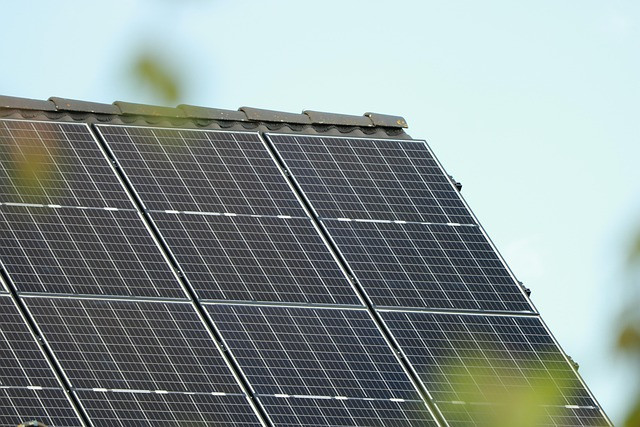
The most searched concern for homeowners and businesses is the solar panel cost in India 2025 and whether subsidies make rooftop systems affordable. This guide explains typical price ranges, the incentive landscape, how to calculate payback, and a practical decision framework for choosing and installing solar today.
- Typical installed cost ranges depend on size and components: budget-friendly grid-tied systems usually fall in a broad range rather than a single price.
- Government incentives vary by central and state programs; check MNRE and your state DISCOM for current schemes.
- Use a 5-step rooftop solar decision framework below to compare quotes, confirm standards, and estimate payback.
solar panel cost in India 2025: overview and price ranges
Installed prices change with module grade, inverter quality, mounting type, balance-of-system items, and labor. As a practical range for 2025: residential rooftop grid-tied installations commonly fall roughly between ₹40,000 and ₹80,000 per kW installed depending on components and location. Larger commercial/industrial systems and ground-mounted utility projects usually achieve lower per-kW costs because of scale and procurement advantages.
Typical cost bands (illustrative)
- Small rooftop residential (1–5 kW): ₹45,000–₹80,000 per kW
- Medium rooftop / commercial (10–100 kW): ₹40,000–₹65,000 per kW
- Large scale / utility: often ₹35,000–₹50,000 per kW
These are ranges for installed systems (modules, inverter, mounting, wiring, commissioning). Prices depend on panel wattage, panel brand and warranty, inverter efficiency and warranty, and whether batteries are included.
Understanding government solar subsidy India 2025 and incentives
Central and state incentives differ widely. The central government sets broad policy through the Ministry of New and Renewable Energy (MNRE) and regulatory guidance via the Central Electricity Regulatory Commission (CERC), while state DISCOMs and state energy departments run many localized schemes. For the most reliable source of official policy and program updates see the MNRE site: Ministry of New and Renewable Energy (MNRE).
Types of incentives to check
- Capital subsidies (occasionally available via state schemes or targeted central programs)
- Net metering or net billing policies that credit exported generation
- Low-interest loans or interest subvention via banks and state programs
- Accelerated depreciation and tax incentives for businesses
5-step Rooftop Solar Decision Framework
- Assess consumption and roof suitability: review last 12 months' electricity bills and roof orientation/obstructions.
- Size the system: choose kW to match daytime loads and export strategy (self-consumption vs. feed-in).
- Compare detailed quotes: require itemized BOM, panel/inverter model and warranties, performance ratio assumptions.
- Verify incentives and permits: confirm net metering rules, subsidy eligibility, and required approvals from the DISCOM.
- Installation and post-commission: ensure IEC/BIS-compliant equipment, written performance warranty, and commissioning report.
Checklist: SOLAR-COST
Use this quick checklist before signing a contract:
- S: System size & expected generation
- O: Owner/user consumption profile
- L: Local policies & net metering
- A: Approved equipment standards (IEC/BIS)
- R: Review warranties and performance guarantees
- C: Compare three quotes
- O: Offtake and export rules
- S: Safety and roof structural check
- T: Timeline and commissioning plan
How to estimate payback and finances
Calculate simple payback by dividing net installed cost (after any subsidy) by annual bill savings from self-consumption plus export credits. For a more accurate figure include system degradation (typically 0.5–1% per year), inverter replacement cost in 8–12 years, and any financing interest. Solar payback period India commonly ranges from 3 to 8 years for residential systems depending on electricity tariff and subsidy availability.
Real-world example
A 3 kW rooftop grid-tied system with a mid-range BOM might cost about ₹1.5–2.4 lakh installed. If a state scheme offers a hypothetical 15% capital subsidy, net cost falls by ₹22,500–36,000. If the household saves ₹18,000 per year on bills, the simple payback is roughly 7–13 years before considering degradation and replacement costs.
Practical tips
- Get at least three itemized quotes and compare BOM details, not only the final price.
- Confirm product certifications (IEC 61215 for panels, IEC 62109/IS standards for inverters) and written warranties.
- Check net metering rules and any monthly fixed charges the DISCOM may apply; those affect savings.
- Consider a slightly oversized system if daytime usage is high; consider batteries only when backup needs justify cost.
- Verify installer credentials and ask for completed commissioning reports and performance testing.
Common mistakes and trade-offs
- Choosing the cheapest quote without checking component quality or warranty transferability.
- Ignoring long-term inverter and balance-of-system replacement costs.
- Assuming subsidies are uniform — they change by state and may be time-limited.
- Overestimating self-consumption without checking actual load profiles; this lengthens payback.
FAQ: What is the average solar panel cost in India 2025?
Average installed cost varies by size and quality; residential rooftop systems broadly range around ₹45,000–₹80,000 per kW. Exact prices depend on equipment choices, local labour costs, and whether any subsidies apply.
How can homeowners find current government solar subsidy India 2025 programs?
Check the MNRE website and the local state energy department or DISCOM portal for active programs, eligibility rules, and application procedures. Policies and subsidies differ by state and are updated periodically.
How to calculate rooftop solar installation cost per kW India for a quote?
Ask installers for an itemized cost per kW breakdown including modules, inverter, mounting, wiring, labour, taxes, and commissioning. Divide total installed cost by system kW to compare quotes on a per-kW basis.
Does net metering affect the payback period?
Yes. Favorable net metering or export credit policies improve annual bill savings and shorten payback. Confirm meter settlement frequency and any limits on exported energy credits.
Are there standards and certifications to require from suppliers?
Require panel and inverter certifications (IEC/BIS), performance warranties, and ask for datasheets. Verify installer registration with state or national registries when available, and ask for a commissioning certificate and grid-connection paperwork.