How Structural Services Support Better Design Decisions and Project Performance
-
- Published Updated
- 3,847 views
Introduction
A structural system is essential for the successful implementation of any building construction process, as it involves thorough planning, communication, and detailing tailored to the architectural needs and operational performance of the structure. If building design is focused on aesthetic appeal and functionality, the structural system is focused on its practical, safe realization. This emphasizes the value of incorporating Structural Services at an integral point of the project lifecycle.
Whether for the evaluation of different designs, facilitation of interdisciplinary collaboration, enhancement of architectural documents, and problem-solving of issues prior to their escalation to more significant risks, it ensures an efficient workflow for improved outcomes.
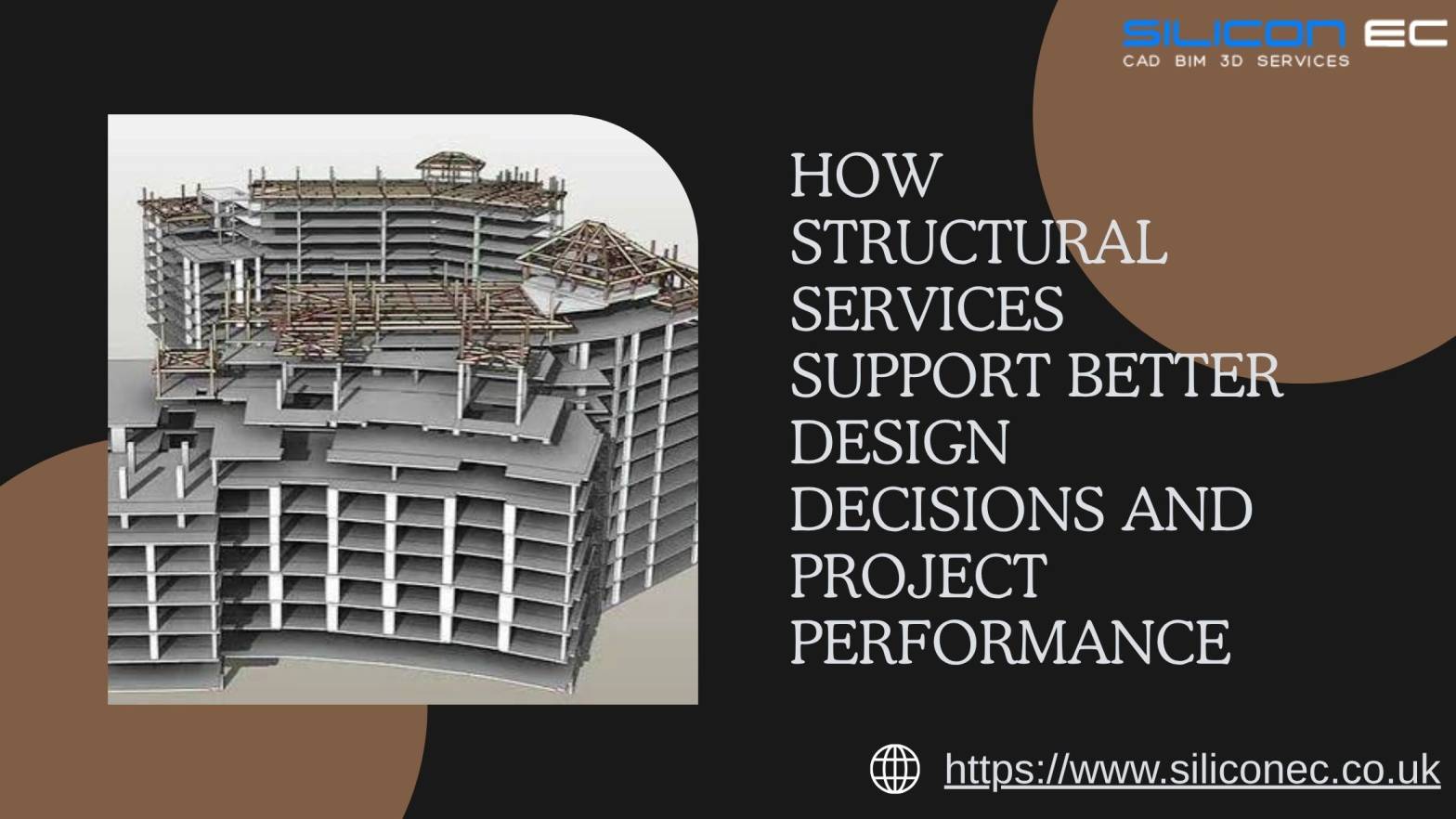
Moreover, structural engineering practice today goes much beyond traditional 2D drafting by using digital 3D structural modelling and Building Information Modeling (BIM) to create coordinated drawings, plans, and reports for better project execution. In the follow-up post, read about how the structural services lead to better decision-making for designs, enhance inter-group working relationships, minimize mistakes, and create greater value overall on construction projects.
What Are Structural Services?
Structural services cover a broad range of engineering and documentation activities involved in planning, designing, analyzing, and documenting building structures.
Depending on project requirements, structural services may include:
Structural design and analysis
Structural drafting
Structural BIM modeling
Structural detailing
Structural documentation
Reinforcement detailing
Structural coordination
Shop drawing preparation
Design development support
The primary objective is to create a structural solution that supports the intended architectural design while addressing safety, functionality, constructability, and project requirements.
Why Structural Services Matter in the Early Design Stage
Structural decisions made during the early stages of a project can have a significant impact on its final outcome.
For example, the location of columns can affect room layouts, parking arrangements, circulation spaces, and architectural aesthetics. Similarly, beam depths and floor systems can influence ceiling heights and the placement of mechanical services.
Early structural involvement helps identify these considerations before the design becomes difficult to change.
Better Feasibility Assessment
Structural professionals can evaluate whether a proposed architectural concept is practical from a structural perspective.
More Informed Design Choices
Different structural systems can be compared based on project requirements, helping stakeholders select an appropriate approach.
Reduced Future Modifications
Early coordination can minimize significant changes during later design stages.
Role of Structural BIM Services
Digital workflows have transformed structural design and coordination. Structural BIM Services allow engineering teams to develop intelligent three-dimensional representations of structural systems.
A BIM model can contain information about structural elements such as columns, beams, slabs, walls, foundations, and reinforcement.
This provides project stakeholders with a more comprehensive understanding of the proposed structure.
Key Benefits of Structural BIM
Improved visualization
Better interdisciplinary coordination
Easier design revisions
Improved information management
Early identification of potential conflicts
More consistent project documentation
BIM can therefore support better decisions throughout the design and development process.
How Structural CAD Drawing Services Improve Documentation
Although BIM is becoming increasingly important, CAD remains an essential part of structural documentation. Structural CAD Drawing Services provide accurate 2D drawings that communicate structural information clearly.
These drawings may include:
Structural plans
Sections
Elevations
Foundation layouts
Framing plans
Structural details
Reinforcement information
Accurate CAD documentation provides engineers, consultants, and project teams with a reliable reference for design development and coordination.
Structural BIM Modelling and Design Coordination
Structural BIM Modelling Services provide more than three-dimensional visualization. They help project teams understand how structural components relate to architectural and building-system requirements.
For example, a structural model can help identify whether a beam conflicts with a duct, whether a column interferes with an architectural opening, or whether structural elements align correctly between floors.
Identifying such issues during the digital design stage can help prevent unnecessary modifications later.
Benefits of Structural CAD and BIM Services
Combining CAD and BIM workflows provides flexibility throughout different stages of a project.
1. Better Visualization
Three-dimensional models help stakeholders understand complex structural arrangements more easily.
2. Improved Accuracy
Digital workflows can reduce inconsistencies between different drawings and models.
3. Better Collaboration
Shared project information helps architects, engineers, and other consultants coordinate more effectively.
4. Reduced Rework
Potential conflicts can be identified earlier, reducing the likelihood of expensive changes later.
5. Efficient Documentation
Design information can be developed into coordinated drawings and models more systematically.
Structural Services and Project Performance
Structural services can influence project performance in several ways.
Project Schedule
Accurate structural documentation helps downstream teams work with clearer information, supporting smoother project progression.
Budget Planning
Early structural evaluation can help stakeholders understand the implications of different structural solutions.
Design Quality
Professional structural input helps ensure that architectural concepts are supported by practical engineering solutions.
Coordination
A coordinated structural model and drawing set can reduce misunderstandings between project disciplines.
Long-Term Performance
Proper structural planning contributes to the durability, functionality, and reliability of the completed building.
Structural Services Across Different Project Stages
Structural support is not limited to one stage of a project.
Concept Design
At this stage, structural professionals help establish the basic structural strategy.
Schematic Design
Preliminary structural layouts and systems are developed and coordinated with architectural requirements.
Detailed Design
Structural elements are analyzed, sized, and documented in greater detail.
Documentation
Detailed drawings, models, and supporting information are prepared.
Construction Support
Updated documentation and coordination information can help address design-related requirements during project execution.
This continuous involvement creates a more connected design process.
Common Challenges Without Proper Structural Coordination
Late Design Changes
When structural requirements are considered too late, significant architectural modifications may become necessary.
Conflicting Information
Uncoordinated drawings and models can result in inconsistent project information.
Space Constraints
Structural elements may conflict with mechanical, electrical, or architectural requirements.
Documentation Errors
Incorrect dimensions or inconsistent drawings can create confusion for downstream project teams.
Increased Rework
Issues discovered late in the process are often more difficult and expensive to resolve.
Professional structural services help address these challenges through early planning and systematic coordination.
How to Choose the Right Structural Services Partner
Selecting an appropriate consultancy or service provider is an important project decision.
Technical Experience
Look for professionals with experience across relevant building types and structural systems.
Documentation Capabilities
The provider should be capable of producing accurate drawings and coordinated models.
BIM Expertise
For digitally coordinated projects, experience with BIM workflows is increasingly valuable.
Quality Control
A structured review process helps identify errors before documentation is delivered.
Communication
Clear communication is essential when responding to revisions and coordinating with multiple project stakeholders.
Scalability
The right partner should be able to support projects of different sizes and complexity.
Silicon Engineering Consultant UK provides structural consultancy and documentation support designed around the requirements of modern engineering projects.
Case Study: Improving Coordination for a Commercial Building
Project Background
A commercial development included multiple floors, open-plan spaces, service areas, and complex architectural requirements. The project team needed to coordinate the structural framework with architectural and building-system layouts.
Challenge
The initial design included several areas where structural elements could potentially interfere with architectural openings and service routes. Resolving these issues after detailed documentation would have resulted in additional revisions and delays.
Solution
The project team adopted a coordinated structural workflow combining 2D documentation with a digital structural model.
The structural team developed the preliminary framing arrangement, coordinated column and beam positions, and reviewed the model against other project disciplines.
Potential conflicts were identified during the design stage rather than after documentation was finalized.
Outcome
The coordinated workflow provided:
Better understanding of the structural system
Improved alignment between disciplines
Fewer design revisions
More consistent documentation
Greater confidence during detailed design development
The case demonstrates how early structural involvement and digital coordination can positively influence overall project performance.
Future Trends in Structural Services
Structural engineering continues to evolve as technology becomes more integrated into project workflows.
Greater BIM Adoption
More projects are moving toward model-based coordination and information management.
Automation
Automated processes can reduce repetitive drafting and documentation tasks.
Cloud Collaboration
Cloud-based platforms allow geographically distributed teams to access current project information.
Data-Driven Decision Making
Digital project information can support better analysis and more informed engineering decisions.
Sustainable Structural Design
Material optimization and efficient structural systems will become increasingly important as the industry focuses on sustainability.
Conclusion
Structural services play a fundamental role in transforming architectural concepts into practical, coordinated, and reliable building solutions. Their value extends beyond structural calculations or drawing preparation. Professional structural support helps project teams make better decisions from the earliest stages through detailed design and documentation.
By combining engineering expertise with accurate CAD documentation, BIM modeling, and interdisciplinary coordination, structural services can improve project efficiency, reduce errors, support better communication, and contribute to stronger project outcomes.
As modern building projects continue to become more complex, early and effective structural involvement will remain essential. Organizations that integrate structural expertise into their design workflows can make more confident decisions and create a stronger foundation for successful project delivery.
Frequently Asked Questions
1. What do structural services include?
Structural services can include structural design, analysis, drafting, BIM modeling, detailing, coordination, and preparation of structural documentation.
2. How do structural services improve project performance?
They help identify structural challenges early, improve coordination, reduce errors, and provide accurate information for design development.
3. What are Structural BIM Services?
Structural BIM Services involve developing information-rich digital models of structural elements to support visualization, coordination, and project documentation.
4. Are Structural CAD Drawing Services still important?
Yes. CAD drawings remain valuable for structural plans, sections, details, and other forms of technical documentation, even when BIM is used.
5. What is the advantage of combining CAD and BIM?
Combining CAD and BIM provides both precise 2D documentation and coordinated 3D model-based information, supporting different project requirements.
6. When should structural consultants become involved?
Ideally, structural consultants should be involved during the early design stage so structural requirements can be considered before major architectural decisions are finalized.
7. Can structural services help reduce design changes?
Yes. Early structural planning and interdisciplinary coordination can identify potential issues before they require major design revisions.