How Sustainable Agricultural Practices Are Transforming Food Systems
-

- Published Updated
- 2,029 views
Sustainable Agricultural Practices: Overview and Trends
Sustainable agricultural practices are methods of farming designed to meet current food and fiber needs while conserving resources, maintaining ecosystem services, and increasing resilience to climate variability. Interest in sustainable approaches has grown as policymakers, researchers, and producers respond to concerns about soil degradation, water scarcity, greenhouse gas emissions, and biodiversity loss.
- Definition: Practices that balance productivity with environmental and social goals.
- Key techniques: crop rotation, cover cropping, integrated pest management, precision agriculture, and conservation tillage.
- Benefits: improved soil health, reduced input use, carbon sequestration, and stronger resilience to climate shocks.
- Challenges: upfront costs, knowledge gaps, measurement and verification, and market and policy incentives.
Why sustainable agricultural practices matter
Global agriculture supplies food, fiber, and livelihoods for billions but also contributes to environmental pressures including nutrient runoff, deforestation, and greenhouse gas emissions. Sustainable agricultural practices aim to reduce negative impacts by promoting soil health, efficient water use, diversified cropping systems, and reduced reliance on chemical inputs. International organizations such as the Food and Agriculture Organization (FAO) and scientific assessments by the Intergovernmental Panel on Climate Change (IPCC) highlight the role of improved land management in climate mitigation and adaptation.
Key techniques and technologies
Crop rotation and diversification
Rotating crops and introducing diverse plant species improves soil structure, disrupts pest cycles, and enhances nutrient cycling. Diversification can include intercropping, agroforestry, and integrating livestock with cropping systems.
Cover cropping and conservation tillage
Cover crops protect soil from erosion, build organic matter, and suppress weeds. Conservation tillage reduces soil disturbance, which helps preserve moisture and supports soil microbiota essential for long-term fertility.
Integrated pest management (IPM)
IPM prioritizes biological control, habitat management, and targeted chemical use only when necessary, reducing reliance on broad-spectrum pesticides while maintaining crop health.
Precision agriculture and digital tools
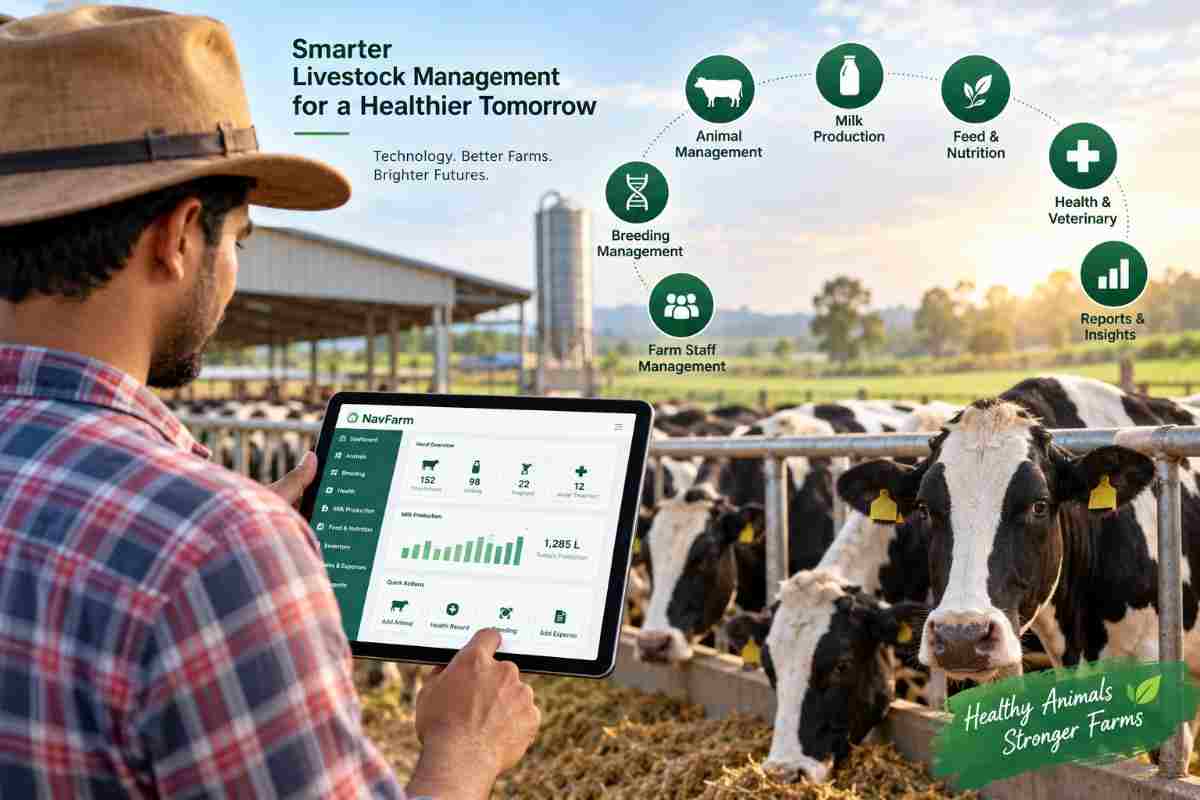
Deploying sensors, satellite imagery, and variable-rate application systems allows for more efficient input use (water, fertilizer, pesticides), which can lower costs and environmental footprints. Precision tools also assist in monitoring soil moisture, crop health, and nutrient status in real time.
Regenerative and climate-smart approaches
Regenerative practices focus on building soil organic matter and enhancing biodiversity, often overlapping with climate-smart agriculture that explicitly targets mitigation and adaptation outcomes through measurable greenhouse gas reductions and resilience-building practices.
Benefits and co-benefits
Well-implemented sustainable agricultural practices can deliver multiple benefits: improved soil fertility and structure, reduced erosion and runoff, enhanced water-use efficiency, lower greenhouse gas emissions per unit of production, and increased on-farm biodiversity. Social and economic co-benefits include diversified income streams, reduced long-term input costs, and greater resilience to extreme weather events.
Challenges and barriers to adoption
Adoption faces several hurdles: initial investment costs for equipment or transition, fragmented land ownership, limited access to technical knowledge, and supply chain requirements that favor conventional commodity production. Measurement and verification of environmental outcomes—such as carbon sequestration in soils—remain technically complex and can hinder incentive programs.
Policy, markets, and measurement
Policies and market mechanisms influence uptake. Public programs and conservation incentives, extension services, and voluntary sustainability standards can accelerate transitions when aligned with robust monitoring. Scientific institutions and government agencies, including national agricultural research services and extension programs, play a role in developing guidelines and outreach. For guidance and technical resources, see the Food and Agriculture Organization (FAO) of the United Nations: Food and Agriculture Organization (FAO).
Scaling and research priorities
Key research priorities include refining soil carbon measurement methods, assessing long-term productivity trade-offs, evaluating socioeconomic outcomes for smallholder farmers, and developing scalable digital tools tailored to diverse regions. Interdisciplinary research that links agronomy, ecology, economics, and social science supports evidence-based policy design.
Conclusion
Sustainable agricultural practices offer pathways to maintain or increase food production while protecting natural resources and strengthening resilience to climate change. Successful adoption depends on supportive policies, access to finance and knowledge, reliable measurement frameworks, and supply chains that value sustainability outcomes.
Frequently asked questions
What are sustainable agricultural practices?
Sustainable agricultural practices are farming methods that balance productivity with environmental stewardship and social responsibility, including techniques like crop rotation, cover cropping, reduced tillage, integrated pest management, and efficient water use.
How do sustainable agricultural practices improve soil health?
Practices such as adding organic amendments, maintaining continuous cover, minimizing soil disturbance, and diversifying crops increase organic matter, enhance soil structure, and support beneficial microbial communities that drive nutrient cycling.
Can sustainable agricultural practices reduce greenhouse gas emissions?
Certain practices—such as improved nitrogen management, conservation tillage, and carbon-rich cover crops—can lower emissions intensity and increase carbon stored in soils and biomass, contributing to climate mitigation when measured and managed appropriately.
Are sustainable agricultural practices suitable for large-scale commercial farms?
Yes. Many practices are adaptable to large-scale operations, especially when combined with precision agriculture and landscape-level planning. Economic viability often depends on local conditions, input costs, and market incentives.