What Is Trump’s U.S. Space Academy?
-

- Published Updated
- 3,276 views
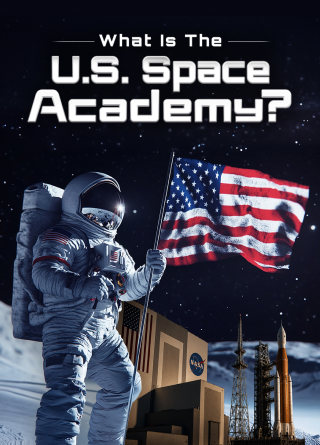
The United States is preparing to take another major step in developing the workforce needed for its expanding ambitions in space. President Donald Trump signed an executive order on August 28, 2026, beginning the process of establishing the U.S. Space Academy, a proposed federal institution designed to educate and train the next generation of space professionals.
The announcement does not mean that a fully operational academy exists today. Instead, the executive order establishes a Presidential Commission on the United States Space Academy that will develop recommendations for how the institution should be created and operated. The commission has been given 120 days to produce a detailed blueprint covering everything from governance and curriculum to admissions, location, service obligations, and implementation.
The proposed academy comes at a time when the U.S. space sector is becoming increasingly complex. NASA continues to pursue lunar exploration, the U.S. Space Force is developing its capabilities, and private companies are expanding commercial activity in launch services, satellites, communications, and other space technologies. Together, these developments are creating demand for highly skilled engineers, scientists, technicians, operators, military personnel, entrepreneurs, and civil servants.
What Is the U.S. Space Academy?
The U.S. Space Academy is a proposed national academy intended to develop the technical and leadership capabilities required for America's future space activities. President Trump's executive order sets the foundation for the initiative but leaves many of the academy's most important details to the newly established commission.
The institution is expected to combine technical education with leadership development, discipline, experiential learning, and public service. Its potential student population could eventually include people preparing for careers across NASA, the U.S. Space Force, other federal agencies, the defense sector, and the growing commercial space industry.
Unlike a conventional university focused primarily on academic education, the proposed Space Academy is expected to place considerable emphasis on practical preparation. Students could receive training designed to help them operate in demanding technical, scientific, military, and spaceflight environments.
However, it is important to distinguish the current proposal from an operating educational institution. There is no confirmed campus, admissions process, student enrollment, opening date, or academic calendar yet. Those decisions remain part of the planning process.
Why Does the U.S. Need a Space Academy?
The push for a U.S. Space Academy reflects the growing importance of space to national security, scientific research, economic activity, and technological development.
For decades, the United States has maintained a leading position in space exploration and aerospace technology. However, the nature of the space industry has changed significantly. Space is no longer limited to government-led missions. Private companies are now involved in rocket launches, satellite networks, lunar missions, communications, space infrastructure, and other emerging areas.
At the same time, the U.S. Space Force has created additional demand for personnel with specialized knowledge of space systems, satellite operations, cybersecurity, communications, engineering, and related technologies.
The administration argues that maintaining American leadership in this environment will require a larger pipeline of people who understand both the technical and strategic sides of space.
The proposed academy could therefore serve as a long-term talent-development institution. Instead of relying entirely on existing universities, military academies, and specialized training programs, the Space Academy could provide a centralized educational pathway focused specifically on the needs of America's space ecosystem.
What Will Students Learn at the U.S. Space Academy?
The final curriculum has not yet been established, but the executive order gives the commission a broad set of areas to consider.
Potential academic programs could include engineering, space science, aerospace technology, satellite systems, robotics, planetary science, computer science, and other technical disciplines. However, the academy's education would likely extend beyond traditional classroom instruction.
Leadership development is another major component of the proposed model. Students could receive training designed to prepare them for management, decision-making, public service, and high-pressure operational environments.
Experiential learning is also expected to play an important role. Depending on the final design, this could involve partnerships with NASA facilities, government agencies, universities, military organizations, research institutions, and private space companies.
The commission will also examine degree programs, accreditation, curriculum design, leadership development, and practical training. This means the eventual academic structure could be significantly different from that of existing federal service academies or traditional universities.
Who Will Be Eligible to Attend?
One of the biggest unanswered questions is who will be able to apply to the U.S. Space Academy.
The commission has specifically been instructed to examine applicant requirements. These could involve citizenship, security clearances, government employment, military status, or other eligibility criteria.
The final admissions structure will depend heavily on how the academy is ultimately organized. If it primarily serves federal agencies and national security requirements, applicants could face requirements similar to those associated with military or government institutions.
If the academy is designed to serve the broader commercial space sector as well, its admissions system could potentially be more open to civilian students.
The executive order does not establish a final admissions policy. Therefore, claims about specific age limits, academic qualifications, application deadlines, tuition, or student numbers should not be treated as confirmed at this stage.
Who Is Leading the Space Academy Commission?
NASA has been placed at the center of the planning process.
NASA Administrator Jared Isaacman is serving as chair of the Presidential Commission on the United States Space Academy. Michael Kratsios and Kevin Hassett are serving as vice chairs, while NASA Deputy Administrator Matt Anderson is the executive director.
The commission also includes senior representatives from the federal government, including the Secretary of War, White House Chief of Staff, Director of the Office of Management and Budget, National Security Advisor, and Secretary of the Air Force, or their designated representatives.
The structure reflects the broad goals of the initiative. The proposed academy is not being positioned solely as a NASA education project. Its potential responsibilities span civilian space exploration, national security, military operations, scientific research, and commercial development.
The commission can also work with academia and industry through working groups and consultations. That could become important because many of the skills required by the modern space economy are being developed across both government and private-sector organizations.
Where Will the U.S. Space Academy Be Located?
For now, there is no answer.
The executive order does not name a city, state, NASA center, military base, or university as the permanent home of the academy. Instead, the commission has been tasked with developing a process for selecting a suitable physical location.
The choice could become a major issue because different locations could offer different advantages. A site near an existing NASA facility could provide access to aerospace infrastructure, laboratories, researchers, and mission operations.
A location close to a major military or aerospace hub could offer connections to defense organizations and space-related companies. Other locations could compete by offering universities, research institutions, technology ecosystems, and existing aerospace talent.
The White House has indicated that proposals for the academy's location will be considered. However, until the commission makes a recommendation and the administration approves it, there is no official campus.
What Does the Commission Have to Decide?
The commission has a wide-ranging assignment and must submit its recommendations within 120 days of the executive order.
Its work will cover several fundamental questions about how the U.S. Space Academy should operate.
These include the academy's governance and organizational structure, accreditation, relationships with federal agencies, academic programs, curriculum, leadership training, and experiential education.
The commission must also examine whether graduates should have military or civilian federal service obligations. This is particularly important because the academy could potentially prepare personnel for roles connected to national security and government service.
Admissions requirements are another major area. The commission must consider questions involving citizenship, security clearances, government employment, and military status.
It must also recommend a permanent location and consider pilot programs, partnerships, and coordination with existing federal education initiatives.
Finally, the commission is expected to identify any administrative or legislative changes that may be necessary and provide an implementation strategy and timeline.
Could the Academy Become Part of NASA?
Another important question is whether the U.S. Space Academy will ultimately operate within NASA.
The executive order specifically directs the commission to consider this possibility. That does not mean the academy will definitely become a NASA institution.
NASA's involvement makes sense because the agency already manages major scientific and human spaceflight programs and has extensive relationships with universities, research organizations, aerospace companies, and international partners.
However, the academy's proposed mission extends beyond NASA's traditional civilian space activities. The institution could also serve the needs of the military, national security agencies, and commercial space companies.
The final governance structure will therefore need to balance these different priorities.
When Will the U.S. Space Academy Open?
There is currently no confirmed opening date for the U.S. Space Academy.
The August 28 executive order begins a planning and recommendation process rather than announcing the launch of an operational school. The commission must first complete its report within 120 days.
After that, the recommendations would need to go through the appropriate approval and implementation processes. Depending on what the commission proposes, some elements could require additional presidential action, congressional legislation, funding, or other administrative steps.
Construction would also be necessary if a new physical campus is ultimately selected.
This means prospective students should not expect an immediate admissions announcement or first academic year. There is currently no confirmed application window, tuition structure, student intake, or campus construction schedule.
How Could the Space Academy Affect America's Space Industry?
If successfully established, the U.S. Space Academy could have a long-term impact on America's space workforce.
The commercial space industry is expanding into areas that require highly specialized expertise. Launch vehicles, satellite networks, lunar infrastructure, space-based communications, robotics, artificial intelligence, and other technologies all require engineers and technical professionals.
Government space programs face similar challenges. Future lunar missions, exploration programs, national security operations, and space infrastructure projects will require people capable of working across multiple disciplines.
A dedicated academy could help create a more coordinated talent pipeline by bringing education, government service, research, and industry partnerships together.
The institution could also help bridge the gap between academic knowledge and operational experience. If its experiential learning programs are designed effectively, graduates could enter the workforce with exposure to real-world space systems and mission environments.
What Happens Next?
The immediate next step is the work of the Presidential Commission.
Over the coming months, the commission will need to answer the questions surrounding the academy's purpose, structure, curriculum, admissions, location, funding, and implementation.
Its recommendations will provide the first detailed picture of what the proposed institution could become.
For now, the most important point is that the U.S. Space Academy is still in the planning stage. The executive order establishes the process for creating it, but many of the details that would matter to prospective students, educators, government agencies, and the private space industry have yet to be decided.
Conclusion
President Trump's U.S. Space Academy initiative represents an effort to build a dedicated talent pipeline for America's increasingly important space sector. The proposed institution could bring together technical education, leadership development, practical training, public service, and partnerships across government, academia, and industry.
However, the academy is not yet an operating university or federal service academy. Its governance, curriculum, admissions requirements, location, funding, and opening timeline remain under consideration.
The Presidential Commission now has 120 days to develop its recommendations. What emerges from that process will determine whether the idea becomes a fully established institution and, ultimately, how the next generation of American space professionals will be trained.