Is WordPress Still Worth Using in 2026?
-

- Published Updated
- 5,230 views
Choosing a website platform in 2026 is not as simple as it was a few years ago. There are now dozens of website builders offering drag-and-drop editors, AI-powered design tools, automated content creation, and ready-made templates.
Despite all these new options, WordPress continues to be an important part of the web.
The reason is simple: WordPress offers a combination of flexibility, customization, content management, and scalability that makes it useful for a wide range of websites.
But is WordPress actually still worth using in 2026?
WordPress Gives Website Owners More Control
One of the biggest advantages of WordPress is the amount of control it provides.
Website owners can choose their hosting provider, change themes, install plugins, modify their website's structure, and customize functionality according to their requirements.
This is particularly useful for people who want to build a website that can evolve over several years instead of remaining limited to a basic template.
It Is More Than Just a Blogging Platform
Many people still associate WordPress mainly with blogging. Although blogging remains one of its strongest features, the platform can be used for much more.
WordPress websites can be built for:
Small businesses
Freelancers
Portfolios
News websites
Educational projects
Online stores
Membership platforms
Service businesses
Personal brands
This flexibility allows different types of users to work with the same underlying platform.
Plugins Make Websites More Flexible
A website often needs features that aren't included in its basic setup.
WordPress solves this through plugins. Depending on the project, website owners can add tools for SEO, forms, security, backups, analytics, e-commerce, performance, and many other purposes.
The important thing is not to install hundreds of plugins simply because they are available. A better approach is to use only reliable plugins that provide a genuine benefit to the website.
WordPress and Search Engine Optimization
SEO remains important for businesses that depend on organic traffic.
WordPress gives website owners control over many elements that matter for SEO, including page structure, URLs, headings, images, internal links, and published content.
SEO plugins can also make optimization easier for beginners by providing recommendations and helping manage technical settings.
However, a WordPress installation by itself will not make a website rank well. Useful content, good website performance, strong user experience, and a consistent SEO strategy are still necessary.
AI Is Changing How Websites Are Managed
Artificial intelligence is one of the biggest changes affecting website creation in 2026.
AI tools can help with tasks such as generating content ideas, creating images, improving copy, analyzing information, and automating repetitive workflows.
WordPress can work alongside these technologies, giving website owners additional ways to improve productivity.
The best results still come from combining automation with human judgment. AI can help speed up a process, but businesses still need people to understand their audience and make strategic decisions.
WordPress Can Support Growing Businesses
A common problem with website builders is that a platform may work well initially but become restrictive as a business grows.
WordPress can be expanded gradually.
A business might begin with a simple homepage, service pages, and a contact form. Later, it could add a blog, booking system, online store, membership functionality, or advanced marketing tools.
This ability to expand makes WordPress attractive to businesses thinking about their long-term online presence.
It Can Be Affordable
Starting a WordPress website does not necessarily require a large budget.
There are free themes and plugins available, while premium options can be added when a website actually needs them.
The overall cost depends on hosting, themes, plugins, development, and maintenance, so website owners should choose tools according to their actual requirements rather than paying for unnecessary features.
Website Security Still Matters
Flexibility also means website owners have responsibilities.
Keeping WordPress, themes, and plugins updated is important. Strong passwords, reliable hosting, regular backups, and sensible security practices can also reduce potential problems.
Security should be considered part of website maintenance rather than something that is handled only after an issue occurs.
Is WordPress the Right Choice for Everyone?
Not necessarily.
Someone who wants a very simple website with minimal maintenance may prefer a hosted website builder.
WordPress becomes particularly attractive when someone wants greater control, extensive customization, content publishing capabilities, or the ability to expand a website over time.
The right platform ultimately depends on the project's goals, budget, technical requirements, and expected growth.
Why WordPress Remains Relevant
Technology changes quickly, but WordPress has continued to adapt.
Its ecosystem has expanded, visual editing has improved, AI is becoming increasingly relevant, and developers continue to create new tools around the platform.
Rather than competing only on simplicity, WordPress's biggest strength is its flexibility.
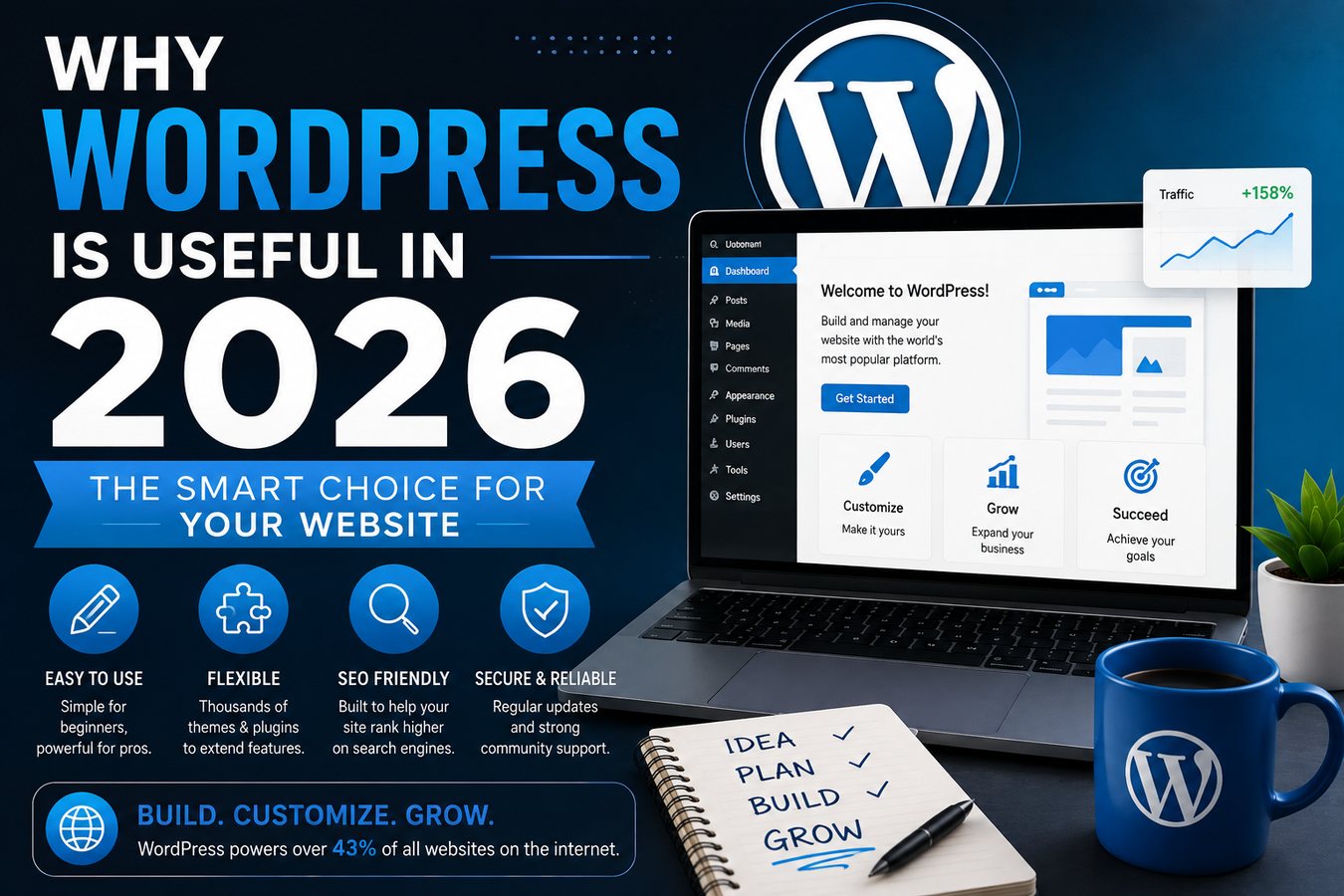
For anyone interested in understanding its current advantages in more detail, this guide explores why WordPress is useful in 2026 and why it remains one of the best website platforms.
Final Thoughts
WordPress remains a strong option in 2026 because it gives users room to build, customize, and grow.
It may not be the perfect platform for every website, but its combination of content management, customization, plugins, SEO capabilities, and scalability makes it a practical choice for many individuals and businesses.
The future of website creation will undoubtedly include more AI, automation, and advanced tools. However, the need for a flexible platform that gives website owners control is unlikely to disappear.
For that reason, WordPress still has a meaningful place in the modern web.