Barndominium Kitchen Design: Practical Layouts, Materials, and Systems for Durable Living
-

- February 23rd, 2026
- 1,646 views

FREE SEO Topical Map Generator: Find Your Next Content Ideas
The barndominium kitchen design blends rustic barn elements with modern home functionality, creating a durable, open, and adaptable space. Planning should balance structural realities of pole-barn or steel-frame construction with kitchen workflow, ventilation, and utility placement to achieve a practical and attractive result.
- Prioritize layout (work triangle, island, circulation) to suit open-plan barndominiums.
- Choose durable finishes: engineered countertops, moisture-resistant cabinets, and resilient flooring.
- Address mechanical systems early: ventilation, electrical capacity, and gas lines in barn-style structures.
- Plan storage and lighting for multifunctional use and possible loft spaces.
- Consult local building codes and industry standards such as guidance from the National Kitchen & Bath Association for ventilation and safety.
Barndominium kitchen design: layout and planning
Layout decisions are central to successful barndominium kitchen design. Many barndominiums feature large, open bays and exposed structural members that favor open-concept kitchens, islands, and integrated living areas. Start with basic circulation, the work triangle (sink, stove, refrigerator), and zones for prep, cooking, cleanup, and storage. Consider traffic flow to and from exterior doors, mudrooms, garages, or outdoor cooking areas often paired with barn-style homes.
Work triangle and workflow
Use the classic work triangle as a guide, but adapt it for islands and multiple cooks. In open layouts, place the primary range and sink on parallel or L-shaped runs to reduce crossing traffic. Allow clear aisles of 36 inches or more around islands used for prep and seating; increase to 42–46 inches where heavy appliance doors will open or where multiple people work simultaneously.
Open-plan islands and multifunctional zones
Kitchens in barndominiums often serve as the social core; islands can house a sink, dishwasher, or cooktop while providing seating and storage. Design islands with durable faces to resist knocks from farm tools or outdoor gear. Consider built-in pantry towers, appliance garages, and open shelving for an industrial or farmhouse look that suits exposed-truss interiors.
Materials and finishes for barn-style kitchens
Durability and ease of maintenance are priorities in a barndominium kitchen design. Materials should withstand humidity changes, dust, and higher ceilings.
Cabinetry and storage
Choose cabinet materials rated for humidity and temperature swings; engineered plywood with marine-grade glues or MDF with moisture-resistant finishes perform better than raw particleboard. Integrate deep drawers, pull-out pantry shelves, and ceiling-height cabinets where lofts exist. Consider metal or painted finishes for an industrial aesthetic that pairs with steel framing.
Countertops and sinks
Engineered quartz and solid-surface tops offer low maintenance and stain resistance; thicker butcher block suits a farmhouse look but requires sealing. A large farmhouse sink can be practical for large pots and outdoor gear, while under-mount stainless sinks ease cleaning in heavy-use kitchens.
Appliances, ventilation, and services
Position appliances with an eye toward venting pathways, gas supply runs, and electrical load distribution. Barndominiums with open rafters may simplify hood venting runs if soffits or chases are planned early.
Ventilation guidance and range hoods
Effective ventilation removes cooking moisture and particulates that can accumulate in open, high-ceiling spaces. Follow industry guidance on capture efficiency and airflow rates; for reference and detailed ventilation recommendations consult the National Kitchen & Bath Association (NKBA).
National Kitchen & Bath Association
Plumbing, gas, and electrical considerations
Early coordination with the mechanical contractor is essential. If using propane or natural gas for ranges or water heaters, plan run locations to minimize elbows and pressure issues. Confirm electrical service capacity for high-draw appliances and plan dedicated circuits for ranges, ovens, and EV chargers if added. Compliance with the International Residential Code and local building inspections ensures safety where structural modifications intersect with utilities.
Lighting, flooring, and finishes
Natural light complements the open spaces of barndominiums; consider clerestory windows, skylights, or large sliding doors. Layer task, ambient, and accent lighting to illuminate prep zones, islands, and dining areas.
Flooring and durability
Choose resilient flooring such as porcelain tile, sealed concrete, or luxury vinyl plank rated for heavy use and moisture. Warmth can be added with area rugs in dining zones. Flooring should coordinate with possible radiant heating systems often used in slab-on-grade barndominiums.
Practical considerations and resale
Balance aesthetic choices with functionality and maintenance. Simple, durable finishes and flexible layouts tend to age better and appeal to a wider range of buyers. Keep documentation of mechanical installations and permits to support future resale and inspections.
Accessibility and code compliance
Plan for universal design elements such as knee space at worktops, reachable storage, and slip-resistant flooring if accessibility is a priority. Consult local building departments for code requirements affecting ceiling heights, stair and loft access, and appliance clearances.
Budget and phasing
Phasing the kitchen build can spread costs: prioritize utility rough-ins, cabinetry backs and counters, then add specialty finishes and appliances. Durable core materials reduce long-term maintenance expenses, an important factor in rural or climate-extreme locations.
Finishing touches for a barndominium kitchen
Decor choices that complement exposed beams and metal roofing include mixed materials, open shelving, black hardware, and matte finishes. Incorporate mudroom adjacency, boot-cleaning stations, and covered outdoor cooking areas to reflect the lifestyle often associated with barn-style homes.
FAQ
What are common layout choices for barndominium kitchen design?
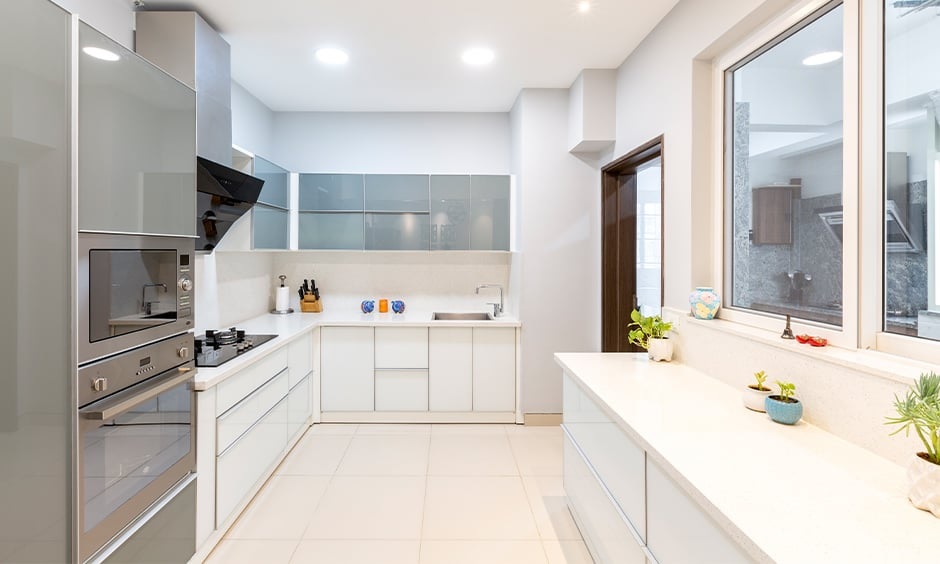
Common layouts include open-plan L-shaped kitchens with islands, galley kitchens where space is narrower, and U-shaped configurations when loft or wall conditions permit. Islands with integrated seating are popular for social use, while pantry walls and tall storage suit long-term organization.
How much does a barndominium kitchen cost to build or remodel?
Costs vary widely by finishes, appliances, and scope. A basic functional kitchen in a barndominium can be completed at modest cost by prioritizing core systems and durable surfaces; mid- to high-end builds increase with custom cabinetry, stone countertops, and professional-grade appliances. Obtain multiple contractor bids and detailed estimates.
Can a barndominium kitchen include a full-size range and hood?
Yes. Full-size ranges and properly sized, vented hoods are common and often recommended. Early planning for duct runs, electrical service, and ventilation capture area ensures effective operation in high-ceiling, open spaces.
What flooring works best in a barndominium kitchen?
Durable, water-resistant flooring such as porcelain tile, sealed concrete, or high-quality vinyl plank is recommended. Choose finishes that balance slip resistance, warmth, and compatibility with radiant heating if used.