Circumference of Earth Orbit and Space Study
-

- Published Updated
- 8,087 views
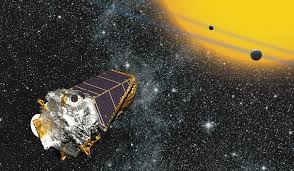
Learn how Earth travels in orbit.

Space Telescopes and Circumference of Earth Orbit: Exploring the Universe from Our Planet
Introduction
The universe is full of mysteries, and humans have always tried to understand what lies beyond our planet. One of the greatest inventions that helps us explore space is the space telescope. These powerful tools allow scientists to see distant stars, galaxies, and planets that cannot be observed clearly from Earth.
At the same time, understanding the circumference of Earth orbit helps us learn how our planet moves around the Sun and how space missions are planned. The Earth, known as Earth, travels in a massive elliptical path around the Sun, and this journey is essential for life on our planet.
This article explains space telescopes and the circumference of Earth orbit in a simple, human-friendly way.
What Are Space Telescopes?
Space telescopes are scientific instruments placed outside Earth’s atmosphere to observe the universe more clearly. Unlike ground-based telescopes, they are not affected by air, clouds, or pollution.
Why space telescopes are important:
- They capture clear images of distant galaxies
- They observe stars and planets beyond our solar system
- They detect invisible light like infrared and X-rays
- They help study black holes and cosmic events
Famous space telescopes include:
- Hubble Space Telescope
- James Webb Space Telescope
- Chandra X-ray Observatory
- Spitzer Space Telescope
These telescopes have transformed our understanding of the universe.
What is Circumference of Earth Orbit?
The circumference of Earth orbit refers to the total distance Earth travels around the Sun in one complete revolution.
Earth follows an elliptical orbit, meaning it is slightly oval-shaped rather than perfectly circular.
Approximate value:
- About 940 million kilometers per year
This enormous distance shows how vast space is compared to Earth.
How Space Telescopes Work
Space telescopes work by collecting light from distant objects and sending data back to Earth.
Main parts of a space telescope:
- Mirrors or lenses to collect light
- Sensors to convert light into data
- Communication systems for data transmission
- Solar panels for energy supply
These components allow telescopes to operate continuously in space.
Connection Between Space Telescopes and Earth’s Orbit
Space telescopes are launched into space using rockets, and their movement is closely connected to Earth’s orbit.
The circumference of Earth orbit helps scientists calculate:
- Satellite positioning
- Telescope placement
- Orbital paths
- Communication signals
Without understanding Earth’s orbital distance, space missions would not be possible.
Why Earth’s Orbit is Important in Space Science
The orbit of Earth around the Sun plays a key role in space exploration.
It helps in:
- Planning satellite launches
- Predicting space object movements
- Studying solar radiation
- Supporting communication systems
All of this is essential for space telescopes to function properly.
Famous Space Telescopes and Their Discoveries
1. Hubble Space Telescope
- Launched in 1990
- Captures visible and ultraviolet light
- Has provided deep space images
2. James Webb Space Telescope
- Launched in 2021
- Observes infrared light
- Studies early universe formation
3. Chandra X-ray Observatory
- Detects X-rays from space
- Studies black holes and supernovas
These telescopes help us understand the universe beyond Earth.
Earth’s Orbit and Space Measurement
The circumference of Earth orbit is used in many scientific calculations.
It helps scientists:
- Measure Earth’s yearly travel
- Calculate orbital speed
- Understand seasonal changes
- Plan interplanetary missions
The Earth, known as Earth, moves at about 107,000 km per hour while orbiting the Sun.
How Space Telescopes Help Science Education
Space telescopes are not only scientific tools but also educational resources.
They help students learn:
- About galaxies and stars
- How the universe is structured
- The concept of light and space
- The scale of Earth’s orbit
Science education becomes more exciting when real telescope images are used in learning.
Role of Technology in Space Telescopes
Modern technology has improved space telescopes significantly.
Key advancements:
- AI-based data analysis
- Infrared imaging systems
- High-resolution sensors
- Deep space communication networks
These technologies help scientists study the universe more effectively.
Future of Space Telescopes
The future of space telescopes is very promising.
Expected developments:
- Larger and more powerful telescopes
- Exploration of Earth-like planets
- AI-driven space analysis
- Better deep space imaging
As technology improves, our understanding of the universe will grow rapidly.
Importance of Studying Earth’s Orbit
Understanding the circumference of Earth orbit is important because it:
- Helps in space navigation
- Supports satellite communication
- Explains seasonal changes
- Assists in astronomy research
It connects Earth science with space exploration.