MBA in Rural Development: Build a Career That Can Transform Rural India
-

- September 12th, 2026
- 131 views
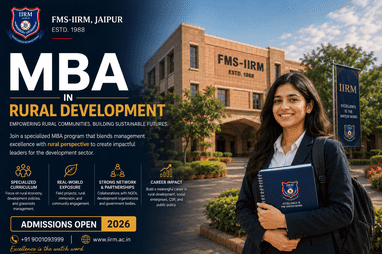
Rural India is experiencing significant changes through advancements in agriculture, digital connectivity, financial services, entrepreneurship, infrastructure, and livelihood opportunities. These developments have created a growing need for professionals who understand both management principles and the realities of rural communities.
For students interested in business, agriculture, finance, entrepreneurship, or social impact, an MBA in Rural Development can provide a specialized pathway into this evolving field. Unlike a traditional management program that primarily focuses on corporate business environments, rural management education also explores how businesses, government programs, financial institutions, development organizations, and social enterprises operate in rural and semi-urban markets.
What Is an MBA in Rural Development?
An MBA in Rural Development is a management-focused program that combines business knowledge with an understanding of rural economies, communities, agriculture, markets, development projects, and livelihood systems.
Depending on the institution, students may study areas such as:
Rural Finance
Rural Marketing
Agribusiness Management
Supply Chain Management
Development Management
Entrepreneurship
Market Research
Financial Services
Business Management
The objective is to prepare students to understand and address business, economic, and development-related challenges in rural and semi-urban areas.
Why Choose an MBA in Rural Development?
An MBA in Rural Development can be a suitable option for students who want to combine management skills with an understanding of rural economies and communities. It can open career opportunities across private companies, agricultural businesses, financial institutions, development organizations, NGOs, consulting firms, and social enterprises.
Some key benefits include:
Understanding rural consumers: Learn how consumer behaviour, purchasing patterns, and market needs differ across rural markets.
Knowledge of agribusiness: Develop an understanding of agriculture-related businesses and rural enterprises.
Management and financial skills: Build capabilities in planning, decision-making, budgeting, and business management.
Rural supply chain knowledge: Understand distribution networks, logistics, and supply chains that support rural markets.
Development project skills: Learn how management principles can be applied to development-oriented projects.
Career opportunities in financial services: Explore areas such as rural banking, microfinance, insurance, and financial inclusion.
Entrepreneurial skills: Develop problem-solving and entrepreneurial abilities relevant to rural businesses and social enterprises.
However, the value of the program depends on factors such as curriculum quality, practical exposure, faculty expertise, industry interaction, internships, and the student's individual career goals.
What Career Options Are Available After an MBA in Rural Development?
Graduates can explore management and development-oriented roles across several industries. Career opportunities may vary depending on the student's specialization, skills, internships, and previous experience.
Some potential career areas include:
Rural Marketing
Agribusiness Management
Rural Banking and Finance
Microfinance
Insurance
Sales and Distribution
Supply Chain Management
Development Projects
NGO and Social Enterprise Management
Corporate Social Responsibility (CSR)
Market Research
Rural Entrepreneurship
Consulting
A rural management professional may not necessarily work only in rural locations. Many organizations operate across rural and semi-urban markets and require professionals who understand local consumers, distribution systems, financial inclusion, and rural business models.
What Skills Should Students Develop?
A management degree alone does not determine career success. Students should develop a combination of analytical, managerial, interpersonal, digital, and field-oriented skills.
Important skills include:
1. Communication Skills
Professionals working in rural markets often interact with customers, communities, organizations, business partners, and government or development stakeholders. Strong communication skills can therefore be valuable.
2. Market Research
Students should learn how to identify consumer needs, market opportunities, competition, and emerging trends in rural markets.
3. Data Analysis
The ability to interpret data can help professionals make better business, marketing, financial, and development-related decisions.
4. Financial Knowledge
Understanding credit systems, financial products, budgeting, insurance, and other financial services can be useful for careers in rural banking and financial inclusion.
5. Problem-Solving
Rural markets can involve complex business and community-level challenges. Practical problem-solving skills can help professionals develop effective solutions.
6. Digital Skills
Digital marketing, technology-enabled services, data-driven management, and digital financial services are becoming increasingly relevant to rural businesses and consumers.
7. Field Understanding
Students should understand the economic, social, cultural, and business factors that influence rural markets and communities.
What Should Students Look for in the Best Rural Management College for an MBA?
There is no single college that is the best choice for every student. Instead, students should compare institutions based on their individual career goals and learning requirements.
Important factors to consider include:
Curriculum and course structure
Faculty experience
Specializations offered
Industry exposure
Internships and field projects
Practical learning opportunities
Placement and career support
Alumni network
Course fees
Location
Learning environment
A strong rural management program should connect classroom learning with real-world situations through case studies, projects, workshops, industry interactions, field visits, internships, and practical assignments.
How Can IIRM Help Students Prepare for Rural Management Careers?
IIRM College, Jaipur (Faculty of Management Studies, Institute of Rural Management) offers a two-year PGDM-RM (Rural Management) program designed to provide management education with a focus on rural and related business sectors.
The program covers areas such as Agribusiness Management, Rural Finance, Rural Marketing, and Digital Business Management, helping students develop an understanding of both management concepts and rural business environments.
The learning approach includes classroom sessions, workshops, seminars, case studies, assignments, presentations, business activities, and field-based learning. These methods can help students connect management concepts with practical business and development situations.
For admission, IIRM states that candidates applying for PGDM/PGDM-RM generally need a bachelor's degree in any discipline with at least 50% aggregate marks, along with a valid score from an accepted entrance examination such as CAT, MAT, CMAT, XAT, or ATMA, subject to the institute's current admission criteria. Final-year students may also be eligible to apply, subject to the applicable requirements.
Is an MBA in Rural Development a Good Career Choice?
An MBA in Rural Development can be a suitable career option for students interested in management, agriculture, rural markets, financial services, entrepreneurship, development, and social impact.
The program can be particularly relevant for students who want to understand how business decisions interact with the economic and social conditions of rural India.
However, students should select a program based on their long-term career goals rather than the course title alone. Comparing the curriculum, practical exposure, specializations, faculty, career support, fees, internships, and career opportunities can help students make a more informed decision.
Conclusion
An MBA in Rural Development can provide a distinctive pathway for students who want to build management careers while developing a deeper understanding of rural markets, agriculture, finance, entrepreneurship, supply chains, and development initiatives.
Career opportunities can extend across agribusiness, rural marketing, banking and finance, insurance, sales, supply chain management, CSR, consulting, social enterprises, and development projects.
Before selecting a rural management program, students should carefully evaluate the curriculum, practical exposure, faculty, internships, industry interaction, career support, fees, and overall suitability for their career goals.
A well-structured rural management education can help students build relevant management skills while contributing to the growth of businesses, communities, and economic opportunities across rural India.
Frequently Asked Questions
1. What is an MBA in Rural Development?
An MBA in Rural Development is a management-oriented program that combines business education with subjects related to rural economies, agriculture, rural markets, finance, entrepreneurship, and development.
2. What jobs can I get after an MBA in Rural Development?
Career opportunities may include rural marketing, agribusiness, rural banking and finance, microfinance, insurance, sales and distribution, supply chain management, CSR, development projects, consulting, market research, and social enterprises.
3. Is rural management a good career option?
Rural management can be a suitable career choice for students interested in management roles related to agriculture, rural markets, financial services, development, entrepreneurship, and social impact.
4. What is the difference between an MBA in Rural Development and a traditional MBA?
A traditional MBA generally provides broader management education across areas such as marketing, finance, human resources, operations, and strategy. Rural management programs place greater emphasis on rural markets, agriculture, rural finance, development, and related business challenges.
5. What is the minimum qualification required for rural management programs?
Eligibility criteria vary between institutions. For example, IIRM currently lists a bachelor's degree in any discipline with at least 50% aggregate marks for its PGDM/PGDM-RM admission requirements, along with other applicable admission criteria.