How Packaging Inserts Should Be Planned for Refill Systems and Replacement Cartridges
-

- Published Updated
- 164 views
Bilkul. Dono topics previous Inserts Hub blogs se alag rakhe hain. Pehla blog neeche copy-paste visual format mein hai, aur doosra properly formatted PDF mein diya hai.
Why Refill Packaging Needs a Different Internal Layout
Refill systems are becoming common across personal care products, household items, electronics, dispensers, tools, and other product types. Unlike a standard package containing one finished product, a refill package may contain a main unit together with cartridges, replacement containers, capsules, applicators, caps, or other components that will be used at different times.
Foam, cardboard, corrugated, molded pulp, and divider structures used across Inserts Hub can be arranged to keep these components separated and easy to identify. The insert should support the refill process without allowing smaller replacement parts to move freely around the main product.
The most practical layout depends on how the customer will use, store, and replace each component after opening the package.
Understand the Complete Refill System First
Insert planning should begin with every component included in the package rather than only the largest product.
For example, a refill system might contain:
- A reusable main container
- Replacement cartridges
- Separate caps or closures
- Small applicators
- Instructions or refill accessories
These five component types may have very different packaging needs.
The main unit may require structural support, while a cartridge may mainly need protection around its seal or connection point.
Separate the Main Product From Future-Use Components
Replacement components may remain unused for weeks or months after the package is opened.
They should therefore have clearly defined positions rather than being stored loosely around the main product.
A dedicated compartment can reduce movement while helping the customer understand which pieces are intended for later use.
Clear separation also makes it easier to inspect whether the package contains the correct quantity of refills before shipment.
Protect Refill Seals and Connection Areas
Many replacement cartridges include an opening, valve, nozzle, thread, membrane, or other connection feature.
These areas may be more sensitive than the body of the refill.
An insert should avoid using a sealed opening or connector as the main support point.
Instead, contact can be directed toward stronger areas such as the sidewall, base, or reinforced outer body.
This helps prevent continuous pressure on functional components.
Keep Different Refill Types Clearly Organized
Some systems include more than one refill type.
A kit might contain different fragrances, formulas, capacities, colors, or product functions.
If the components look similar, the internal layout can help keep them organized.
Separate compartments can reduce the risk of products being placed in the wrong locations during packing.
The insert does not replace labels, but it can make the packaging easier to verify visually.
Consider How Many Refills Are Included
Quantity influences the insert layout.
A package containing one replacement cartridge needs a different structure from a pack containing six or twelve.
When several identical components are included, repeated cavities or divider cells can create a consistent arrangement.
An empty location can also make a missing unit easier to notice during final inspection.
Avoid Large Compartments for Small Cartridges
A small refill placed inside a large open section may move significantly during shipping.
Even when the component is not fragile, repeated movement can damage labels, closures, or neighboring products.
The compartment should provide enough room for easy packing while limiting unnecessary sliding or rotation.
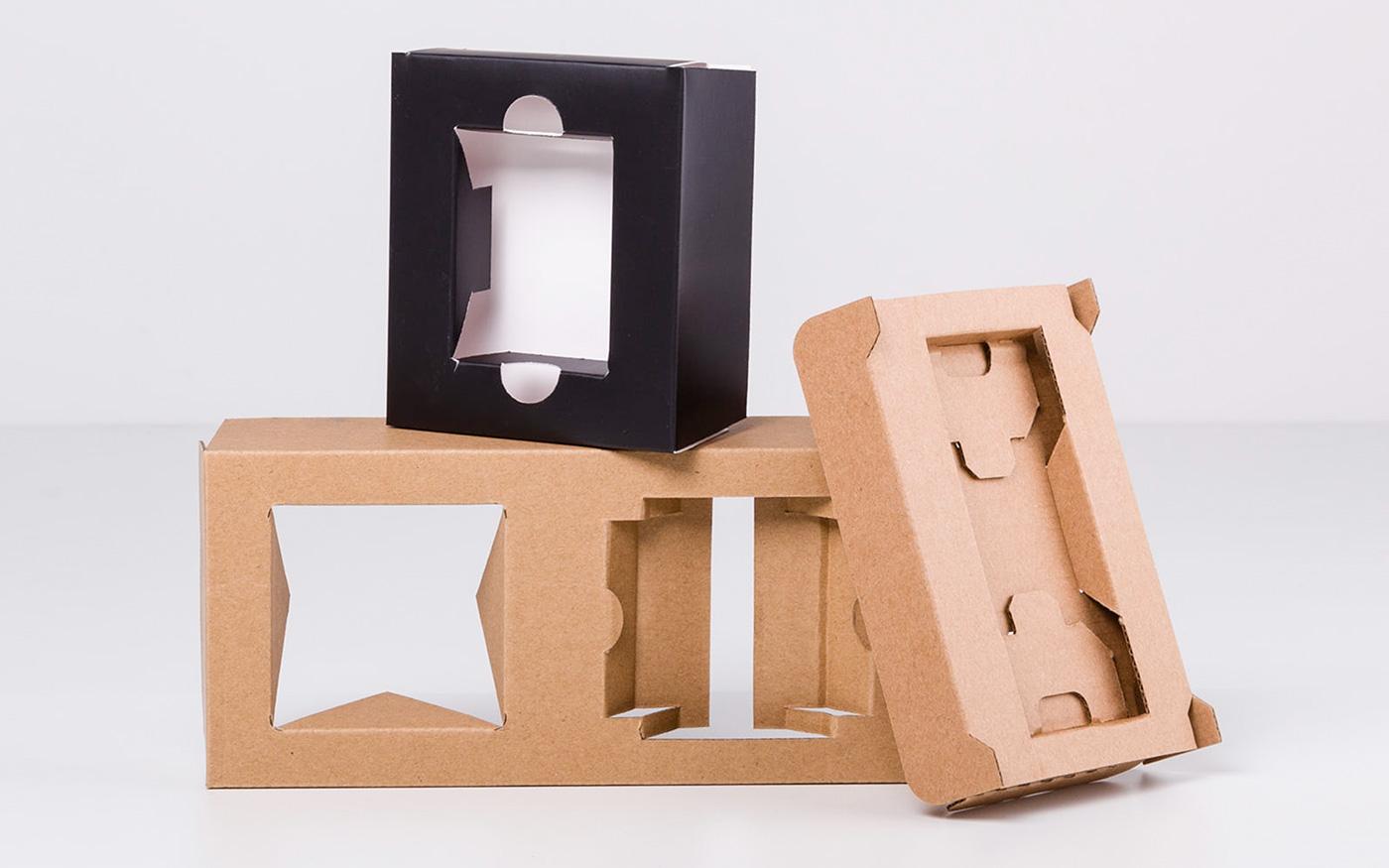
Cardboard Inserts Can Organize Lightweight Refill Sets
Folded cardboard structures can create several small sections without requiring deep cavities.
This approach can work well for:
- Lightweight cartridges
- Cosmetic refills
- Small containers
- Replacement pods
- Accessory sets
Tabs and partitions can organize the components while keeping them visible during packing.
Foam Can Support More Sensitive Refill Components
Foam may be useful when a refill has fragile connectors, glass sections, or irregular geometry.
Individual cavities can hold each component in a repeatable position.
However, the cavity should not be unnecessarily tight around sealed or functional areas.
Finger access can also help prevent workers or customers from pulling on the connector when removing the refill.
Corrugated Dividers Can Manage Larger Refill Quantities
Corrugated partitions can be useful for refill products supplied in larger sets.
Individual cells separate containers while allowing several units to share one outer box.
Cell dimensions should reflect the actual packed product.
If cartridges are individually bagged or sleeved, the divider should be designed around those final packed dimensions.
Molded Pulp Can Create Repeatable Refill Positions
Molded pulp can form defined recesses for several components.
This may help maintain consistent orientation without requiring every surface to be enclosed.
Raised areas and formed supports can keep refill units separated while preserving access to labels or identification marks.
Material suitability should still be considered according to the product surface and protection requirements.
The choice of insert format changes how the refill set behaves during packing and use.
| Insert Format | Useful Application | Main Benefit | Area to Review |
|---|---|---|---|
| Folded Cardboard | Lightweight refill sets | Clear compartment organization | Tabs and closure areas |
| Shaped Foam | Sensitive cartridges | Controlled positioning | Connector clearance |
| Corrugated Dividers | Multiple containers | Strong separation | Cell dimensions |
| Molded Pulp | Repeated shaped units | Consistent seating | Contact surfaces |
Keep Caps and Small Accessories Contained
Refill systems sometimes include loose caps, adapters, pumps, keys, or small tools.
These components can easily move underneath the main product if they do not have their own location.
Small accessories may also be overlooked during packing.
A separate compartment helps keep them together and makes the complete set easier to verify.
Think About the Refill Installation Process
The way a refill is installed can influence the packaging layout.
If the customer needs to remove a cartridge, cap, and applicator in a particular sequence, the insert can place those items in a logical arrangement.
The packaging does not need to function as an instruction manual, but organized placement can make the relationship between components easier to understand.
Avoid Hiding Important Instructions
A refill system may require specific handling, installation, or storage instructions.
Printed instructions should be easy to find when the package is opened.
If they are placed underneath several trays or refill units, the customer may begin assembling the product before seeing the information.
A flat upper section or clearly visible document area can make instructions easier to access.
Keep Refill Labels Visible When Possible
Product labels may identify:
- Formula
- Color
- Size
- Variant
- Batch information
If workers need to verify these details before shipping, the insert can be arranged so important identification remains visible.
This can reduce repeated removal during final quality checks.
Account for Individual Protective Wrapping
Some refill cartridges are packed inside bags, films, sleeves, or small cartons.
The cavity or compartment should be designed around the component in this final condition.
Protective wrapping may change the overall width, thickness, friction, and position of seals.
Testing only an uncovered refill can result in a cavity that becomes too tight during actual production.
Prevent Refill Components From Pressing Against Each Other
A package can contain several refill units with hard surfaces.
If they are allowed to move together, they may strike one another during handling.
Even when breakage is unlikely, repeated contact can affect:
- Printed surfaces
- Labels
- Closures
- Decorative finishes
- Protective films
Physical separation can reduce these issues.
Think About Long-Term Storage After Opening
Refill packaging may remain in the customer's home, workplace, or storage area after the first product has been removed.
This means the insert may continue to serve an organizational purpose.
A tray that keeps unused cartridges upright and separated may be more practical than an arrangement that collapses after the first component is removed.
Make Individual Refills Easy to Remove
Deep or tight cavities can make small refill components difficult to grip.
Customers should not need to pull on a cap, nozzle, seal, or connector just to remove the product.
Finger openings, open corners, or accessible upper sections can provide safer gripping areas.
Keep the Insert Stable as Refills Are Removed
An insert containing several identical cartridges can behave differently after one or two components are removed.
The remaining products should not become loose simply because an adjacent cavity is empty.
Each position should provide enough independent support to keep the remaining refills organized.
Avoid Excessive Packaging Around Every Unit
Each refill does not always require its own complex protective structure.
The required level of protection should reflect the actual product risk.
For durable lightweight cartridges, simple dividers may be enough.
For fragile glass refill units, additional cushioning may be justified.
The packaging should solve the real protection requirement rather than applying the same structure to every product type.
Consider Replacement Components With Different Sizes
Some refill systems include multiple capacities or component sizes.
If several variants share the same outer packaging, the insert should be checked with both the smallest and largest units.
A cavity designed only around the largest refill may allow smaller components to move excessively.
Separate inserts or grouped size families may provide a more controlled solution.
Plan the Pack-Out Sequence
A repeatable packing sequence helps reduce errors.
One practical test can follow these five steps:
Place the main reusable product into its assigned support area and confirm that it is seated correctly.
Add each refill to its designated position while checking that seals and connectors remain free from direct pressure.
Place small accessories and instructions in their assigned sections instead of allowing them to move freely.
Close and handle the complete package in several normal shipping orientations.
Reopen the package and verify each component for movement, rubbing, displaced accessories, or difficult removal.
These steps help evaluate both transportation control and pack-out usability.
Check the Package After Removing One Refill
Testing should not stop with a completely full package.
Remove one cartridge and observe what happens to the remaining components.
Then remove several.
This can reveal whether the insert continues to organize the refill system after the customer begins using it.
Consider Whether the Outer Box Will Be Reused
Some refill systems are designed so the original package becomes a storage box.
If this is expected, the insert should remain usable after repeated opening.
Tabs, compartments, and trays should not depend on a one-time packing arrangement that is destroyed during the first unboxing.
Avoid Making Refill Identification Too Complicated
Highly similar cavities can make it difficult to remember which refill belongs where.
If component order matters, physical differences in compartment size or position may help.
However, the layout should remain simple.
The packaging should reduce confusion rather than creating a puzzle for the customer.
Review the System When Refill Designs Change
Refill products may change over time.
A supplier may alter a cap, connector, container wall, label, or protective sleeve.
Even small dimensional changes can affect insert fit.
Whenever the refill component changes, the existing packaging should be checked again rather than assuming the old cavity will continue to work.
Build the Insert Around the Refill Cycle
Packaging for refill systems needs to consider more than the first delivery.
The insert may organize a reusable main product, several future-use components, accessories, and instructions while also remaining useful after individual refills are removed.
A practical design protects sensitive seals and connectors, separates refill units, keeps identification visible, and provides enough access for repeated use.
By planning the internal layout around how refills are packed, stored, removed, and replaced, the packaging can remain organized throughout the full product cycle.