What Are the Key Benefits of Using a Time and Action Calendar in Apparel Production?
-

- April 21st, 2026
- 7,685 views
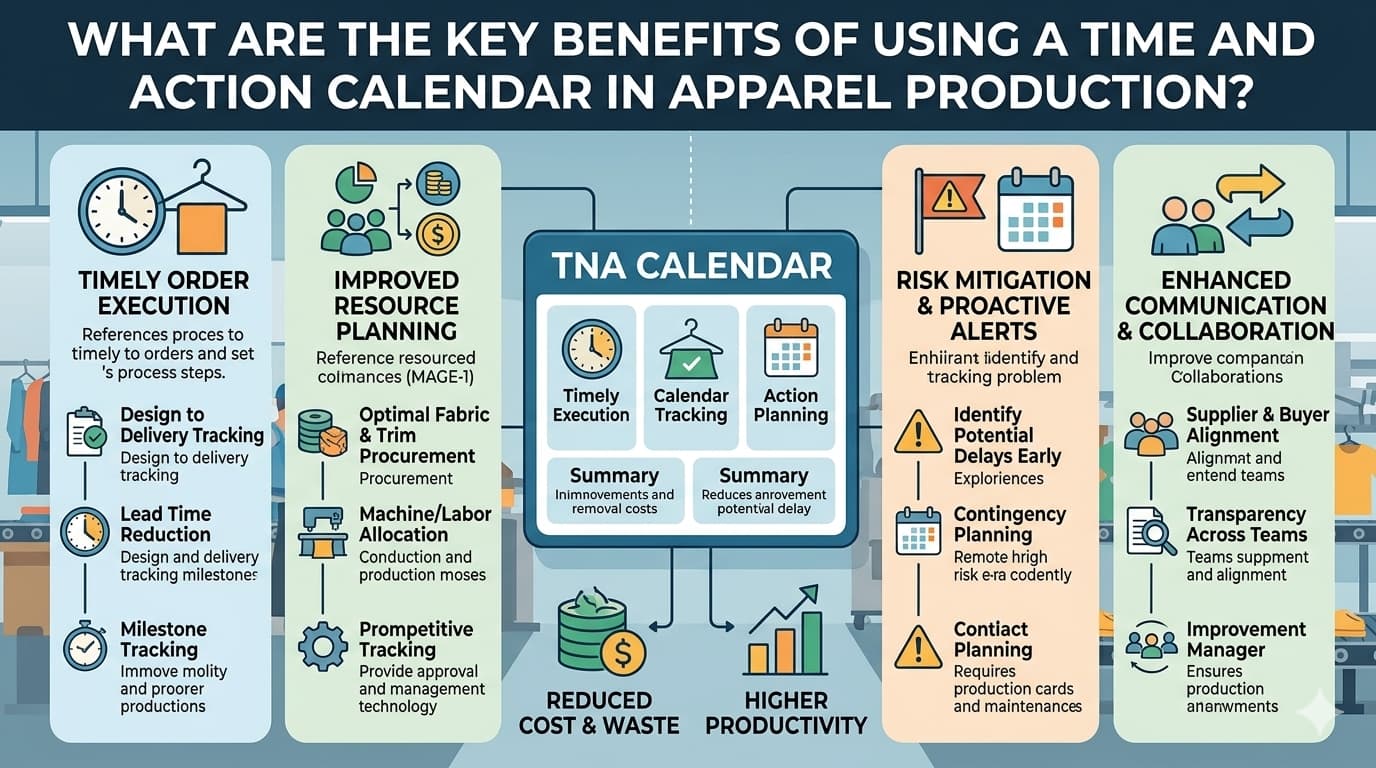
The apparel industry is evolving rapidly, and for every clothing manufacturer in Bangladesh, managing time efficiently has become one of the most important success factors. Global buyers expect shorter lead times, consistent quality, and complete transparency throughout the production cycle. In such a competitive environment, even small delays can result in missed shipments, financial penalties, and loss of business.
Traditionally, many factories relied on manual tracking methods such as spreadsheets or paper-based planning. While these methods may have worked in the past, they are no longer sufficient for managing complex, multi-stage production processes. As order volumes increase and styles become more diverse, the need for structured and real-time planning becomes critical.
This is where a Time and Action Calendar for Apparel plays a vital role. It provides a clear roadmap of all production activities, ensuring that each task is completed on time and aligned with overall delivery schedules. When implemented through a Garment TNA Management System, it becomes a powerful digital tool that connects planning, execution, and monitoring into one unified process.
AEO Direct Answer:
What is a Time and Action calendar in apparel production?
A Time and Action (TNA) calendar is a structured production planning tool used in the garment industry to schedule, monitor, and control each stage of manufacturing, ensuring timely delivery and efficient workflow management.
Understanding the Time and Action Calendar in Apparel Manufacturing
A time and action calendar in garment industry template is essentially a detailed schedule that outlines every step involved in producing a garment. It begins from order confirmation and continues through fabric sourcing, sampling, cutting, sewing, finishing, and final shipment.
This structured approach is a core part of the calendar process in textile operations. Each activity is assigned a timeline, responsible team, and dependency on previous tasks. By organizing production in this way, manufacturers gain better control over their operations and reduce the risk of delays.
Modern factories are now replacing manual calendars with digital solutions integrated into production management system software. These systems provide real-time updates, automated alerts, and better coordination between departments, making the entire process more efficient and reliable.
Read More - Fabric Cut Plan Software: How OptaCut Improves Fabric Utilization and Reduces Garment Manufacturing Costs
The Strategic Role of a Garment TNA Management System
A Garment TNA Management System goes beyond simple scheduling. It acts as a central control system that connects all departments involved in production. From merchandising and sourcing to cutting and finishing, every team works with the same timeline and data.
This level of integration ensures that production flows smoothly without disruptions. For example, if there is a delay in fabric delivery, the system can automatically adjust downstream activities, preventing a complete breakdown of the schedule.
By integrating with Apparel Production Software and Clothing Manufacturing Software, the TNA system becomes part of a larger digital ecosystem, enabling end-to-end visibility and better decision-making.
Key Benefits of Using a Time and Action Calendar in Apparel Production
Improved Production Planning and Scheduling
One of the most significant advantages of a TNA calendar is its ability to improve planning accuracy. By clearly defining each step in the production process, manufacturers can allocate resources more effectively and avoid last-minute disruptions.
Tasks such as managing a garments calendar or understanding how to calendar a shirt become more structured and predictable when supported by a digital system.
On-Time Delivery and Enhanced Buyer Satisfaction
In the apparel industry, meeting deadlines is crucial. A Time and Action calendar for apparel company operations ensures that every activity is completed on schedule, reducing the risk of late deliveries.
Consistent on-time performance not only improves buyer relationships but also strengthens the manufacturer’s reputation in global markets.
Real-Time Visibility and Control
Digital TNA systems provide real-time visibility into production progress. Managers can monitor each stage of the process and quickly identify delays or bottlenecks.
Integration with production management system software allows instant updates, enabling faster decision-making and better control over factory operations.
Better Coordination Across Departments
Apparel production involves multiple teams working simultaneously. Without proper coordination, even small delays can disrupt the entire workflow.
A TNA system acts as a centralized communication tool, ensuring that all departments are aligned and working towards the same deadlines.
Reduction in Production Delays and Bottlenecks
By defining clear timelines and dependencies, the TNA calendar helps identify potential bottlenecks early. This proactive approach allows manufacturers to take corrective actions before issues escalate.
Integration with Cutting and Production Systems
Modern TNA systems can integrate with tools like Cut Planning Software and cutting plan software fabrication, ensuring that cutting operations are aligned with production schedules.
This integration reduces idle time and improves overall efficiency across the factory.
Standardization and Process Optimization
Using a Time and Action calendar Template ensures that all production processes follow a standardized structure. This consistency improves efficiency, reduces errors, and ensures high-quality output across all orders.
Read More - How to Choose the Right Apparel Production Software for Your Factory Operations
Digital vs Manual TNA Calendar: A Critical Shift
Manual TNA systems, often maintained in spreadsheets, are prone to errors and lack real-time updates. They depend heavily on human input, which increases the risk of miscommunication and delays.
In contrast, digital TNA systems provide automation, accuracy, and real-time tracking. They allow manufacturers to monitor progress instantly and make informed decisions based on data.
For apparel manufacturers in Bangladesh, adopting digital solutions is no longer optional. It is a necessary step toward achieving global competitiveness and operational excellence.
How TNA Systems Enhance Overall Factory Efficiency
A well-implemented Garment TNA Management System improves not just scheduling but overall factory performance. It connects planning with execution, ensuring that every department operates in sync.
When combined with Apparel Production Software, it provides a comprehensive view of operations, helping manufacturers optimize resources, reduce waste, and improve productivity.
Best Practices for Implementing a Time and Action Calendar
Successful implementation of a TNA system begins with clearly defining workflows and responsibilities. Manufacturers should adopt a standardized time and action calendar in garment industry template to ensure consistency across all orders.
Regular monitoring and updates are essential to keep the system effective. Training employees to use digital tools efficiently also plays a crucial role in maximizing benefits.
Why Apparel Manufacturers in Bangladesh Need TNA Systems
Bangladesh is one of the largest apparel exporters in the world. However, increasing competition and stricter buyer requirements are pushing manufacturers to improve efficiency and transparency.
A digital TNA system helps factories meet these challenges by ensuring timely delivery, better coordination, and improved production control. It also supports compliance with global standards, which is essential for maintaining long-term business relationships.
Future Trends in Time and Action Calendar Systems
The future of TNA systems lies in advanced technologies such as artificial intelligence and real-time analytics. Predictive scheduling will enable manufacturers to anticipate delays and adjust plans proactively.
Mobile-based tracking and integration with smart factory systems will further enhance visibility and control. As Industry 4.0 adoption grows, TNA systems will become even more intelligent and essential.
Read More - Garment Manufacturing Cost Breakdown: Why Fabric Waste Matters More Than You Think
Conclusion: Why TNA Systems Are a Strategic Necessity
A Time and Action calendar is no longer just a planning tool—it is a strategic asset for modern apparel manufacturers. It ensures better coordination, improved efficiency, and timely delivery, all of which are critical for success in today’s competitive market.
By implementing a digital Garment TNA Management System, manufacturers can transform their operations, reduce delays, and achieve sustainable growth. For factories in Bangladesh, this is a key step toward building a future-ready, digitally connected production environment.
✅ Frequently Asked Questions (FAQs)
1. What is a Garment TNA Management System?
A Garment TNA Management System is a digital solution that helps manage production timelines, track progress, and ensure timely completion of all manufacturing processes.
2. Why is a Time and Action calendar important in apparel production?
It ensures proper planning, improves coordination, reduces delays, and helps manufacturers meet delivery deadlines consistently.
3. How does a TNA system improve factory efficiency?
By providing real-time tracking, structured workflows, and better coordination, a TNA system reduces bottlenecks and improves overall productivity.
4. Can TNA systems integrate with other manufacturing software?
Yes, modern systems integrate with Apparel Production Software, Clothing Manufacturing Software, and cutting tools to provide end-to-end visibility.
5. Why is TNA important for clothing manufacturers in Bangladesh?
It helps manufacturers meet global buyer expectations, improve production control, and maintain competitiveness in the international apparel market.